Early Life and Education
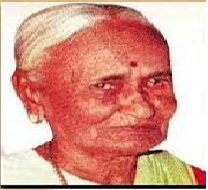
S. N. Sundarambal was born on 7 October 1913 in Veerapandi, Tiruppur, Tamil Nadu. She was the daughter of Natchimuthu Goundar, a respected local leader (maniyakkar). Although she belonged to a financially well-established family, she developed a strong interest in social service and nationalist activities from a young age.
There are no detailed records regarding her formal education. However, her upbringing exposed her to public affairs and the growing movement against British rule. As a teenager, she attended political meetings organized by the Indian National Congress, which shaped her commitment to India’s freedom struggle.
Education & Skills
While information about Sundarambal’s academic qualifications remains limited, she possessed several qualities that made her an effective activist:
- Strong leadership and organizational abilities.
- Excellent communication skills that enabled her to mobilize people.
- Deep commitment to Gandhian principles such as non-violence and self-reliance.
- Dedication to community service and social welfare.
- Ability to inspire women to participate actively in public causes.
Her life demonstrates that practical experience, determination, and social awareness can become powerful tools for nation-building.
Contribution to Tamil Literature
Unlike many Tamil freedom fighters who were poets or authors, S.N. Sundarambal did not make direct contributions to Tamil literature through literary works. There is no evidence of published writings, poems, or essays authored by her.
However, her life story has contributed to the broader historical narrative of Tamil Nadu’s freedom movement. Her sacrifices and activism continue to be remembered through biographies, newspaper articles, and commemorative accounts that preserve the legacy of women freedom fighters in Tamil society.
Role in India’s Freedom Movement
S.N. Sundarambal played a significant role in the Indian independence movement in Tamil Nadu.
Influence of Mahatma Gandhi
In 1928, during a public meeting in Tiruppur, Mahatma Gandhi appealed for support for the national cause. The young Sundarambal climbed onto the stage and donated her gold bangles to him. Gandhi appreciated her enthusiasm but encouraged her to participate actively in the struggle and adopt khadi as a symbol of self-reliance. She followed this advice for the rest of her life.
Participation in Satyagraha
In 1941, Sundarambal took part in Satyagraha protests against British rule. She was arrested and imprisoned in Vellore Prison for three months, along with her infant son.
Quit India Movement
During the 1942 Quit India Movement, she actively participated in non-violent demonstrations against the colonial government. She was arrested again and sentenced to seven months of imprisonment in Vellore Prison.
Continued Resistance
In 1943, Sundarambal organized a large protest in Tiruppur against British policies. Her involvement led to another arrest and an additional three-month prison sentence. Despite repeated imprisonment, she remained steadfast in her commitment to India’s freedom.
Post-Independence Social Activism
After India achieved independence in 1947, Sundarambal redirected her efforts toward social welfare. She advocated for farmers’ rights and organized demonstrations addressing rural issues. Even in the 1970s, she faced arrests due to her activism.
Inspired by Gandhian reformer Vinoba Bhave, she established an orphanage at Angeripalayam in Tiruppur, continuing her lifelong service to society.
Personal Life
S.N. Sundarambal was married and had two sons. Despite her family responsibilities, she remained deeply involved in the freedom movement and public service.
Her life reflected the values of simplicity and sacrifice. She consistently wore khadi, upheld Gandhian ideals, and devoted herself to helping the underprivileged. Those who knew her remembered her as a humble and compassionate individual committed to the welfare of others.
Death
S.N. Sundarambal passed away on 20 August 2007 in Tiruppur, Tamil Nadu, at the age of 93. By the time of her death, both of her sons had predeceased her.
Her passing marked the end of a remarkable journey defined by courage, patriotism, and selfless service.
Conclusion
S.N. Sundarambal stands as one of Tamil Nadu’s lesser-known yet extraordinary freedom fighters. Her repeated imprisonment, unwavering commitment to Gandhian ideals, and continued dedication to social causes after independence highlight her exceptional character. Although she did not contribute directly to Tamil literature, her life itself serves as an inspiring chapter in the history of Tamil women’s participation in India’s struggle for freedom.
Her story reminds us that the nation’s independence was achieved not only through the efforts of celebrated leaders but also through the sacrifices of countless unsung heroes like S.N. Sundarambal, whose courage and service continue to inspire future generations.
About the Author