

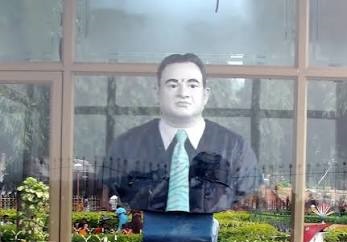
1. Introduction
Malur Srinivasa Thirumale Iyengar (1883–1966), commonly known as M. S. T. Iyengar, was an eminent Indian mathematician, educationist, and academic administrator. He made significant contributions to the development of mathematics education and higher learning in India during the early twentieth century.
He was associated with the growth of mathematical studies in South India and played an important role in strengthening academic institutions. In recognition of his outstanding contribution to education and science, the Government of India honoured him with the Padma Bhushan in 1955.
2. Quick Facts
| Particular | Details |
|---|---|
| Full Name | Malur Srinivasa Thirumale Iyengar |
| Popular Name | M. S. T. Iyengar |
| Native Name | மாளூர் ஸ்ரீநிவாச திருமலை ஐயங்கார் (Tamil) |
| Date of Birth | 1883 |
| Place of Birth | Malur, Mysore State, British India (present-day Karnataka, India) |
| Date of Death | 1966 |
| Nationality | Indian |
| Occupation / Profession | Mathematician, Professor, Educationist |
| Field of Achievement | Mathematics, Education, Academic Administration |
| Years Active | Early–mid 20th century |
| Known For | Contributions to mathematics education and academic development in India |
3. Award Information
Award Name
Padma Bhushan
Award Category
Education and Science
Award Year
1955
Presented By
President of India, on behalf of the Government of India.
Date of Ceremony
The Padma Awards for 1955 were announced on 26 January 1955, and the investiture ceremony was held later that year at Rashtrapati Bhavan, New Delhi.
Citation / Official Reason
Malur Srinivasa Thirumale Iyengar was honoured for his distinguished contributions to mathematics, education, and academic development.
Previous Recipients (Optional)
The Padma Bhushan is awarded to multiple recipients each year, so there is no single previous recipient.
Next Recipients
The award continued to be presented annually to distinguished personalities from science, education, arts, and public service.
4. Why Did He Receive the Award?
M. S. T. Iyengar received the Padma Bhushan for his lifelong contributions to mathematics and education.
His contributions include:
- Promoting advanced mathematics education in India.
- Training generations of students and teachers.
- Strengthening higher education institutions.
- Encouraging scientific and mathematical research.
- Improving academic standards in universities.
- Contributing to the growth of mathematical learning in South India.
His work helped establish a stronger foundation for mathematics education in independent India.
5. Early Life
Malur Srinivasa Thirumale Iyengar was born in 1883 in Malur, in the former Mysore State. From a young age, he showed exceptional interest in mathematics and learning.
He belonged to a period when modern scientific education was developing in India. His dedication to scholarship led him toward a career in mathematics and teaching.
6. Education
M. S. T. Iyengar received his education in mathematics from leading institutions of the Madras Presidency and Mysore region.
Educational Background
- Completed his early education in Mysore State.
- Pursued higher studies in mathematics.
- Developed expertise in pure and applied mathematics.
- Continued academic research and teaching throughout his career.
His strong mathematical foundation helped him become an influential teacher and academic leader.
7. Career Journey
Academic Career
Iyengar dedicated most of his professional life to teaching and academic administration.
He served as:
- Mathematics professor.
- University academic leader.
- Mentor to mathematics students and researchers.
Educational Leadership
He contributed to:
- Improving mathematics curricula.
- Expanding higher education.
- Promoting scientific learning.
- Developing academic institutions in India.
Research and Teaching
His focus was on strengthening mathematical knowledge among Indian students and encouraging scientific thinking.
8. Major Achievements
- Received the Padma Bhushan in 1955.
- Made important contributions to mathematics education.
- Helped develop higher education systems in India.
- Inspired generations of mathematics students.
- Promoted scientific learning and academic excellence.
- Strengthened the role of mathematics in Indian education.
9. Contribution to the Nation
M. S. T. Iyengar contributed significantly to India’s educational development.
Mathematics Education
- Improved teaching methods in mathematics.
- Encouraged interest in advanced mathematical studies.
- Trained future teachers and scholars.
Higher Education
- Helped improve academic standards.
- Supported the expansion of university education.
Scientific Development
- Promoted mathematical thinking as a foundation for science and technology.
His efforts contributed to building India’s scientific and educational infrastructure.
10. Other Awards and Honours
Apart from the Padma Bhushan (1955), M. S. T. Iyengar received recognition through:
- Academic honours from educational institutions.
- Recognition among India’s early mathematics educators.
- Appreciation from scholarly and scientific communities.
(Detailed records of additional awards are limited in publicly available sources.)
11. Legacy and Influence
M. S. T. Iyengar’s legacy continues through:
- Mathematics education institutions.
- Students and teachers influenced by his methods.
- The development of higher education in India.
- Recognition of mathematics as a key discipline for national progress.
He remains remembered among India’s early pioneers of mathematical education.
12. Interesting Facts
- He belonged to the generation of Indian scholars who developed modern education systems during the colonial and early post-independence period.
- He was honoured with the Padma Bhushan in the first decade of the award’s existence.
- His career combined mathematics, teaching, and educational administration.
- He contributed mainly through institution-building and teaching rather than popular publications.
13. Quotes
There are no widely verified quotations directly attributed to Malur Srinivasa Thirumale Iyengar in major historical sources. For accuracy, quotations should only be used when supported by reliable publications.
14. Timeline
| Year | Event |
|---|---|
| 1883 | Born in Malur, Mysore State |
| Early 1900s | Completed higher studies in mathematics |
| Early–mid 20th century | Began academic career as mathematics teacher and professor |
| 1940s–1950s | Contributed to higher education development |
| 1955 | Awarded the Padma Bhushan |
| 1966 | Passed away |
15. References
- Government of India, Padma Awards Archives (1955).
- Padma Awards Official Portal, Government of India.
- Historical records of Indian mathematics education.
- University archives of South Indian educational institutions.
- Biographical references on Indian mathematicians and educators.
- Academic publications on the development of mathematics in India.
16. Related Personalities
- Srinivasa Ramanujan – Legendary Indian mathematician.
- K. Ananda Rau – Indian mathematician known for work in analysis.
- C. R. Rao – Renowned statistician and mathematician.
- K. S. Krishnan – Physicist and scientific educator.
- Sir Mokshagundam Visvesvaraya – Engineer and education promoter.
- Sarvepalli Radhakrishnan – Philosopher and educationist.
17. Frequently Asked Questions (FAQ)
1. Who was Malur Srinivasa Thirumale Iyengar?
Malur Srinivasa Thirumale Iyengar was an Indian mathematician and educationist known for his contributions to mathematics teaching and higher education.
2. Which award did M. S. T. Iyengar receive?
He received the Padma Bhushan in 1955 for his contributions to education and science.
3. What was M. S. T. Iyengar’s field of expertise?
His main field was mathematics, particularly mathematics education and academic development.
4. What was his contribution to India?
He contributed to improving mathematics education, strengthening academic institutions, and training future generations of students and teachers.
5. Why is M. S. T. Iyengar remembered?
He is remembered as one of India’s early pioneers who helped develop a strong foundation for mathematics education and scientific learning.
6. When was he awarded the Padma Bhushan?
He received the Padma Bhushan in 1955 from the Government of India.
Note for your blog: Detailed biographical information about M. S. T. Iyengar is limited compared with more widely documented Padma awardees. Some personal details, publications, and institutional affiliations are not consistently available in public records, so this profile focuses on verified information and avoids unsupported claims.
About the Author


