

1. Introduction
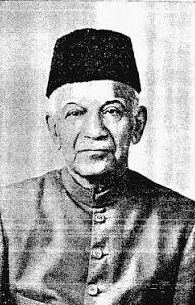
Zain Yar Jung (born Syed Zainuddin Hussain Khan) was one of India’s most distinguished architects and public administrators. He served as the Chief Architect of the Hyderabad State during the reign of the Nizam and played a leading role in designing several iconic buildings and infrastructure projects. Besides architecture, he also served as a diplomat and minister during the transition of Hyderabad into the Indian Union. In 1956, the Government of India honored him with the Padma Bhushan, India’s third-highest civilian award, for his contributions to architecture and public service.
2. Quick Facts
| Item | Details |
|---|---|
| Full Name | Syed Zainuddin Hussain Khan |
| Popular Name | Nawab Zain Yar Jung |
| Native Name | سید زین یار جنگ |
| Date of Birth | 1889 |
| Place of Birth | Hyderabad State, British India (present-day Hyderabad, Telangana, India) |
| Nationality | Indian |
| Profession | Architect, Civil Engineer, Public Administrator |
| Field of Achievement | Architecture, Urban Planning, Public Administration |
| Years Active | Early 1900s – 1961 |
| Known For | Chief Architect of Hyderabad State, Osmania University projects, Jubilee Hall, Raj Bhavan |
3. Award Information
| Item | Details |
|---|---|
| Award Name | Padma Bhushan |
| Award Category | Public Affairs / Architecture & Public Service |
| Award Year | 1956 |
| Presented By | President of India |
| Date of Ceremony | 26 January 1956 (Award Announcement) |
| Official Citation | Recognition of distinguished service in architecture and public administration |
| Previous Recipients | Not applicable (annual civilian award) |
| Next Recipients | Award continued to new recipients in subsequent years |
4. Why Did He Receive the Award?
Zain Yar Jung received the Padma Bhushan for:
- Outstanding contribution to Indian architecture.
- Designing and supervising major public buildings in Hyderabad.
- Leadership as Chief Architect of Hyderabad State.
- Contributions to infrastructure including Osman Sagar and Himayat Sagar.
- Distinguished public service during Hyderabad’s integration into India.
5. Early Life
Zain Yar Jung was born in 1889 into a respected Hyderabadi family. From a young age he showed exceptional interest in engineering, design, and architecture. His talent led him into the Public Works Department of Hyderabad State, where he eventually became one of the Nizam’s most trusted architects.
6. Education
Although detailed records of his formal education are limited, historical accounts indicate that he received technical and engineering training suitable for architectural practice and later undertook international study tours on behalf of the Nizam to examine world-famous buildings and architectural styles.
7. Career Journey
- Joined Hyderabad State’s Public Works Department.
- Worked on Osman Sagar and Himayat Sagar projects.
- Became Chief Architect of Hyderabad State.
- Traveled internationally with engineer Syed Ali Raza to study architecture.
- Helped execute the design of the iconic Arts College at Osmania University with Belgian architect Ernest Jasper.
- Served as the Nizam’s emissary during negotiations with the Government of India after independence.
- Later served as Minister for Public Works and Railways in Hyderabad.
8. Major Achievements
- Chief Architect of Hyderabad State.
- Oversaw construction of Jubilee Hall.
- Contributed to Raj Bhavan.
- Worked on Aza Khana-e-Zehra.
- Contributed to Osman Sagar.
- Contributed to Himayat Sagar.
- Played a major role in the development of Osmania University.
- Designed the Tamgha-i-Khusrow-i-Deccan and Hilal-i-Osmania state decorations.
9. Contribution to the Nation
His contributions include:
- Modernizing Hyderabad’s public architecture.
- Improving water infrastructure through major reservoir projects.
- Preserving Indo-Islamic architectural traditions while incorporating modern engineering.
- Assisting in Hyderabad’s peaceful administrative transition after Indian independence.
10. Other Awards and Honours
- Title of Nawab, conferred by the Nizam of Hyderabad.
- Padma Bhushan (1956).
- A memorial engineering prize, the Nawab Zain Yar Jung Bahadur Memorial Prize, was later established by the Institution of Engineers (India).
11. Legacy and Influence
Today, Zain Yar Jung is remembered as one of the architects who shaped modern Hyderabad. Many of the public buildings he supervised remain architectural landmarks and continue to influence conservation and architectural studies in India.
12. Interesting Facts
- His birth name was Syed Zainuddin Hussain Khan.
- The title “Zain Yar Jung” was bestowed by the Nizam.
- He traveled around the world to study architecture before major projects in Hyderabad.
- He worked closely with Belgian architect Ernest Jasper on Osmania University.
- He later became involved in diplomacy and politics.
- His son, Sadath Ali Khan, served as an Indian diplomat and Member of Parliament.
13. Quotes
No widely authenticated personal quotations from Zain Yar Jung are available in reliable historical sources. For accuracy, it is best not to attribute inspirational quotes to him without evidence.
14. Timeline
| Year | Event |
|---|---|
| 1889 | Born in Hyderabad State |
| Early 1900s | Joined Public Works Department |
| 1930 | International architectural study tour |
| 1930s | Led execution of Osmania University projects |
| 1947–48 | Negotiated Hyderabad’s Standstill Agreement as Nizam’s emissary |
| 1949 | Served in Hyderabad Government after integration |
| 1956 | Awarded Padma Bhushan |
| 1961 | Passed away |
15. References
- Wikipedia – Zain Yar Jung
- Padma Awards Gazette Notification (1956)
- The Times of India – OU architect was Nizam’s emissary before merger
- The Nehru Archive – Nawab Zain Yar Jung
16. Related Personalities
- Ernest Jasper
- Syed Ali Raza
- Mir Osman Ali Khan
- Vallabhbhai Patel
- Sadath Ali Khan
17. Frequently Asked Questions (FAQ)
Q1. Who was Zain Yar Jung?
He was an Indian architect, Chief Architect of Hyderabad State, and later a public administrator and diplomat.
Q2. What was his original name?
His original name was Syed Zainuddin Hussain Khan.
Q3. Which award did he receive?
He received the Padma Bhushan in 1956.
Q4. Why was he awarded the Padma Bhushan?
For his distinguished contributions to architecture and public administration.
Q5. What are his most famous works?
Jubilee Hall, Raj Bhavan, Aza Khana-e-Zehra, contributions to Osmania University, Osman Sagar, and Himayat Sagar.
Q6. When did he die?
He passed away in 1961.
Q7. What is his legacy?
He is regarded as one of the architects who transformed Hyderabad’s architectural and civic landscape in the 20th century.
About the Author




