

1. Introduction
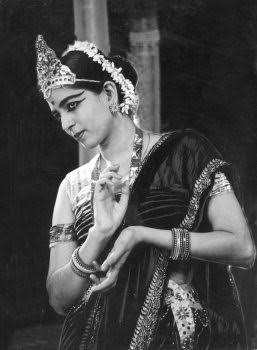
Rukmini Devi Arundale (29 February 1904 – 24 February 1986) was an eminent Indian classical dancer, choreographer, educationist, theosophist, and animal welfare activist. She is widely credited with reviving and popularizing Bharatanatyam, transforming it from a marginalized temple dance tradition into one of India’s most respected classical dance forms. Through her vision, she elevated Bharatanatyam to the international stage while preserving its artistic and spiritual essence.
In 1936, she founded Kalakshetra, one of India’s most prestigious institutions for classical dance, music, and fine arts. She also served as a Member of the Rajya Sabha and actively promoted animal welfare, education, and Indian cultural heritage. For her exceptional contributions to art and culture, the Government of India awarded her the Padma Bhushan in 1956. She later received several national and international honours and was even considered for the office of the President of India in 1977, an offer she respectfully declined.
2. Quick Facts
| Particular | Details |
|---|---|
| Full Name | Rukmini Devi Arundale |
| Birth Name | Rukmini Devi Nilakanta Sastri |
| Native Name | ருக்மிணி தேவி அருண்டேல் (Tamil) |
| Date of Birth | 29 February 1904 |
| Place of Birth | Madurai, Madras Presidency, British India (present-day Tamil Nadu, India) |
| Date of Death | 24 February 1986 |
| Place of Death | Chennai, Tamil Nadu, India |
| Nationality | Indian |
| Occupation / Profession | Bharatanatyam Dancer, Choreographer, Educationist, Animal Welfare Activist |
| Field of Achievement | Classical Dance, Performing Arts, Cultural Revival, Education |
| Years Active | 1928–1986 |
| Known For | Revival of Bharatanatyam, Founder of Kalakshetra |
3. Award Information
Award Name
Padma Bhushan
Award Category
Arts
Award Year
1956
Presented By
President of India, on behalf of the Government of India.
Date of Ceremony
The Padma Awards for 1956 were announced on 26 January 1956, and the investiture ceremony was held later that year at Rashtrapati Bhavan, New Delhi.
Citation / Official Reason
Rukmini Devi Arundale received the Padma Bhushan for her outstanding contributions to Indian classical dance, cultural preservation, education, and the revival of Bharatanatyam.
Previous Recipients (Optional)
The Padma Bhushan is awarded to multiple recipients annually; therefore, there is no single previous recipient.
Next Recipients
The award continued to be presented each year to distinguished personalities from the arts, literature, science, public affairs, and other fields.
4. Why Did She Receive the Award?
Rukmini Devi Arundale was awarded the Padma Bhushan because of her transformative role in preserving and promoting India’s cultural heritage.
Her contributions include:
- Reviving Bharatanatyam as a respected classical dance form.
- Founding Kalakshetra, a world-renowned institution for Indian arts.
- Promoting Indian classical music, dance, and traditional crafts.
- Preserving ancient dance traditions through research and education.
- Inspiring generations of dancers and artists.
- Advocating animal welfare and humane treatment of animals.
- Promoting Indian culture internationally through performances and lectures.
Her work ensured that Bharatanatyam became one of the most celebrated classical dance traditions in the world.
5. Early Life
Rukmini Devi was born on 29 February 1904 in Madurai, Tamil Nadu, into a scholarly Brahmin family. Her father, Neelakanta Sastri, was an engineer and a respected Sanskrit scholar, while her mother, Seshammal, encouraged an appreciation for music and culture.
She grew up in an intellectually rich environment and became associated with the Theosophical Society at an early age. Her exposure to international thinkers, artists, and philosophers shaped her vision of preserving India’s artistic traditions.
6. Education
Rukmini Devi received her early education at home and through institutions associated with the Theosophical Society in Adyar, Chennai.
Educational Background
- Home education with emphasis on literature, music, Sanskrit, and philosophy.
- Studied under leading scholars connected with the Theosophical Society.
- Learned Bharatanatyam from renowned guru Pandanallur Meenakshi Sundaram Pillai.
- Received training in Indian classical music, dance, philosophy, and culture.
Although she did not pursue formal university education, she became one of India’s most influential cultural educators.
7. Career Journey
Beginning of Her Dance Career
Inspired by the legendary Russian ballerina Anna Pavlova, Rukmini Devi decided to study Indian classical dance and dedicate her life to its revival.
Revival of Bharatanatyam
During the 1930s, Bharatanatyam was socially marginalized. Rukmini Devi reintroduced the dance to mainstream society by:
- Refining its stage presentation.
- Preserving its spiritual and artistic integrity.
- Designing elegant costumes inspired by temple sculptures.
- Creating innovative dance dramas based on Indian epics.
Founding of Kalakshetra
In 1936, she established Kalakshetra in Chennai, which became one of the world’s leading institutions for:
- Bharatanatyam
- Carnatic music
- Traditional crafts
- Sanskrit studies
- Indian theatre
Public Service
She served as a Member of the Rajya Sabha (1952–1956), where she advocated cultural preservation, education, and animal welfare.
8. Major Achievements
- Revived Bharatanatyam and restored its classical status.
- Founded Kalakshetra Foundation in 1936.
- Developed the modern Kalakshetra style of Bharatanatyam.
- Choreographed numerous dance dramas based on the Ramayana and other Indian epics.
- Promoted Indian handicrafts, textiles, and traditional stage design.
- Represented India at international cultural conferences.
- Served as a nominated member of the Rajya Sabha.
- Played a leading role in India’s animal welfare movement.
9. Contribution to the Nation
Rukmini Devi Arundale made remarkable contributions in several fields:
Indian Classical Dance
- Revived Bharatanatyam as a respected art form.
- Preserved traditional dance techniques.
Cultural Heritage
- Protected India’s artistic traditions.
- Encouraged preservation of temple arts.
Education
- Founded Kalakshetra to train future generations of artists.
- Promoted holistic arts education.
Animal Welfare
- Championed animal rights.
- Supported legislation for the prevention of cruelty to animals.
- Helped strengthen India’s animal welfare movement.
Her work greatly enhanced India’s cultural identity both nationally and internationally.
10. Other Awards and Honours
In addition to the Padma Bhushan (1956), Rukmini Devi Arundale received many prestigious honours:
- Padma Bhushan (1956)
- Sangeet Natak Akademi Award (1957)
- Sangeet Natak Akademi Fellowship (Akademi Ratna) (1967)
- Desikottama, honorary degree from Visva-Bharati University
- Queen Victoria Silver Medal from the Royal Society for the Prevention of Cruelty to Animals (RSPCA)
- Nominated Member of the Rajya Sabha (1952–1956)
11. Legacy and Influence
Rukmini Devi Arundale’s legacy continues through:
- Kalakshetra Foundation, one of the world’s leading performing arts institutions.
- The globally recognized Kalakshetra style of Bharatanatyam.
- Thousands of dancers trained under her educational philosophy.
- Renewed respect for Indian classical arts worldwide.
- Continued advocacy for animal welfare and cultural preservation.
She remains one of the most influential figures in the history of Indian performing arts.
12. Interesting Facts
- She was born on Leap Day (29 February).
- She married George Arundale, an English theosophist, in 1920.
- She was inspired by Russian ballerina Anna Pavlova to pursue Indian classical dance.
- She founded Kalakshetra in 1936.
- She was nominated to the Rajya Sabha.
- She was offered the opportunity to become the President of India in 1977 but declined.
- She was a passionate advocate for vegetarianism and animal rights.
13. Quotes
Some verified quotes attributed to Rukmini Devi Arundale include:
“The arts are the greatest treasures of a nation.”
“Education should help us discover the beauty and harmony within ourselves.”
These statements reflect her lifelong commitment to art, education, and cultural values.
14. Timeline
| Year | Event |
|---|---|
| 1904 | Born in Madurai, Tamil Nadu |
| 1920 | Married George Arundale |
| 1928 | Inspired by Anna Pavlova to pursue Bharatanatyam |
| 1935 | Gave her first public Bharatanatyam performance |
| 1936 | Founded Kalakshetra in Chennai |
| 1952–1956 | Served as a nominated Member of the Rajya Sabha |
| 1956 | Awarded the Padma Bhushan |
| 1957 | Received the Sangeet Natak Akademi Award |
| 1967 | Received the Sangeet Natak Akademi Fellowship |
| 1977 | Declined the proposal to become President of India |
| 1986 | Passed away on 24 February in Chennai |
15. References
- Government of India, Padma Awards Archives (1956).
- Kalakshetra Foundation – Official publications and archives.
- Sangeet Natak Akademi – Biography of Rukmini Devi Arundale.
- Parliament of India – Rajya Sabha records.
- Ministry of Culture, Government of India.
- Rukmini Devi: A Life by Leela Samson.
- Encyclopaedia of Indian Classical Dance and Performing Arts.
16. Related Personalities
- Anna Pavlova – Russian ballerina who inspired Rukmini Devi.
- George Arundale – Theosophist and her husband.
- Balasaraswati – Legendary Bharatanatyam dancer.
- Pandanallur Meenakshi Sundaram Pillai – Her Bharatanatyam guru.
- E. Krishna Iyer – Advocate for the revival of Bharatanatyam.
- M. S. Subbulakshmi – Carnatic vocalist and Bharat Ratna recipient.
- Yamini Krishnamurthy – Celebrated Bharatanatyam and Kuchipudi dancer.
17. Frequently Asked Questions (FAQ)
1. Who was Rukmini Devi Arundale?
Rukmini Devi Arundale was an Indian Bharatanatyam dancer, choreographer, educationist, and cultural reformer who revived Bharatanatyam and founded the Kalakshetra Foundation.
2. Why is Rukmini Devi Arundale famous?
She is famous for restoring Bharatanatyam to national and international prominence, establishing Kalakshetra, and promoting Indian classical arts and animal welfare.
3. Which award did Rukmini Devi Arundale receive?
She received the Padma Bhushan in 1956 for her outstanding contributions to Indian classical dance and culture.
4. What is Kalakshetra?
Kalakshetra, founded by Rukmini Devi Arundale in 1936 in Chennai, is one of India’s premier institutions for Bharatanatyam, Carnatic music, traditional arts, and cultural education.
5. Who inspired Rukmini Devi to become a dancer?
She was inspired by the renowned Russian ballerina Anna Pavlova, who encouraged her to explore and preserve India’s own classical dance traditions.
6. Did Rukmini Devi Arundale serve in Parliament?
Yes. She served as a nominated Member of the Rajya Sabha from 1952 to 1956.
7. Was Rukmini Devi Arundale offered the Presidency of India?
Yes. In 1977, she was reportedly approached as a consensus candidate for the office of the President of India, but she declined the offer.
8. Why is Rukmini Devi Arundale remembered today?
She is remembered as the visionary who revived Bharatanatyam, founded the Kalakshetra Foundation, advanced Indian cultural education, and championed animal welfare, leaving a lasting legacy in India’s artistic and cultural history.
About the Author


