

1. Introduction
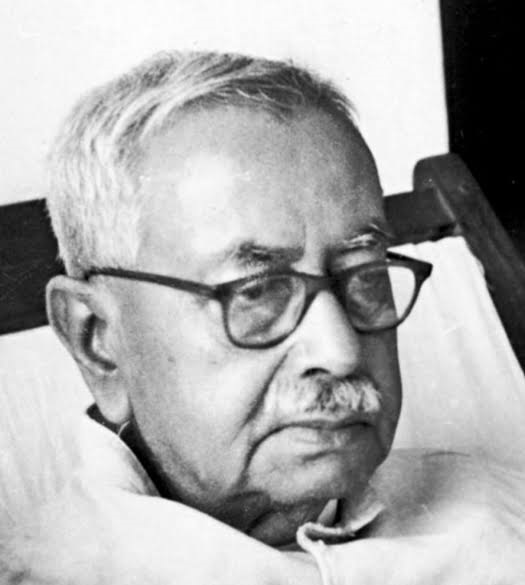
Rajshekhar Basu (16 March 1880 – 27 April 1960), popularly known by his pen name Parashuram, was a celebrated Indian writer, humorist, lexicographer, chemist, and translator. He is regarded as one of the greatest figures in Bengali literature for his witty short stories, satirical writings, and scholarly contributions to the Bengali language.
Apart from his literary achievements, Basu had a distinguished career as a chemist with Bengal Chemical & Pharmaceutical Works, founded by Acharya Prafulla Chandra Ray. He compiled the renowned Chalantika Bengali dictionary, translated major Sanskrit classics into Bengali, and enriched Bengali prose with his distinctive style. In recognition of his exceptional contributions to literature and education, the Government of India awarded him the Padma Bhushan in 1956.
2. Quick Facts
| Particular | Details |
|---|---|
| Full Name | Rajshekhar Basu |
| Pen Name | Parashuram (পরশুরাম) |
| Native Name | রাজশেখর বসু (Bengali) |
| Date of Birth | 16 March 1880 |
| Place of Birth | Bamunpara, Bardhaman (Burdwan), Bengal Presidency, British India (present-day Purba Bardhaman, West Bengal, India) |
| Date of Death | 27 April 1960 |
| Place of Death | Kolkata, West Bengal, India |
| Nationality | Indian |
| Occupation / Profession | Writer, Humorist, Lexicographer, Chemist, Translator |
| Field of Achievement | Bengali Literature, Lexicography, Translation, Chemistry |
| Years Active | 1903–1960 |
| Known For | Chalantika dictionary, satirical stories, Bengali translations of Sanskrit classics |
3. Award Information
Award Name
Padma Bhushan
Award Category
Literature and Education
Award Year
1956
Presented By
President of India, on behalf of the Government of India.
Date of Ceremony
The Padma Awards for 1956 were announced on 26 January 1956, and the investiture ceremony took place later that year at Rashtrapati Bhavan, New Delhi.
Citation / Official Reason
Rajshekhar Basu received the Padma Bhushan for his distinguished contributions to Bengali literature, lexicography, translation, and education.
Previous Recipients (Optional)
The Padma Bhushan is awarded to multiple individuals each year; therefore, there is no single previous recipient.
Next Recipients
The award has continued to be presented annually to distinguished personalities in literature, arts, science, public affairs, and other fields.
4. Why Did He Receive the Award?
Rajshekhar Basu was awarded the Padma Bhushan because of his exceptional contributions to Bengali language and literature.
His achievements include:
- Writing timeless humorous and satirical short stories.
- Compiling the influential Chalantika Bengali dictionary.
- Translating classical Sanskrit works into modern Bengali.
- Enriching Bengali prose with clarity and simplicity.
- Promoting Bengali language and literary scholarship.
- Contributing to science through his work as a chemist.
His literary and linguistic works continue to be widely read and respected.
5. Early Life
Rajshekhar Basu was born on 16 March 1880 in Bamunpara, Bardhaman district of present-day West Bengal. His father, Chandrasekhar Basu, served in the government, and the family later moved to Bihar, where Rajshekhar spent much of his childhood.
Growing up in an intellectually stimulating environment, he developed interests in science, literature, Sanskrit, and languages from an early age.
6. Education
Rajshekhar Basu was an outstanding student throughout his academic life.
Educational Background
- Completed his schooling in Darbhanga, Bihar.
- Graduated from Presidency College, Calcutta, with a degree in Chemistry.
- Earned a Master’s degree in Chemistry from the University of Calcutta.
- Studied Law and obtained a Bachelor of Law (B.L.) degree, although he chose not to practice.
His scientific education complemented his literary pursuits and shaped his analytical writing style.
7. Career Journey
Scientific Career
After completing his education, Basu joined Bengal Chemical & Pharmaceutical Works, founded by Acharya Prafulla Chandra Ray.
He later became:
- Chief Chemist.
- General Manager of the company.
He contributed significantly to the growth of India’s indigenous pharmaceutical industry.
Literary Career
Writing under the pen name Parashuram, he gained immense popularity for his humorous and satirical stories.
His literary works include:
- Short stories.
- Essays.
- Dictionaries.
- Literary translations.
- Language studies.
He also translated:
- Ramayana
- Mahabharata
- Meghaduta
- Bhagavad Gita
into accessible Bengali prose.
8. Major Achievements
- Awarded the Padma Bhushan (1956).
- Compiled the famous Bengali dictionary Chalantika.
- One of Bengal’s greatest humorists.
- Produced acclaimed Bengali translations of Sanskrit classics.
- Served as General Manager of Bengal Chemical & Pharmaceutical Works.
- Published numerous collections of short stories.
- Modernized Bengali lexicography.
- Promoted scientific thinking alongside literary excellence.
9. Contribution to the Nation
Rajshekhar Basu made lasting contributions in several fields.
Literature
- Enriched Bengali literature with satire and humor.
- Created enduring fictional characters and stories.
Language Development
- Standardized Bengali vocabulary through Chalantika.
- Simplified literary Bengali for common readers.
Translation
- Made Sanskrit classics accessible to modern audiences.
Science
- Strengthened India’s pharmaceutical industry through Bengal Chemical.
His work continues to influence both Bengali literature and language studies.
10. Other Awards and Honours
Besides the Padma Bhushan (1956), Rajshekhar Basu received several honours:
- Rabindra Puraskar (posthumously recognized among Bengal’s literary greats through his enduring contributions).
- Honorary recognition from literary organizations in Bengal.
- His works remain part of school and university curricula.
- Widely regarded as one of the finest Bengali prose stylists of the twentieth century.
11. Legacy and Influence
Rajshekhar Basu’s legacy continues through:
- The enduring popularity of Parashuram stories.
- Continued use of the Chalantika dictionary.
- Bengali translations of Sanskrit classics.
- Influence on later Bengali humorists and writers.
- Academic study of his literary style.
He remains one of the most respected figures in Bengali language and literature.
12. Interesting Facts
- He wrote under the pen name Parashuram.
- He was both a distinguished chemist and writer.
- His Chalantika dictionary remains an important reference work in Bengali.
- He worked closely with Acharya Prafulla Chandra Ray.
- His humorous stories are considered classics of Bengali literature.
- He translated the Ramayana, Mahabharata, and Bhagavad Gita into Bengali.
- He received the Padma Bhushan in 1956.
13. Quotes
There are no widely documented, verified quotations directly attributed to Rajshekhar Basu in authoritative sources that have achieved the same status as his literary works. For historical accuracy, it is best to quote passages from his published writings with proper attribution rather than attribute standalone sayings to him.
14. Timeline
| Year | Event |
|---|---|
| 1880 | Born in Bamunpara, Bardhaman, Bengal Presidency |
| 1900 | Graduated in Chemistry from Presidency College |
| 1903 | Joined Bengal Chemical & Pharmaceutical Works |
| 1922 | Published his first celebrated collection of humorous stories under the pen name Parashuram |
| 1930s | Compiled the Chalantika Bengali dictionary |
| 1940s–1950s | Published Bengali translations of Sanskrit classics |
| 1956 | Awarded the Padma Bhushan |
| 1960 | Passed away in Kolkata on 27 April |
15. References
- Government of India, Padma Awards Archives (1956).
- Padma Awards Official Portal, Government of India.
- Sahitya Akademi – Biography of Rajshekhar Basu.
- Bangiya Sahitya Parishad publications.
- University of Calcutta archives.
- Bengal Chemical & Pharmaceutical Works historical records.
- Dictionary of Indian Literature, Sahitya Akademi.
16. Related Personalities
- Acharya Prafulla Chandra Ray – Chemist and founder of Bengal Chemical.
- Rabindranath Tagore – Nobel laureate and Bengali poet.
- Sukumar Ray – Writer and humorist.
- Sharadindu Bandyopadhyay – Bengali novelist.
- Bibhutibhushan Bandyopadhyay – Novelist.
- Bankim Chandra Chattopadhyay – Pioneer of modern Bengali literature.
- Ishwar Chandra Vidyasagar – Educationist and linguist.
17. Frequently Asked Questions (FAQ)
1. Who was Rajshekhar Basu?
Rajshekhar Basu was an Indian writer, humorist, lexicographer, chemist, and translator, best known by his pen name Parashuram.
2. Why is Rajshekhar Basu famous?
He is famous for his witty Bengali short stories, the Chalantika Bengali dictionary, and his translations of Sanskrit classics such as the Ramayana, Mahabharata, and Bhagavad Gita.
3. Which award did Rajshekhar Basu receive?
He received the Padma Bhushan in 1956 for his distinguished contributions to literature and education.
4. What is Chalantika?
Chalantika is Rajshekhar Basu’s celebrated Bengali dictionary, widely regarded as one of the most authoritative and influential dictionaries in the Bengali language.
5. Why did he use the pen name “Parashuram”?
He adopted Parashuram as his literary pseudonym for his humorous and satirical writings, which became immensely popular among Bengali readers.
6. Was Rajshekhar Basu also a scientist?
Yes. He was a trained chemist and served as the Chief Chemist and later General Manager of Bengal Chemical & Pharmaceutical Works, contributing to India’s early pharmaceutical industry.
7. Which Sanskrit works did he translate into Bengali?
He translated several classics, including the Ramayana, Mahabharata, Bhagavad Gita, and Meghaduta, making them accessible to a wider Bengali readership.
8. Why is Rajshekhar Basu remembered today?
He is remembered as one of the greatest figures in Bengali literature for his humor, scholarship, linguistic contributions, and efforts to make classical Indian literature accessible to modern readers.
About the Author


