Introduction
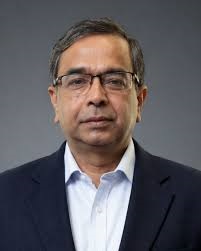
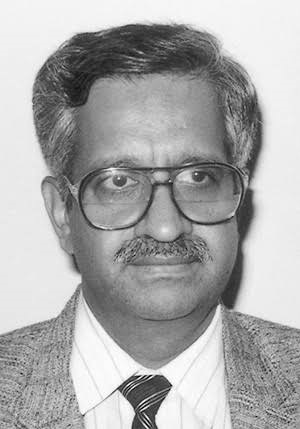
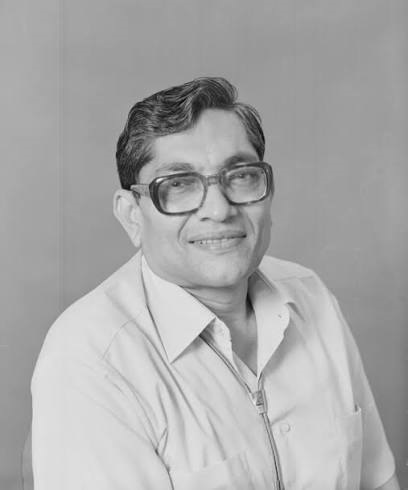
Devendra Lal was one of India’s most distinguished geophysicists and space scientists. He is best known for his pioneering work in cosmic rays, isotope geochemistry, geophysics, and space physics. His research helped scientists understand Earth’s atmosphere, climate history, geological processes, and the interaction between cosmic radiation and planetary materials. He is regarded as a leading figure in establishing modern geophysics and space science research in India.
Early Life and Education
Devendra Lal was born on February 14, 1929, in Varanasi, Uttar Pradesh, India. He showed an early aptitude for science and mathematics and pursued higher education in physics.
He completed his studies at Banaras Hindu University and later specialized in geophysics and cosmic ray research. His academic excellence and innovative approach to scientific problems soon earned him recognition among India’s emerging scientific community.
Scientific Career & Research
Devendra Lal spent much of his career at the Physical Research Laboratory, one of India’s premier research institutions. He later worked with several international scientific organizations and universities.
His research areas included:
- Geophysics
- Space Physics
- Cosmic Ray Physics
- Isotope Geochemistry
- Earth and Planetary Sciences
- Climate and Environmental Studies
He pioneered the use of cosmogenic isotopes produced by cosmic rays to study geological and environmental processes. His work provided valuable insights into the age of rocks, meteorites, groundwater systems, and Earth’s climatic history.
Major Discoveries and Inventions
Cosmogenic Isotope Research
Devendra Lal developed innovative methods using cosmogenic isotopes to determine geological ages and study Earth’s surface processes.
Cosmic Ray Studies
He made significant contributions to understanding how cosmic rays interact with Earth’s atmosphere and surface materials.
Geochronology Techniques
His research improved methods for dating rocks, sediments, and meteorites, helping scientists reconstruct Earth’s geological history.
Environmental and Climate Research
Lal used isotopic techniques to investigate climate change, ocean circulation, and environmental processes over long time scales.
Planetary Science Contributions
His work helped scientists understand the exposure ages of meteorites and planetary materials, contributing to planetary exploration studies.
Awards and Honours
Devendra Lal received numerous prestigious awards and recognitions, including:
- Shanti Swarup Bhatnagar Prize
- Padma Bhushan (1977)
- Fellow of the Indian National Science Academy
- Fellow of several international scientific academies
- Lifetime Achievement awards in geophysics and Earth sciences
- Numerous honorary doctorates from academic institutions
Later Life and Death
In his later years, Devendra Lal continued his research and mentoring activities, contributing to global scientific collaborations. He remained active in Earth and space science research well beyond retirement.
Devendra Lal passed away on December 1, 2012. His death marked the loss of one of India’s most influential geophysicists, but his scientific contributions continue to guide researchers worldwide.
Legacy and Impact
Devendra Lal’s work transformed the fields of geophysics, isotope geochemistry, and space physics. His innovative use of cosmogenic isotopes opened new avenues for studying Earth’s history, climate systems, and planetary processes.
His legacy includes:
- Establishing modern isotope geochemistry research in India.
- Advancing understanding of cosmic ray interactions.
- Improving geological and environmental dating techniques.
- Contributing to planetary science and meteorite studies.
- Mentoring generations of Earth and space scientists.
Today, his research methods remain widely used in geology, climatology, environmental science, and planetary exploration.
Conclusion
Devendra Lal was a pioneering geophysicist and space physicist whose groundbreaking research expanded our understanding of Earth and the cosmos. Through his innovative studies of cosmic rays, isotopes, and planetary materials, he helped bridge the fields of geophysics and space science. His contributions continue to influence scientific research around the world, making him one of India’s most respected scientists.
Short Blog Summary (200 Words)
Devendra Lal (1929–2012) was a pioneering Indian geophysicist and space physicist whose research transformed the understanding of Earth’s geological and environmental processes. He is best known for his work on cosmic rays, isotope geochemistry, and planetary science. Educated in India, he spent much of his career at the Physical Research Laboratory in Ahmedabad, where he conducted groundbreaking studies that earned international recognition.
One of Lal’s most significant achievements was developing techniques that used cosmogenic isotopes—rare isotopes produced by cosmic rays—to study the age of rocks, meteorites, groundwater, and geological formations. His research helped scientists better understand Earth’s climate history, environmental changes, and planetary evolution.
Lal also made important contributions to cosmic ray physics, investigating how high-energy particles from space interact with Earth’s atmosphere and surface. His innovative methods became essential tools in geochronology, environmental science, and planetary research.
Throughout his career, he received numerous honours, including the Padma Bhushan and the Shanti Swarup Bhatnagar Prize. Beyond his scientific discoveries, he mentored many young researchers and strengthened India’s position in Earth and space sciences.
Today, Devendra Lal is remembered as a visionary scientist whose work continues to influence geophysics, climate research, isotope studies, and planetary exploration worldwide.
About the Author