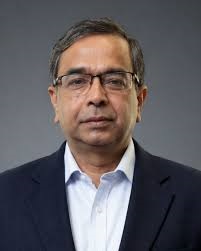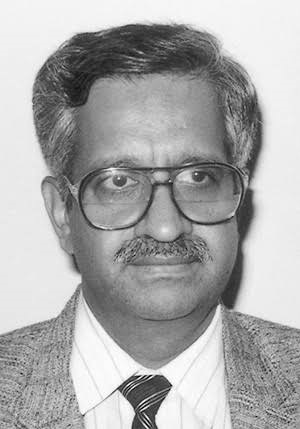

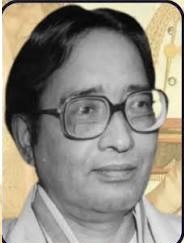
Introduction
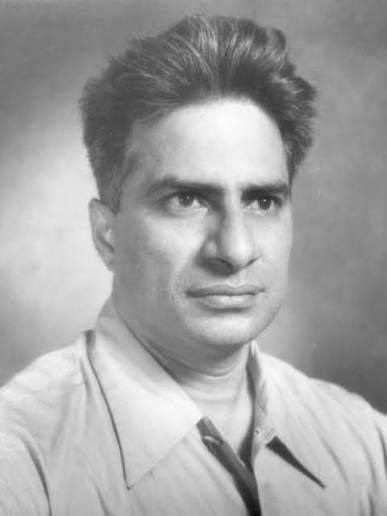
Debiprasad Chattopadhyaya was one of India’s most influential philosophers, historians of science, and intellectual historians. He is best known for his pioneering studies of ancient Indian philosophy, the history of science, and materialist traditions in India. Through his interdisciplinary research, he challenged conventional interpretations of Indian intellectual history and demonstrated that scientific thinking and rational inquiry have deep roots in Indian civilization. His writings continue to influence scholars in philosophy, history, and science studies.
Early Life and Education
Debiprasad Chattopadhyaya was born in Kolkata (then Calcutta), where he received his early education. He developed an interest in philosophy, history, and literature from a young age.
He pursued higher education in philosophy and became deeply interested in understanding the relationship between science, society, and philosophical thought. His academic training enabled him to combine historical research with philosophical analysis, making him a leading authority on the history of Indian science and philosophy.
Birth Date and Place
- Date of Birth: 19 November 1918
- Place of Birth: Kolkata
Scientific Career & Research
Although Debiprasad Chattopadhyaya was not a laboratory scientist, his scholarly work transformed the understanding of the history of science in India.
His research focused on:
- History of Indian science
- Indian philosophy
- Materialist traditions in ancient India
- Philosophy of science
- Ancient medicine and technology
- Social history of scientific knowledge
- Rationalism and scientific thought
He argued that scientific knowledge develops within its social, economic, and cultural contexts. His studies highlighted how Indian traditions in mathematics, astronomy, medicine, metallurgy, and philosophy contributed to the growth of scientific knowledge.
He also played an important role in promoting interdisciplinary studies that connected philosophy, history, archaeology, and science.
Major Discoveries and Contributions
Debiprasad Chattopadhyaya’s contributions were primarily scholarly rather than experimental. His major achievements include:
Revival of Materialist Philosophy
He brought renewed attention to the ancient Indian Lokayata (Cārvāka) school, emphasizing its rational and empirical approach to understanding the world.
History of Indian Science
He demonstrated that scientific inquiry in India evolved through observation, experimentation, and practical knowledge rather than solely through religious traditions.
Research on Ancient Medicine
His studies explored the scientific foundations of classical Indian medicine, showing how empirical practices contributed to the development of healthcare.
Interdisciplinary Scholarship
He integrated philosophy, history, sociology, and science to provide a comprehensive understanding of India’s intellectual heritage.
Influential Publications
Among his best-known books are:
- Lokayata: A Study in Ancient Indian Materialism
- Science and Society in Ancient India
- History of Science and Technology in Ancient India
These works remain important references for students of philosophy and the history of science.
Awards and Honours
Debiprasad Chattopadhyaya received several prestigious honours for his scholarly contributions.
Some notable recognitions include:
- Padma Bhushan (1998) for his contributions to literature and education.
- Fellowships and honorary memberships from national and international academic institutions.
- Recognition as one of India’s foremost historians of science and philosophers.
- His publications continue to be widely studied in universities across India and abroad.
Later Life and Death
In his later years, Debiprasad Chattopadhyaya continued writing, lecturing, and mentoring researchers. He remained actively engaged in promoting the study of Indian philosophy and the history of science.
- Date of Death: 8 May 1993
- Place of Death: Kolkata
His intellectual legacy continues through his writings and the many scholars influenced by his work.
Legacy and Impact
Debiprasad Chattopadhyaya’s work has had a lasting impact on the study of Indian philosophy and the history of science.
His legacy includes:
- Promoting a scientific and evidence-based understanding of Indian intellectual history.
- Reviving interest in rationalist and materialist traditions within Indian philosophy.
- Demonstrating the close relationship between science, society, and culture.
- Inspiring interdisciplinary research in philosophy, history, and science studies.
- Preserving and interpreting India’s scientific and philosophical heritage for future generations.
His writings continue to shape discussions on the origins and development of scientific thought in India.
Conclusion
Debiprasad Chattopadhyaya was a pioneering philosopher and historian of science whose research transformed the understanding of India’s intellectual and scientific traditions. By combining rigorous historical scholarship with philosophical analysis, he revealed the rich legacy of rational inquiry, materialist thought, and scientific knowledge in ancient India. His influential books and ideas continue to inspire scholars around the world, making him one of the most important figures in the study of the history of science and philosophy in India.
About the Author