Introduction
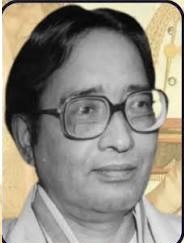
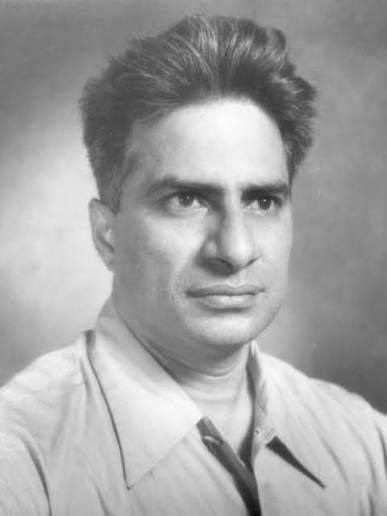
Damodar Dharmananda Kosambi, popularly known as D. D. Kosambi, was one of India’s most influential intellectuals of the twentieth century. He made remarkable contributions to mathematics, statistics, genetics, numismatics, archaeology, and the history of science. Kosambi is especially remembered for introducing a scientific and interdisciplinary approach to the study of Indian history. His work combined mathematics, archaeology, linguistics, and anthropology to reconstruct India’s past, making him a pioneer in the history of science and historical research.
Early Life and Education
Damodar Dharmananda Kosambi was born into a scholarly family. His father, Dharmananda Kosambi, was a renowned scholar of Buddhism and Pali literature. Because of his father’s academic pursuits, Kosambi spent part of his childhood in India and abroad, gaining exposure to different cultures and educational systems.
He received part of his education in the United States and later pursued higher studies at Harvard University. Although he did not complete a formal degree there, his exceptional ability in mathematics and independent scholarship laid the foundation for his future career.
Birth Date and Place
- Date of Birth: 31 July 1907
- Place of Birth: Goa
Scientific Career & Research
D. D. Kosambi began his career as a mathematician and later became one of India’s leading historians of science and culture.
He taught mathematics at institutions including:
- Fergusson College
- Tata Institute of Fundamental Research
His research covered several disciplines:
Mathematics
Kosambi made important contributions to:
- Differential geometry
- Statistics
- Probability theory
- Numerical analysis
The Kosambi–Karhunen–Loève theorem, developed independently by Kosambi, is an important mathematical concept used in statistics, machine learning, image processing, and data analysis.
Genetics
He introduced the Kosambi mapping function, which estimates genetic distances between genes based on recombination frequencies. This mapping function remains widely used in genetics and plant breeding.
History of Science
Kosambi revolutionized the study of Indian history by combining:
- Archaeology
- Numismatics (study of coins)
- Epigraphy (study of inscriptions)
- Literature
- Anthropology
- Economics
He argued that historical developments should be understood through scientific evidence and social change rather than mythology alone.
Major Discoveries and Inventions
Kosambi Mapping Function
One of his best-known scientific contributions is the Kosambi mapping function, an important statistical method in genetics for estimating genetic linkage between genes.
Kosambi–Karhunen–Loève Theorem
He independently contributed to what became known as the Kosambi–Karhunen–Loève theorem, widely used in statistics, signal processing, data compression, and artificial intelligence.
Scientific Study of Indian History
Kosambi transformed Indian historiography by introducing quantitative methods and interdisciplinary research, encouraging historians to use archaeological evidence, coins, inscriptions, and social analysis.
Numismatic Research
His studies of ancient Indian coins provided valuable insights into trade, economy, and political history.
Archaeological Contributions
Kosambi conducted extensive field surveys that helped explain the relationship between settlements, geography, and historical development.
Awards and Honours
Although D. D. Kosambi did not receive many formal awards during his lifetime, his scholarly achievements earned widespread recognition.
His honours include:
- Election as a Fellow of Indian Academy of Sciences.
- International recognition for contributions to mathematics and statistics.
- Recognition as one of India’s greatest historians of science and mathematics.
- His books and research continue to be widely studied in universities around the world.
Later Life and Death
In his later years, Kosambi continued his research on Indian history, archaeology, mathematics, and social science. He remained an independent thinker and published numerous influential books and research papers.
- Date of Death: 29 June 1966
- Place of Death: Mumbai
He passed away at the age of 58, leaving behind an extraordinary intellectual legacy.
Legacy and Impact
D. D. Kosambi’s influence extends across several disciplines.
His lasting contributions include:
- Establishing scientific methods in Indian historical research.
- Advancing mathematics, statistics, and genetics.
- Inspiring interdisciplinary research that combines science and the humanities.
- Promoting evidence-based historical analysis.
- Influencing generations of historians, archaeologists, mathematicians, and social scientists.
His major books, including An Introduction to the Study of Indian History and The Culture and Civilization of Ancient India in Historical Outline, remain foundational texts in Indian historiography.
Conclusion
D. D. Kosambi was one of India’s greatest polymaths, making lasting contributions to mathematics, genetics, statistics, archaeology, and the history of science. His pioneering use of scientific methods to study history transformed historical scholarship in India and continues to influence researchers across multiple disciplines. Through his interdisciplinary approach, rigorous analysis, and commitment to evidence-based inquiry, Kosambi demonstrated how science and the humanities can work together to deepen our understanding of the past. His legacy remains an inspiration to scholars worldwide.
About the Author