B. V. Sreekantan
Introduction
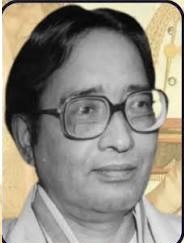
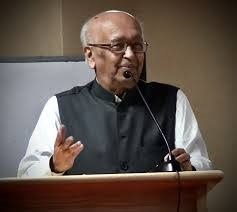
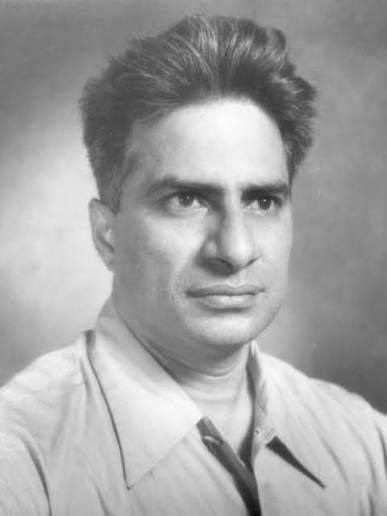
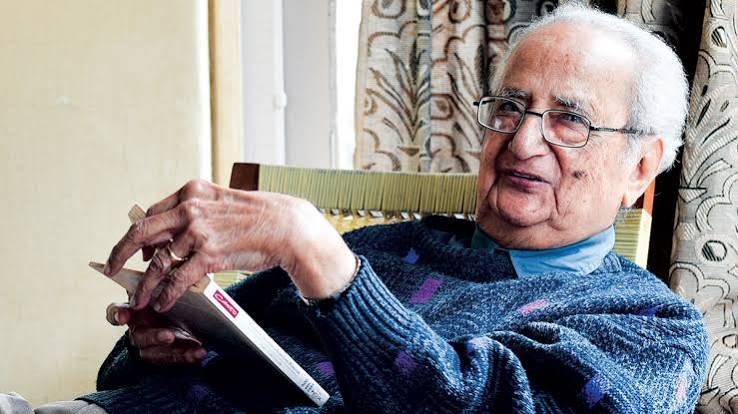
B. V. Sreekantan was a distinguished Indian experimental physicist known for his pioneering contributions to cosmic ray physics and high-energy particle research. He played a key role in developing India’s early capabilities in experimental physics and was closely associated with the growth of the Tata Institute of Fundamental Research (TIFR). His work helped advance the understanding of subatomic particles produced by cosmic rays in the Earth’s atmosphere.
Early Life and Education
B. V. Sreekantan was born in Karnataka, India, in 1925. From an early age, he showed strong interest in science and mathematics.
He completed his higher education in physics at the University of Mysore, where he developed a strong foundation in experimental and theoretical physics.
After his initial studies, he joined TIFR in Mumbai, where he began working under the guidance of leading scientists in India’s early nuclear and cosmic ray research programs.
Scientific Career & Research
Sreekantan’s scientific career was deeply connected with cosmic ray experiments and high-energy particle physics.
- Joined the Tata Institute of Fundamental Research (TIFR) and worked closely with Homi J. Bhabha’s research group.
- Conducted extensive research on cosmic ray showers in deep underground and high-altitude experiments.
- Worked on detecting and analyzing muons and other secondary particles produced by cosmic rays.
- Contributed to experimental setups in Kolar Gold Fields (KGF), one of the world’s deepest underground laboratories at the time.
- Later became a key leader in expanding India’s research in nuclear physics and space science.
He also served in several leadership roles at TIFR and helped shape India’s scientific research infrastructure.
Major Discoveries and Inventions
Although he did not focus on a single invention, his contributions were crucial in experimental physics:
- Advanced studies of cosmic ray muons and particle showers
- Contributions to underground cosmic ray experiments at KGF
- Development of experimental techniques in high-energy particle detection
- Helped establish India as a significant contributor to cosmic ray physics research
Awards and Honours
B. V. Sreekantan received several prestigious recognitions, including:
- Padma Bhushan for his contributions to science and engineering
- Padma Vibhushan (one of India’s highest civilian awards)
- Fellowship and leadership roles in major Indian science academies
- Recognition from national and international scientific institutions
Later Life and Death
In his later years, Sreekantan continued to remain active in science administration and research guidance. He contributed to shaping scientific policy and mentoring younger physicists in India.
He passed away in 2019, leaving behind a strong legacy in Indian experimental physics.
Legacy and Impact
B. V. Sreekantan’s legacy is deeply tied to the development of modern physics in India:
- Pioneer in cosmic ray and underground particle physics
- Key figure in establishing India’s experimental physics infrastructure
- Strengthened India’s position in global high-energy physics research
- Inspired generations of physicists through research and mentorship
- Played a major role in the growth of TIFR as a world-class research institute
Conclusion
B. V. Sreekantan remains one of India’s most respected experimental physicists. His work in cosmic ray physics and his leadership in scientific institutions helped shape modern Indian physics research. His legacy continues to influence new generations of scientists exploring the mysteries of particle physics and the universe.
About the Author