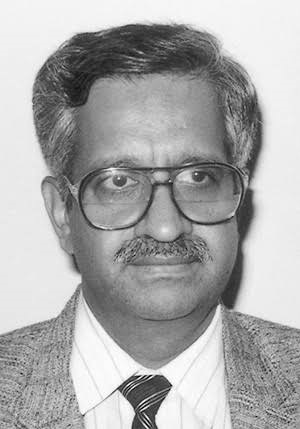
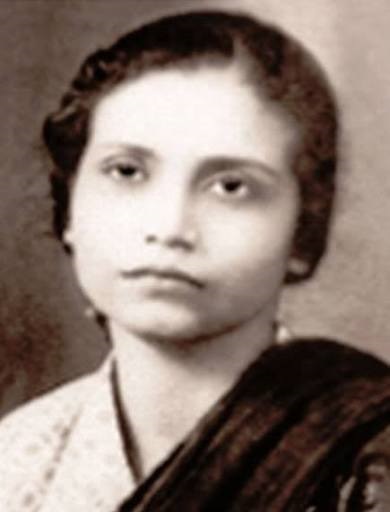
Bibha Chowdhuri
Introduction
Bibha Chowdhuri was one of the earliest Indian women physicists and a pioneering researcher in the field of cosmic rays and particle physics. At a time when women scientists were extremely rare in India and abroad, she made significant contributions to experimental physics using advanced techniques such as photographic emulsions to study high-energy particles from space. Her work helped strengthen early research in subatomic particle physics.
Early Life and Education
Bibha Chowdhuri was born in India in the early 20th century. She pursued her higher education in physics during a period when opportunities for women in science were limited.
She completed her academic training in physics at the University of Calcutta, where she was influenced by leading scientists of the time and developed a strong foundation in experimental physics. Her academic excellence enabled her to pursue advanced research abroad.
Scientific Career & Research
Bibha Chowdhuri’s scientific career focused on cosmic ray physics, a cutting-edge field during her time.
- She worked on cosmic ray showers, studying high-energy particles entering Earth’s atmosphere.
- She used photographic emulsion techniques to detect and analyze subatomic particle tracks.
- She conducted research in collaboration with leading international laboratories, including work in Manchester under Nobel laureate Patrick Blackett.
- Her research contributed to the early understanding of particle interactions before the development of modern particle accelerators.
After returning to India, she continued her scientific work and was associated with major research institutions such as the Tata Institute of Fundamental Research (TIFR).
Major Discoveries and Inventions
While Bibha Chowdhuri did not have a single widely credited “invention,” her scientific contributions were highly significant in early particle physics:
- Early experimental studies of cosmic ray particle showers
- Contributions to the detection of mesons (pions) in cosmic ray experiments
- Advancement of photographic emulsion techniques in India
- Strengthening India’s early research base in high-energy physics
Awards and Honours
Bibha Chowdhuri did not receive major mainstream national awards during her lifetime, largely due to the limited recognition of women scientists in her era. However, today she is increasingly acknowledged as:
- A pioneer among Indian women physicists
- A key contributor to early cosmic ray and particle physics research
- An inspirational figure in Indian scientific history
Modern scientific communities have begun to revisit and honor her legacy more widely.
Later Life and Death
In her later years, Bibha Chowdhuri continued to remain connected to scientific research and institutions in India. She lived a quiet life dedicated to science and passed away in the late 20th century. Despite limited recognition during her lifetime, her contributions have gained appreciation in recent years.
Legacy and Impact
Bibha Chowdhuri’s legacy is highly significant in Indian science:
- One of the first Indian women physicists in experimental particle physics
- Helped establish India’s early presence in cosmic ray research
- Inspired future generations of women in science and physics
- Recognized today as a forgotten pioneer whose work contributed to modern particle physics
Her life story highlights both the challenges and achievements of early women scientists in India and remains an important part of scientific history.
About the Author