
Introduction
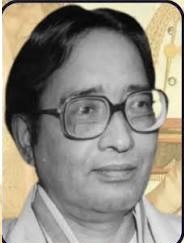
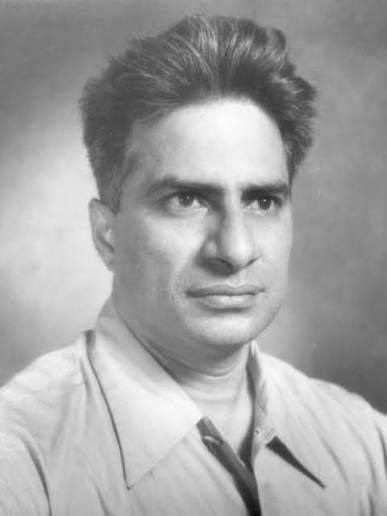
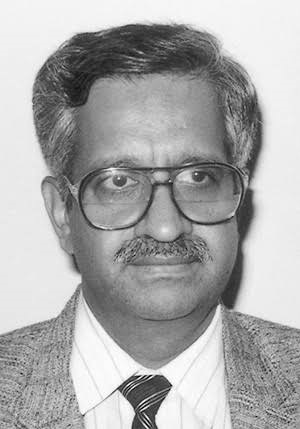
C. K. Majumdar was a distinguished Indian theoretical physicist known for his pioneering contributions to condensed matter physics, particularly in the field of quantum magnetism and spin systems. He is best remembered for the famous Majumdar–Ghosh model, which became a cornerstone in the study of one-dimensional quantum spin chains. His work significantly advanced the understanding of strongly correlated electron systems and quantum phase transitions.
Early Life and Education
Chanchal Kumar Majumdar (C. K. Majumdar) was born in India and pursued his early education with a strong foundation in science and mathematics. He completed his higher studies in physics at leading Indian institutions and developed a deep interest in theoretical physics.
During his academic journey, he was influenced by the growing field of quantum mechanics and statistical physics, which later shaped his research direction in condensed matter theory.
Scientific Career & Research
Majumdar built his scientific career in India and worked at prestigious institutions such as the Indian Association for the Cultivation of Science (IACS) and later contributed to the growth of theoretical physics research in India.
His research primarily focused on:
- Quantum spin systems
- Strongly correlated electron systems
- Statistical mechanics
- Low-dimensional magnetism
He collaborated with other leading physicists and helped establish India as an important center for theoretical condensed matter physics.
Major Discoveries and Inventions
Majumdar–Ghosh Model
His most famous contribution is the Majumdar–Ghosh model, developed with his collaborator. This model describes a one-dimensional spin-½ Heisenberg chain with next-nearest-neighbor interactions.
H=J∑i(Si⋅Si+1+21Si⋅Si+2)
This model is important because it provides an exactly solvable example of a quantum system showing dimerization and quantum frustration.
Key Contributions
- Explained quantum magnetic ordering in low-dimensional systems
- Advanced theoretical understanding of phase transitions
- Contributed to development of spin chain theory
- Influenced modern research in quantum materials and nanophysics
Awards and Honours
C. K. Majumdar received recognition for his outstanding contributions to physics, including:
- Fellowship of the Indian National Science Academy (INSA)
- Fellowship of the Indian Academy of Sciences
- High respect in the international condensed matter physics community
His work continues to be widely cited in modern physics research.
Later Life and Death
In his later years, Majumdar continued to contribute to theoretical physics research and mentored younger scientists. He remained active in academic discussions and research development until his death.
He passed away in 2000, leaving behind a strong scientific legacy in condensed matter physics.
Legacy and Impact
C. K. Majumdar’s work laid the foundation for modern research in:
- Quantum magnetism
- Spin chain systems
- Strongly correlated materials
- Quantum phase transitions
The Majumdar–Ghosh model remains a fundamental tool in theoretical physics and is still used in research and teaching worldwide.
His contributions helped position India as a strong contributor to global condensed matter physics research.
Conclusion
C. K. Majumdar was a visionary physicist whose theoretical insights transformed the understanding of quantum spin systems. His groundbreaking work continues to influence modern physics, especially in the study of quantum materials and condensed matter theory. His legacy remains alive through the many physicists and researchers inspired by his ideas.
About the Author