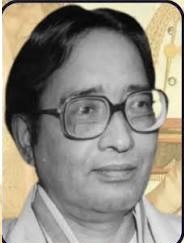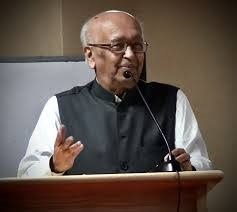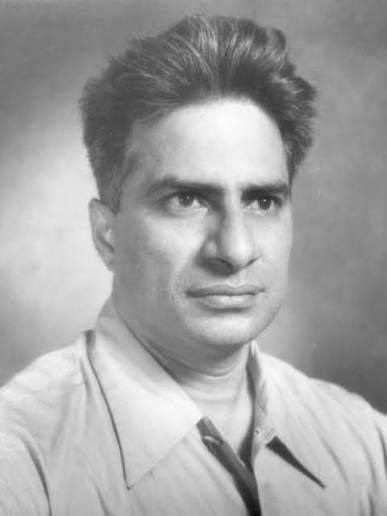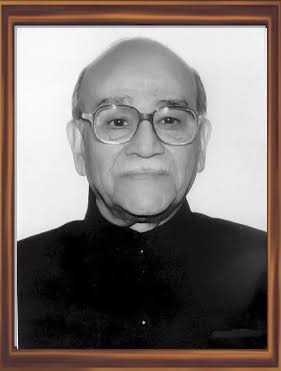
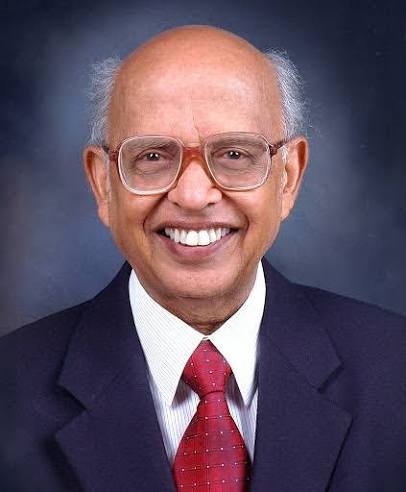
Govind Swarup was a visionary scientist who played a foundational role in establishing radio astronomy in India and designing some of the world’s most advanced radio telescope systems.
Introduction
Govind Swarup was one of India’s greatest radio astronomers, known for revolutionizing observational astronomy in the country. He is best remembered for conceiving and leading the development of the Giant Metrewave Radio Telescope (GMRT), one of the most powerful radio telescope arrays in the world.
Early Life and Education
- Born on 23 March 1929 in Uttar Pradesh, India.
- Completed his early education in India with a strong foundation in physics and mathematics.
- Earned higher education in physics, specializing in radio science.
- Went to the United States for advanced research training in radio astronomy.
Scientific Career & Research
- Worked at the Stanford University, where he gained expertise in radio astronomy techniques.
- Returned to India and joined the Tata Institute of Fundamental Research (TIFR).
- Established India’s radio astronomy group and laid the foundation for large-scale radio telescope development.
- Founded and developed the National Centre for Radio Astrophysics (NCRA) near Pune.
- Led India’s entry into global radio astronomy research.
Major Discoveries and Inventions
- Designed and developed the Giant Metrewave Radio Telescope (GMRT) near Pune.
- Advanced low-frequency radio astronomy techniques.
- Contributed to studies of pulsars, galaxies, and cosmic radio sources.
- Developed innovative antenna array configurations used globally.
- Helped India become a world leader in metre-wavelength radio astronomy.
Awards and Honours
- Received national and international recognition for scientific contributions.
- Awarded prestigious civilian honors including the Padma Shri and Padma Bhushan.
- Elected Fellow of major scientific academies in India and abroad.
- Honored for building world-class astronomical infrastructure in India.
Later Life and Death
- Continued active involvement in research and mentoring young scientists after retirement.
- Served as an inspiration and guide for India’s astronomy community.
- Passed away on 7 September 2020 in Pune, India.
Legacy and Impact
- Known as the father of radio astronomy in India.
- His work led to the establishment of the globally recognized GMRT facility.
- Built the foundation for modern radio astronomy research in India.
- Inspired generations of astrophysicists and engineers.
- His legacy continues through upgraded facilities and ongoing international collaborations.
About the Author