Early Life and Education
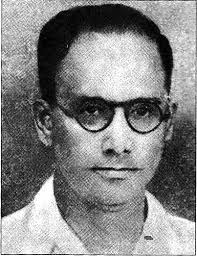
A. M. Saravanam was born in 1902 in Udhagamandalam (Ooty), Tamil Nadu. He belonged to a socially and economically modest background and spent his early years in the Nilgiris region. Despite limited educational opportunities available to him, he completed his schooling up to the eighth standard.
From an early age, Saravanam developed an interest in public affairs and the nationalist movement that was gaining momentum across India. His experiences growing up under British colonial rule inspired him to participate actively in the struggle for independence.
Education & Skills
Although A. M. Saravanam did not receive higher formal education, he acquired practical knowledge and leadership abilities through social work and political activism. His notable skills included:
- Strong organizational and leadership capabilities.
- Effective communication and public mobilization.
- Commitment to Gandhian ideals of simplicity and service.
- Expertise in community welfare initiatives.
- Experience in agricultural and business activities as an agro-businessman.
His dedication and administrative abilities enabled him to hold several important positions within the Congress organization in the Nilgiris district.
Contribution to Tamil Literature
A. M. Saravanam was not primarily known as a Tamil literary figure. Unlike prominent Tamil poets and writers of his era, his contributions lay mainly in political and social activism.
However, through his speeches and public engagements, he encouraged patriotic values and social awareness among the Tamil-speaking population. His efforts helped spread nationalist ideas at the grassroots level, indirectly supporting the cultural awakening associated with the freedom movement.
Role in India’s Freedom Movement
Saravanam played a significant role in the Indian freedom struggle in the Nilgiris region. He joined the Indian National Congress in 1932 and later served as:
- Secretary of the Nilgiris District Congress,
- President of the Nilgiris District Congress,
- Leader within the Ooty Town Congress organization.
One of his notable contributions was organizing Mahatma Gandhi’s visit to the Nilgiris in 1934, during which Gandhi interacted with local communities and promoted the ideals of social equality.
Saravanam actively participated in the Quit India Movement of 1942. Due to his involvement in anti-British activities, he was arrested several times and imprisoned in various jails, including those in Ooty, Coimbatore, Tiruchirappalli, Vellore, and Madras.
His patriotism was so profound that when Subhas Chandra Bose popularized the slogan “Jai Hind,” Saravanam named his son Jaihind Rajan as an expression of nationalist pride.
Personal Life
A. M. Saravanam was married to Mareyayee Ammal, who also supported the nationalist cause and participated in freedom-related activities. The couple shared a strong commitment to public service and social reform.
Despite opportunities to pursue political office after independence, Saravanam remained devoted to community welfare. He was associated with initiatives aimed at improving the lives of marginalized groups and workers.
Following India’s independence, he declined certain political positions due to personal and family considerations, reflecting his humility and selflessness.
Death
The death of his close associate, K. Kamaraj, deeply affected Saravanam. Shortly thereafter, A. M. Saravanam passed away on 7 December 1975 at the age of 73.
In recognition of his services to the nation, he was honoured by the Government of India as a freedom fighter. His contributions continue to be remembered in the Nilgiris region.
Conclusion
A. M. Saravanam was an unsung hero of India’s independence movement whose life exemplified courage, dedication, and public service. Although he did not gain widespread national recognition, his efforts in organizing Congress activities, participating in the Quit India Movement, enduring imprisonment, and promoting Gandhian values significantly contributed to the struggle against British rule.
His story serves as a reminder that India’s freedom was achieved not only through the efforts of nationally celebrated leaders but also through the sacrifices of countless regional activists like A. M. Saravanam. His commitment to justice, patriotism, and social welfare continues to inspire future generations.
About the Author