Introduction
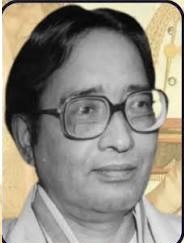
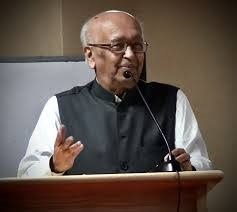
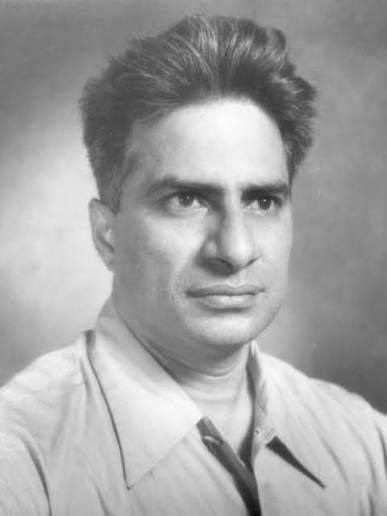
Vinod Kumar Gaur is one of India’s most respected geophysicists, renowned for his pioneering contributions to seismology, geodesy, earthquake science, and geophysics. Throughout his distinguished career, he has significantly advanced the understanding of the Earth’s structure, tectonic movements, and earthquake hazards in the Indian subcontinent. His research has played a crucial role in improving earthquake monitoring, seismic hazard assessment, and geophysical exploration. As a scientist, educator, and scientific administrator, Gaur has greatly influenced India’s Earth science research and policy development.
Early Life and Education
Vinod Kumar Gaur was born in 1940 in India. From an early age, he developed a strong interest in mathematics, physics, and Earth sciences. His curiosity about natural phenomena inspired him to pursue higher education in geophysics.
He completed his undergraduate studies in physics before specializing in geophysics at the postgraduate level. His advanced academic training provided him with expertise in:
- Seismology
- Geodesy
- Solid Earth Physics
- Mathematical Geophysics
- Earthquake Mechanics
His excellent academic performance paved the way for a successful scientific career in India’s premier research institutions.
Scientific Career & Research
Vinod Kumar Gaur spent much of his scientific career at the National Geophysical Research Institute (NGRI), Hyderabad, one of India’s leading Earth science research organizations under the Council of Scientific and Industrial Research (CSIR).
Over several decades, he held numerous important scientific and administrative positions, including:
- Senior Scientist
- Director of NGRI
- Scientific advisor to national committees
- Member of several national science academies
- Chairperson of scientific advisory panels
His research interests covered numerous branches of Earth science, including:
Earthquake Seismology
Gaur extensively studied earthquake generation, seismic wave propagation, and crustal deformation across the Indian subcontinent.
His research helped scientists better understand:
- Earthquake sources
- Seismic fault systems
- Plate boundary interactions
- Himalayan tectonics
Geodesy
One of his major research areas was geodesy, which measures the Earth’s size, shape, gravity field, and crustal movements.
His work improved understanding of:
- Continental drift
- Plate motion
- Crustal deformation
- Surface displacement before and after earthquakes
Indian Plate Tectonics
He conducted important investigations into the movement of the Indian tectonic plate, especially its collision with the Eurasian Plate that created the Himalayas.
His studies explained:
- Mountain-building processes
- Active fault zones
- Earthquake-prone regions
- Stress accumulation in Earth’s crust
Seismic Hazard Assessment
Gaur strongly promoted scientific earthquake hazard mapping across India.
His work contributed to:
- Identification of seismic zones
- Earthquake-resistant infrastructure planning
- Risk reduction strategies
- Public safety policies
Deep Earth Structure
Using seismic observations, he investigated the Earth’s interior, including:
- Crust
- Upper mantle
- Lithosphere
- Deep geological structures
His studies improved understanding of India’s geological evolution.
Scientific Leadership
As Director of NGRI, he expanded research in:
- Geothermal energy
- Gravity surveys
- Magnetic studies
- Exploration geophysics
- Environmental geophysics
He encouraged interdisciplinary Earth science research involving geology, physics, engineering, and remote sensing.
Major Discoveries and Contributions
Although geophysics often advances through collaborative research rather than single inventions, Vinod Kumar Gaur made several influential scientific contributions.
1. Advances in Indian Earthquake Science
He improved scientific understanding of:
- Earthquake mechanisms
- Seismic energy release
- Active tectonic regions
- Crustal stress accumulation
2. Himalayan Seismic Research
His investigations of Himalayan tectonics provided valuable insights into:
- Active fault systems
- Plate convergence
- Earthquake recurrence
- Mountain evolution
3. Crustal Deformation Studies
He used geodetic observations to measure deformation occurring within Earth’s crust.
These studies helped identify:
- Slowly accumulating tectonic strain
- Fault movement
- Earthquake potential
4. National Seismic Monitoring
Gaur played an important role in strengthening India’s:
- Seismic observatories
- Earthquake data collection
- Seismic instrumentation
- National earthquake databases
5. Geophysical Exploration
His work supported exploration of:
- Mineral resources
- Groundwater
- Oil and gas prospects
- Geothermal resources
6. Earthquake Hazard Mitigation
He advocated integrating scientific research into disaster management through:
- Hazard maps
- Engineering recommendations
- Public awareness
- Government policy advice
Awards and Honours
Vinod Kumar Gaur has received numerous prestigious awards and recognitions for his contributions to geophysics and Earth sciences.
Some of the major honours include:
- Shanti Swarup Bhatnagar Prize for Science and Technology (Earth, Atmosphere, Ocean and Planetary Sciences) for outstanding contributions to geophysics.
- Fellow of the Indian National Science Academy (INSA).
- Fellow of the Indian Academy of Sciences (IASc).
- Fellow of the National Academy of Sciences, India (NASI).
- Held senior leadership positions within the Council of Scientific and Industrial Research (CSIR).
- Served on several national committees dealing with earthquake science, geophysics, and disaster management.
Later Life and Death
After retiring from active administrative responsibilities, Vinod Kumar Gaur continued contributing to scientific research, national policy discussions, and mentoring young Earth scientists.
He remained actively involved in:
- Scientific advisory committees
- Earthquake hazard research
- Science policy
- Academic lectures
- Research collaborations
As of the latest publicly available information, Vinod Kumar Gaur is living and continues to be recognized as a senior statesman of Indian geophysics.
Legacy and Impact
Vinod Kumar Gaur’s legacy extends across Indian geophysics, earthquake science, and scientific leadership.
His contributions have had lasting impacts on:
Modern Seismology
His research has enhanced understanding of earthquake generation and seismic hazards in India.
Disaster Risk Reduction
His work has supported the development of safer building practices, improved seismic zoning, and national disaster preparedness.
Earth Science Research
He strengthened India’s capabilities in geodesy, tectonics, and geophysical exploration through institutional leadership and scientific innovation.
Scientific Leadership
As Director of NGRI, he helped expand research infrastructure and foster interdisciplinary collaboration in Earth sciences.
Mentorship
He has guided numerous researchers, many of whom have become leading scientists in seismology, geodesy, and geophysics.
International Recognition
His publications and collaborations have contributed to the global understanding of plate tectonics and earthquake processes, particularly in the Himalayan region.
Conclusion
Vinod Kumar Gaur is widely regarded as one of India’s foremost geophysicists, whose work in seismology, geodesy, and tectonics has significantly advanced the understanding of Earth’s dynamic processes. His research on earthquakes, crustal deformation, and seismic hazards has informed both scientific inquiry and public policy, contributing to improved disaster preparedness and Earth science research in India. Through his scientific achievements, institutional leadership, and mentorship, Gaur has left an enduring legacy that continues to inspire geophysicists and Earth scientists worldwide.
About the Author