Introduction
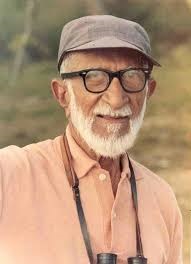
Dr. Salim Moizuddin Abdul Ali (1896–1987), popularly known as the “Birdman of India,” was India’s most renowned ornithologist and naturalist. His pioneering studies on Indian birds transformed ornithology from a hobby into a scientific discipline in India. Through extensive field surveys, meticulous observations, and influential books, Salim Ali significantly advanced the understanding of bird diversity, behavior, ecology, and conservation. His work inspired generations of birdwatchers, researchers, and environmentalists, making him one of India’s greatest scientists in the field of wildlife biology.
Early Life and Education
Salim Ali was born on November 12, 1896, in Bombay (now Mumbai), Maharashtra, into a Suleimani Bohra Muslim family. He lost both his parents at a young age and was raised by his uncle and aunt.
His fascination with birds began when, as a child, he shot a small sparrow with an air gun and took it to the Bombay Natural History Society (BNHS) for identification. There, the society’s secretary, W. S. Millard, introduced him to the fascinating world of ornithology, sparking a lifelong passion.
Salim Ali graduated from St. Xavier’s College, Bombay, but unlike many scientists, he received most of his specialized ornithological training through field experience. In 1928–29, he studied bird taxonomy under Professor Erwin Stresemann at the Berlin Zoological Museum in Germany, where he learned modern scientific methods of bird classification and research.
Scientific Career & Research
After returning to India, Salim Ali devoted his life to studying the country’s birdlife. He worked closely with the Bombay Natural History Society (BNHS) and conducted numerous bird surveys across India.
His scientific career involved extensive expeditions to regions including:
- The Western Ghats
- The Himalayas
- Rajasthan
- Kerala
- Sikkim
- Kashmir
- Arunachal Pradesh
- The Andaman and Nicobar Islands
His surveys documented hundreds of bird species, their habitats, migration routes, nesting behavior, and ecological importance.
Salim Ali also emphasized that birds are excellent indicators of ecosystem health and advocated scientific conservation long before environmental protection became a global concern.
Major Discoveries and Contributions
1. Comprehensive Bird Surveys of India
Salim Ali conducted the first systematic bird surveys across many Indian states and princely kingdoms. His research produced reliable records of bird populations and distributions, greatly expanding scientific knowledge of Indian biodiversity.
2. Popularization of Birdwatching
Before Salim Ali, bird study in India was largely limited to collecting specimens. He encouraged observing birds in their natural habitats using binoculars and field notes, making birdwatching accessible to both scientists and the general public.
3. The Book of Indian Birds
His book “The Book of Indian Birds” became the most popular field guide for bird enthusiasts. Written in simple language with practical identification tips, it introduced thousands of Indians to birdwatching and remains a classic reference.
4. Handbook of the Birds of India and Pakistan
Along with American ornithologist S. Dillon Ripley, Salim Ali authored the monumental 10-volume “Handbook of the Birds of India and Pakistan.”
This comprehensive work describes:
- Bird identification
- Distribution
- Habitat
- Breeding
- Migration
- Behavior
It remains one of the most authoritative references on South Asian birds.
5. Bird Conservation and Wildlife Protection
Salim Ali strongly advocated protecting wetlands, forests, and bird habitats. His recommendations influenced the establishment and protection of several important bird sanctuaries and national parks in India.
He played a significant role in raising awareness about conserving:
- Bharatpur Bird Sanctuary (now Keoladeo National Park)
- Silent Valley forests
- Various wetlands critical for migratory birds
Awards and Honours
Salim Ali received numerous national and international honours for his contributions to ornithology and conservation, including:
- Padma Bhushan (1958) by the Government of India
- Padma Vibhushan (1976), India’s second-highest civilian award
- J. Paul Getty International Prize for Conservation
- Honorary Doctorates from several universities
- Fellow of numerous scientific societies worldwide
Many institutions, bird sanctuaries, museums, and research centers have been named in his honour.
Later Life and Death
Even in his later years, Salim Ali remained active in research, conservation, and writing. He continued to mentor young ornithologists and participated in wildlife conservation efforts throughout India.
His autobiography, “The Fall of a Sparrow,” published in 1985, provides an inspiring account of his life, scientific discoveries, and passion for birds.
Salim Ali passed away on June 20, 1987, in Mumbai, Maharashtra, at the age of 90.
His death marked the loss of one of India’s greatest naturalists, but his scientific legacy continues to inspire conservationists around the world.
Legacy and Impact
Salim Ali transformed ornithology in India through scientific research, public education, and conservation advocacy.
His lasting legacy includes:
- Establishing ornithology as a respected scientific discipline in India.
- Inspiring generations of birdwatchers and wildlife biologists.
- Producing the first comprehensive scientific surveys of Indian birds.
- Promoting bird conservation and habitat protection.
- Strengthening the role of the Bombay Natural History Society in wildlife research.
- Influencing environmental policies and protected-area management.
- Contributing significantly to biodiversity conservation in South Asia.
Today, his books remain essential references, and countless bird enthusiasts continue to follow the methods he pioneered.
Conclusion
Salim Ali, affectionately known as the “Birdman of India,” dedicated his life to understanding and protecting the rich birdlife of the Indian subcontinent. Through decades of field research, groundbreaking publications, and tireless conservation efforts, he transformed the study of birds in India and inspired a nationwide appreciation for nature. His scientific contributions continue to shape ornithology, ecology, and wildlife conservation, ensuring that his legacy lives on in every bird sanctuary, research institution, and birdwatcher who values India’s remarkable avian diversity.
About the Author