Introduction
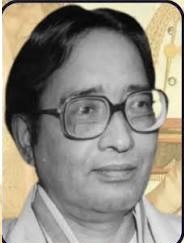
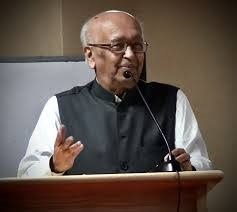
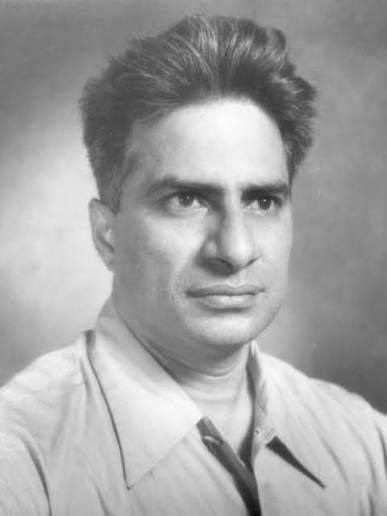
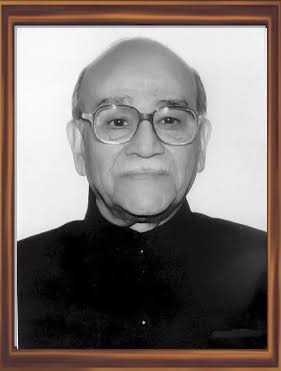
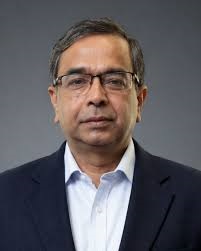
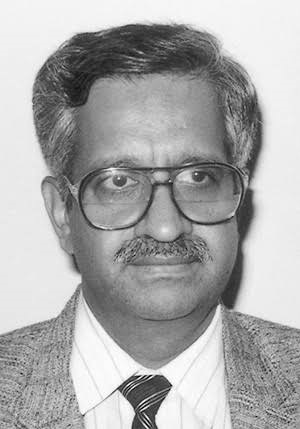
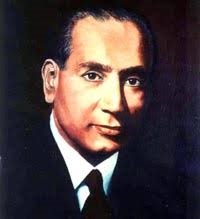
Professor Birbal Sahni (1891–1949) was a pioneering Indian paleobotanist, geologist, and botanist, widely regarded as the Father of Paleobotany in India. His groundbreaking research on fossil plants revolutionized the study of ancient vegetation and contributed significantly to understanding Earth’s geological history, plant evolution, and the origin of the Indian subcontinent’s flora. Sahni combined botany with geology to establish paleobotany as an important scientific discipline in India. His work earned international recognition, and the institute he founded continues to be one of the world’s leading centers for fossil plant research.
Early Life and Education
Birbal Sahni was born on November 14, 1891, in Bhera, Shahpur District, Punjab (now in Pakistan). His father, Professor Ruchi Ram Sahni, was a distinguished scientist and educator who encouraged scientific curiosity from an early age.
Sahni completed his early education in Lahore before joining the Government College, Lahore. He later moved to England and studied at Emmanuel College, University of Cambridge, where he specialized in botany under the renowned paleobotanist Professor Albert Charles Seward.
He earned his degree in Natural Sciences and later received a Doctor of Science (D.Sc.) from the University of London. His education at Cambridge laid the foundation for his lifelong interest in fossil plants and evolutionary biology.
Scientific Career & Research
After returning to India, Birbal Sahni taught botany at Banaras Hindu University and later at the University of Lucknow, where he established one of India’s foremost centers for botanical and paleobotanical research.
His research focused on:
- Fossil plants of the Indian subcontinent
- Plant evolution
- Geological history of India
- Fossil forests
- Ancient climate and ecosystems
- Gymnosperm evolution
Sahni conducted extensive fieldwork across India, collecting fossil specimens from regions such as the Rajmahal Hills, the Gondwana formations, and the Deccan Plateau. His interdisciplinary approach combined botany, geology, archaeology, and paleontology to reconstruct the history of ancient plant life.
In 1946, he founded the Institute of Paleobotany in Lucknow, now known as the Birbal Sahni Institute of Palaeosciences (BSIP), which remains a premier research institution.
Major Discoveries and Contributions
1. Pioneer of Paleobotany in India
Birbal Sahni established paleobotany as a scientific discipline in India. His systematic study of fossil plants provided valuable insights into the evolution of vegetation over millions of years.
2. Discovery of Pentoxylales
One of Sahni’s most significant contributions was the discovery and description of the extinct plant group Pentoxylales.
This remarkable fossil group displayed characteristics of several gymnosperm groups, helping scientists better understand the evolutionary relationships among ancient seed plants.
3. Research on Gondwana Flora
Sahni conducted extensive studies on the Gondwana fossil flora, which flourished over 250 million years ago.
His research helped explain:
- Ancient continental movements
- The geological history of India
- Evolution of seed plants
- Distribution of fossil vegetation across southern continents
These studies later supported ideas related to continental drift and plate tectonics.
4. Fossil Wood and Plant Anatomy
Sahni developed advanced methods for studying fossilized wood and plant tissues.
His microscopic investigations revealed:
- Internal structures of fossil plants
- Growth patterns
- Reproductive organs
- Evolutionary adaptations
His work greatly improved the classification of extinct plant species.
5. Contributions to Archaeology and Numismatics
Beyond paleobotany, Sahni also researched ancient Indian archaeology and numismatics (the study of coins).
He investigated:
- Ancient coin-minting techniques
- Historical metallurgy
- Archaeological artifacts
His multidisciplinary interests demonstrated his broad scientific expertise.
Awards and Honours
Birbal Sahni received numerous national and international honours during his distinguished career, including:
- Fellow of the Royal Society (FRS) (1936), one of the highest honors for a scientist.
- President of the Indian Science Congress (1940).
- Founder of the Institute of Paleobotany, Lucknow (1946).
- Honorary memberships in several international botanical and geological societies.
- Numerous academic recognitions for his pioneering contributions to paleobotany.
Today, the Birbal Sahni Institute of Palaeosciences (BSIP) in Lucknow bears his name in recognition of his lasting scientific legacy.
Later Life and Death
During the final years of his life, Birbal Sahni focused on expanding paleobotanical research and developing the Institute of Paleobotany into a world-class research center.
Unfortunately, he passed away suddenly from a heart attack on April 10, 1949, in Lucknow, Uttar Pradesh, at the age of 57, just days after laying the foundation for the institute he had envisioned.
Although his life was relatively short, his scientific achievements had a profound and lasting impact on botany and geology.
Legacy and Impact
Birbal Sahni’s contributions transformed the study of fossil plants and Earth’s ancient ecosystems.
His enduring legacy includes:
- Establishing paleobotany as a recognized scientific discipline in India.
- Advancing knowledge of fossil plants and plant evolution.
- Improving understanding of Gondwana flora and India’s geological history.
- Discovering the extinct plant group Pentoxylales.
- Founding India’s premier institute for paleobotanical research.
- Inspiring generations of botanists, geologists, paleontologists, and evolutionary biologists.
- Promoting interdisciplinary research linking botany, geology, and archaeology.
His research continues to support studies in paleoclimate, biodiversity, plant evolution, and Earth’s geological past.
Conclusion
Professor Birbal Sahni was one of India’s greatest botanists and paleobotanists, whose pioneering work laid the foundation for fossil plant research in the country. His discoveries expanded scientific understanding of ancient vegetation, plant evolution, and geological history, while the research institute he established continues to contribute to global paleoscientific knowledge. Remembered as the Father of Paleobotany in India, Birbal Sahni’s dedication, innovation, and scientific excellence remain an inspiration to researchers worldwide.
About the Author