Introduction
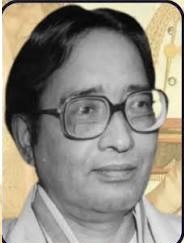
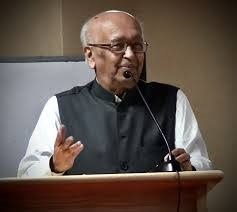
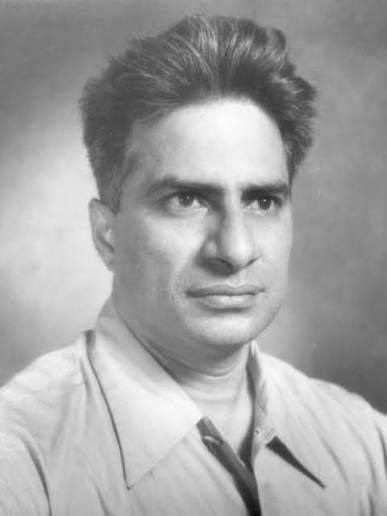
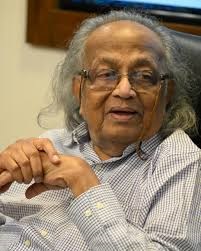
Sethunathasarma Krishnaswami (1945–2015), popularly known as S. Krishnaswami or “Swami,” was one of India’s most distinguished geochemists and oceanographers. He made pioneering contributions to low-temperature geochemistry, marine geochemistry, isotope geochemistry, and Earth surface processes. His research transformed the understanding of how rivers, oceans, sediments, and climate interact over geological timescales.
Working primarily at the Physical Research Laboratory (PRL), Ahmedabad, he became internationally recognized for applying radioactive and stable isotopes to study weathering, erosion, sediment transport, ocean chemistry, and environmental change. His work has had lasting importance in geology, oceanography, climate science, and environmental research.
Early Life and Education
Sethunathasarma Krishnaswami was born on 21 May 1945 in Thiruvananthapuram, Kerala, India.
He completed his undergraduate studies at the University of Kerala before joining the Bhabha Atomic Research Centre (BARC) Training School. His early scientific training in nuclear techniques laid the foundation for his future work in isotope geochemistry.
He later joined the Tata Institute of Fundamental Research (TIFR) under the guidance of renowned geophysicist Devendra Lal, earning his Ph.D. from the University of Bombay in 1974.
Following his doctoral studies, he pursued postdoctoral research at two world-renowned institutions:
- Scripps Institution of Oceanography, USA, under Harmon Craig
- Yale University, USA, under K. K. Turekian
These experiences exposed him to advanced techniques in marine and isotope geochemistry, which he later introduced and expanded in India.
Scientific Career & Research
In 1973, Krishnaswami joined the Physical Research Laboratory (PRL), Ahmedabad, where he spent almost his entire scientific career.
He served in several important positions, including:
- Senior Scientist
- Dean of PRL (1987–1993)
- Acting Director (2004–2005)
- Honorary Scientist after retirement
His research covered a wide range of Earth science topics.
Low-Temperature Geochemistry
Krishnaswami became internationally known for studying chemical reactions occurring at Earth’s surface under ordinary environmental conditions.
His research helped explain:
- Rock weathering
- Soil formation
- River chemistry
- Ocean chemistry
- Global geochemical cycles
Marine Geochemistry
One of his major research areas involved studying:
- Ocean-floor sediments
- Ferromanganese nodules
- Marine radionuclides
- Deep-sea chemical processes
He used radioactive isotopes to determine:
- Growth rates of ocean-floor nodules
- Sedimentation rates
- History of marine deposits
These studies greatly improved understanding of ocean evolution.
River Geochemistry
Krishnaswami carried out extensive studies on major Indian rivers, including:
- Ganga
- Brahmaputra
- Yamuna
- Himalayan river systems
His research investigated:
- Chemical weathering
- Sediment transport
- Isotope composition
- River contribution to oceans
- Carbon cycling
These studies remain standard references in Earth science.
Isotope Geochemistry
He pioneered the use of isotopes such as:
- Uranium isotopes
- Thorium isotopes
- Lead isotopes
- Strontium isotopes
- Neodymium isotopes
- Carbon isotopes
These isotopes allowed scientists to trace:
- Origin of sediments
- Rock weathering
- Ocean circulation
- Environmental changes over millions of years
Climate and Global Change
Krishnaswami connected river chemistry with long-term climate regulation.
His studies showed how:
- Himalayan erosion
- Chemical weathering
- Carbon dioxide removal
- Ocean chemistry
are interconnected and influence Earth’s climate over geological time scales.
His work became important for understanding natural climate regulation.
International Collaborations
He collaborated with leading scientists across the world and worked closely with institutions including:
- Scripps Institution of Oceanography
- Yale University
- International geochemistry laboratories
His collaborations helped establish India as an important contributor to global geochemical research.
Major Discoveries and Inventions
Although Krishnaswami did not invent a physical device, his scientific discoveries significantly advanced geochemistry and oceanography.
1. Dating Ocean-Floor Ferromanganese Nodules
He developed radionuclide methods to estimate the age and growth rates of deep-sea ferromanganese nodules.
This work improved understanding of:
- Ocean-floor mineral formation
- Marine resource development
- Ocean history
2. Sedimentation History of Lakes and Coastal Regions
Using radioactive isotopes, he reconstructed sediment accumulation over thousands of years.
These studies became valuable for:
- Environmental monitoring
- Paleoclimate research
- Coastal geology
3. Himalayan Weathering Studies
His research demonstrated how Himalayan weathering affects:
- River chemistry
- Ocean chemistry
- Atmospheric carbon dioxide
This became one of his most influential scientific contributions.
4. River Isotope Geochemistry
He established isotope techniques for tracing:
- River sediments
- Chemical weathering
- Sediment provenance
- Continental erosion
These methods are now widely used by Earth scientists.
5. U-Th Series Applications
Together with international collaborators, he expanded the application of uranium-thorium (U-Th) series nuclides in aquatic systems, enabling more precise dating of marine and freshwater processes.
Awards and Honours
S. Krishnaswami received numerous prestigious awards during his distinguished career.
Some of the most notable include:
- INSA Young Scientist Medal (1975)
- Krishnan Medal of the Indian Geophysical Union (1981)
- Shanti Swarup Bhatnagar Prize for Science and Technology (1984) in Earth, Atmosphere, Ocean and Planetary Sciences
- Fellow of the Indian Academy of Sciences (1986)
- Fellow of the Indian National Science Academy (1989)
- Fellow of the National Academy of Sciences, India (1992)
- Fellow of The World Academy of Sciences (TWAS) (2000)
- Fellow of the Geochemical Society and the European Association of Geochemistry (2003)
- Fellow of the American Geophysical Union (2005)
Later Life and Death
After retiring from the Physical Research Laboratory in 2005, Krishnaswami remained actively involved in scientific research as an Honorary Scientist and mentor. He continued publishing research papers, supervising young scientists, and contributing to geochemical studies.
He passed away on 20 July 2015 at the age of 70. His death was widely mourned by the scientific community in India and abroad, recognizing the loss of one of the country’s foremost Earth scientists.
Legacy and Impact
S. Krishnaswami’s scientific legacy continues to shape modern geochemistry and oceanography.
His lasting contributions include:
- Establishing isotope geochemistry as a major research discipline in India.
- Advancing knowledge of river systems, marine sediments, and Earth’s surface processes.
- Improving understanding of global carbon cycling and long-term climate change.
- Training generations of Indian geoscientists who now work in leading research institutions worldwide.
- Enhancing India’s international reputation in Earth and environmental sciences.
His research remains widely cited and continues to influence studies in geology, hydrology, marine science, and climate research.
Conclusion
S. Krishnaswami was a visionary geochemist whose pioneering use of isotope techniques revolutionized the study of rivers, oceans, sediments, and Earth’s climate system. His investigations into chemical weathering, marine geochemistry, and environmental processes provided new insights into the dynamic interactions between land, oceans, and the atmosphere. Through decades of groundbreaking research, international collaboration, and mentorship, he left an enduring legacy that continues to inspire Earth scientists around the world. His contributions remain fundamental to our understanding of the planet and its changing environment.
About the Author