Introduction
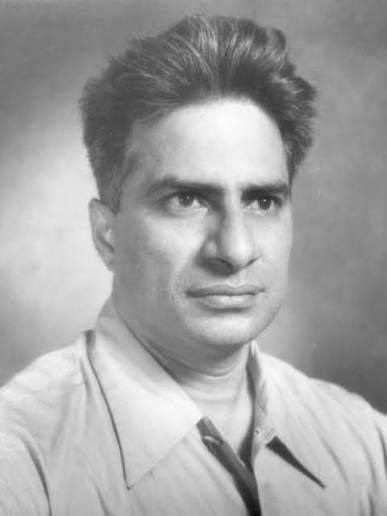
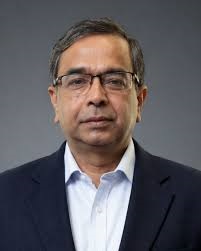
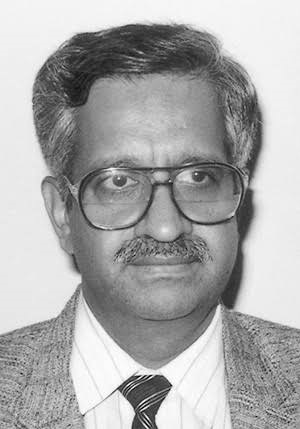
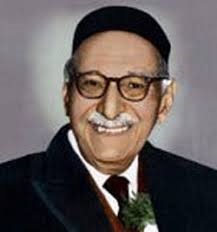
Darashaw Nosherwan Wadia (1883–1969), widely known as D. N. Wadia, was one of India’s greatest geologists and a pioneer in the study of the Himalayan mountain system. His meticulous geological mapping, research on mountain formation, and studies of India’s rock formations laid the foundation of modern Indian geology. Wadia’s landmark book, Geology of India (originally published as Geology of India for Students in 1919), became the standard textbook for generations of geology students. His contributions were so significant that the Wadia Institute of Himalayan Geology in Dehradun was named in his honour.
Early Life and Education
D. N. Wadia was born on 25 October 1883 in Surat, Gujarat, into a Parsi family. He completed his early education in Gujarat before joining St. Xavier’s College, Bombay, where he earned a degree in natural sciences.
His passion for Earth sciences led him to pursue geology, and in 1907 he joined Prince of Wales College, Jammu (now Government Gandhi Memorial Science College) as a professor of geology. His extensive fieldwork in the Himalayas during this period shaped the direction of his lifelong scientific career.
Scientific Career & Research
Professor of Geology
While teaching in Jammu, Wadia conducted geological surveys across the Kashmir Himalayas. His detailed observations of mountain rocks, folds, and faults attracted international recognition.
Geological Survey of India
In 1921, he joined the Geological Survey of India (GSI) as one of the first Indian geologists appointed to such a senior scientific position. During the next seventeen years, he carried out extensive geological mapping in:
- Kashmir
- Hazara (now in Pakistan)
- Nanga Parbat region
- Gilgit
- Northwestern Himalayas
His field investigations greatly improved scientific understanding of Himalayan geology.
Geological Research in Ceylon (Sri Lanka)
After retiring from GSI in 1938, Wadia became Government Mineralogist of Ceylon (Sri Lanka). He conducted comprehensive surveys of the island’s geology, mineral resources, and geomorphology, contributing significantly to geological knowledge beyond India.
Government of Independent India
Following India’s independence, Wadia served as:
- Mineral Adviser to the Government of India
- Director of the Indian Bureau of Mines
- Geological Adviser to the Atomic Energy Commission
His expertise helped shape India’s policies on mineral exploration, geological mapping, and natural resource development.
Major Discoveries and Inventions
Although D. N. Wadia did not invent scientific instruments, his discoveries transformed the understanding of India’s geology.
1. Himalayan Syntaxis
His most famous contribution was explaining the “knee bend” (syntaxis) around Nanga Parbat, where the Himalayan mountain ranges curve sharply. This discovery remains fundamental to Himalayan tectonic studies.
2. Geological Mapping of Kashmir
Wadia produced some of the earliest and most accurate geological maps of Kashmir and the northwestern Himalayas, providing a scientific basis for later geological exploration.
3. Understanding Mountain Formation
His studies of rock layers, folds, thrust faults, and tectonic structures greatly advanced knowledge of how the Himalayas were formed through continental collision.
4. Geology of India
His textbook Geology of India became the definitive reference on Indian geology and remained widely used through multiple editions for several decades.
5. Mineral Resource Exploration
Wadia played a key role in identifying and assessing India’s mineral wealth, helping guide exploration for coal, limestone, metallic ores, and other economically important resources.
Awards and Honours
D. N. Wadia received numerous prestigious honours during his distinguished career, including:
- Back Award of the Royal Geographical Society (1934)
- Lyell Medal of the Geological Society of London (1943)
- Joyakishan Medal of the Indian Association for the Advancement of Science (1944)
- Jagdish Bose Memorial Medal of the Royal Asiatic Society (1947)
- Honorary Doctor of Science (D.Sc.) from the University of Delhi (1947)
- Elected Fellow of the Royal Society (FRS) (1957)
- Padma Bhushan (1958), one of India’s highest civilian honours
- Appointed National Professor by the Government of India, becoming the country’s first geologist to receive this distinction.
Later Life and Death
In the later years of his career, Wadia continued advising the Government of India on geological and mineral matters while serving the Atomic Energy Commission. He remained active in scientific writing and mentoring young geologists.
D. N. Wadia passed away on 15 June 1969 in New Delhi at the age of 85. His death marked the end of a remarkable career spanning more than six decades of geological research.
Legacy and Impact
D. N. Wadia is remembered as one of the architects of modern Indian geology.
His enduring legacy includes:
- Establishing the scientific framework for Himalayan geology.
- Producing geological maps that continue to guide research and mineral exploration.
- Training generations of Indian geologists through his teaching and publications.
- Influencing geological surveys in both India and Sri Lanka.
- Having the Wadia Institute of Himalayan Geology named in his honour, which remains one of India’s leading Earth science research institutions.
His textbook and research continue to be cited in studies of tectonics, mountain building, structural geology, and mineral exploration.
Conclusion
D. N. Wadia was a visionary geologist whose pioneering research revolutionized the understanding of the Himalayas and the geological evolution of the Indian subcontinent. Through extensive fieldwork, groundbreaking interpretations of mountain structures, and his influential textbook Geology of India, he laid the foundations for modern geological research in India. His leadership in geological surveys, mineral exploration, and scientific education earned him national and international recognition. Today, his legacy lives on through the continued work of geologists, research institutions, and students inspired by his lifelong dedication to Earth sciences.
About the Author