Introduction
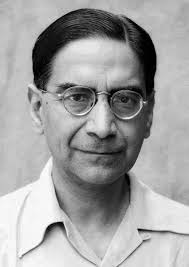
Prasanta Chandra Mahalanobis (1893–1972), commonly known as P. C. Mahalanobis, was a pioneering Indian statistician and scientist whose work laid the foundation for modern statistical research in India. He is best known for introducing the Mahalanobis Distance, a statistical measure widely used in pattern recognition, machine learning, data mining, and multivariate analysis. Mahalanobis also founded the Indian Statistical Institute (ISI), which became one of the world’s leading centers for statistical research. His contributions significantly influenced economics, planning, agriculture, and national development in independent India.
Early Life and Education
Prasanta Chandra Mahalanobis was born on June 29, 1893, in Kolkata, West Bengal, into an educated and progressive family. He attended the Brahmo Boys School and later enrolled at the prestigious Presidency College, where he studied Physics.
In 1913, he went to University of Cambridge and studied at King’s College. Although trained in physics, he developed a strong interest in statistics after encountering the journal Biometrika. This interest eventually led him to pursue statistical research as his lifelong career.
Scientific Career & Research
After returning to India, Mahalanobis joined Presidency College as a physics professor. However, his growing passion for statistics led him to conduct extensive research in data analysis, anthropometry, agriculture, and social sciences.
In 1931, he founded the Indian Statistical Institute in Kolkata, which later became a globally respected institution. Under his leadership, the institute advanced research in statistics, mathematics, computer science, and economics.
Mahalanobis also played a key role in designing large-scale sample surveys and contributed significantly to India’s economic planning after independence. His statistical methods helped governments make informed decisions based on scientific data.
Major Discoveries and Inventions
1. Mahalanobis Distance
Mahalanobis’s most famous contribution is the Mahalanobis Distance, introduced in 1936.
It measures the distance between a data point and a distribution while considering correlations among variables. Unlike ordinary Euclidean distance, it accounts for the relationships between variables, making it highly effective in multivariate analysis.
Applications include:
- Machine learning and artificial intelligence
- Pattern recognition
- Fraud detection
- Medical diagnosis
- Image processing
- Data mining
Today, Mahalanobis Distance remains a fundamental tool in modern data science.
2. Large-Scale Sample Surveys
Mahalanobis pioneered scientific sample survey techniques in India. His methods improved the collection of agricultural, economic, and demographic data and influenced survey practices worldwide.
3. Statistical Quality Control
He introduced advanced statistical methods for industrial quality control and manufacturing processes, helping industries improve efficiency and reliability.
4. Economic Planning Models
Mahalanobis developed mathematical models used in India’s Five-Year Plans. His “Mahalanobis Model” guided industrial development and economic policy during the early decades after independence.
5. Anthropometric Research
He applied statistical techniques to the study of human physical characteristics, contributing to anthropology and population studies.
Awards and Honours
P. C. Mahalanobis received numerous national and international honors, including:
- Fellow of the Royal Society (FRS) – 1945
- Padma Vibhushan – 1968
- Weldon Memorial Prize
- Honorary Fellow of King’s College, Cambridge
- President of the Indian Science Congress
- President of the International Statistical Institute
His achievements earned him global recognition as one of the leading statisticians of his era.
Later Life and Death
During his later years, Mahalanobis continued guiding the Indian Statistical Institute and advising the Government of India on economic planning and statistical policy. He remained active in research, education, and national development initiatives.
He passed away on June 28, 1972, just one day before his 79th birthday. His death marked the loss of one of India’s greatest scientific minds.
Legacy and Impact
Mahalanobis transformed statistics from a theoretical discipline into a practical tool for solving real-world problems. His Mahalanobis Distance continues to be widely used in modern machine learning, artificial intelligence, finance, healthcare, and scientific research.
The Indian Statistical Institute remains a testament to his vision and leadership. His work also established the importance of data-driven decision-making in governance and economic planning.
National Statistical Day is celebrated in India every year on June 29, his birth anniversary, to honor his immense contributions to statistics and public policy.
Conclusion
Prasanta Chandra Mahalanobis was a visionary scientist whose innovations revolutionized statistical science and national planning. Through the creation of the Mahalanobis Distance, the establishment of the Indian Statistical Institute, and his pioneering survey methods, he left a lasting impact on science, economics, and public administration. His legacy continues to influence modern data analysis and remains an inspiration for statisticians and researchers around the world.
About the Author