Introduction
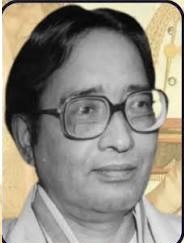
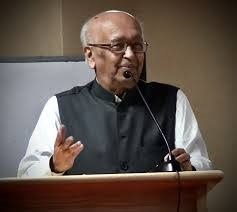
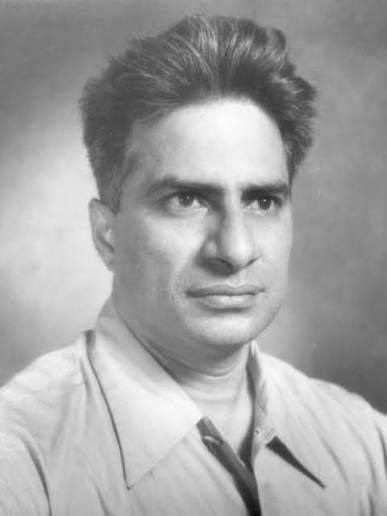
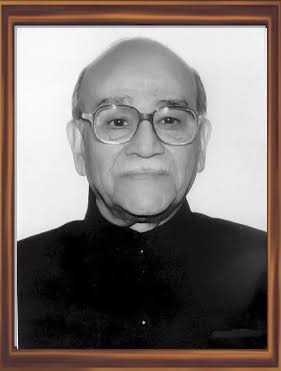
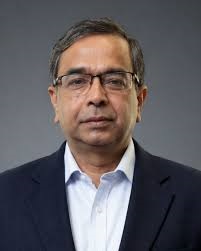
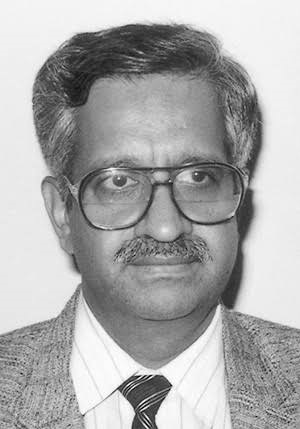
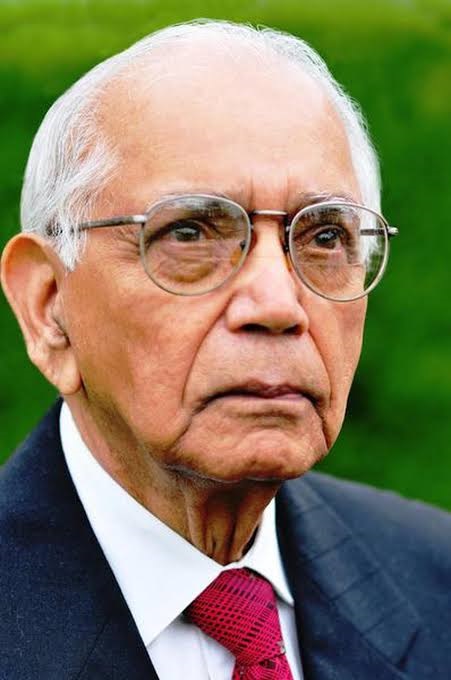
C. R. Rao (Calyampudi Radhakrishna Rao) was one of the most influential statisticians of the 20th and 21st centuries. His groundbreaking contributions to mathematical statistics transformed fields such as data science, economics, genetics, artificial intelligence, and machine learning. Known for developing fundamental statistical concepts like the Cramér–Rao Bound and Rao–Blackwell Theorem, Rao’s work remains essential in modern statistical analysis. He is widely regarded as one of India’s greatest mathematicians and statisticians.
Early Life and Education
C. R. Rao was born on September 10, 1920, in Hadagali, Karnataka (then part of the Madras Presidency, British India). He grew up in Andhra Pradesh and showed exceptional talent in mathematics from an early age.
He completed his bachelor’s degree in Mathematics from Andhra University and later earned a master’s degree in Statistics from the University of Calcutta. During his studies, he came under the guidance of renowned statistician Prasanta Chandra Mahalanobis, founder of the Indian Statistical Institute (ISI), where Rao began his remarkable research career.
Scientific Career & Research
Rao joined the Indian Statistical Institute in the 1940s and quickly established himself as a leading researcher. His early work focused on statistical inference, estimation theory, and multivariate analysis.
Throughout his career, he worked at prestigious institutions including the Indian Statistical Institute, the University of Pittsburgh, and Pennsylvania State University. His research influenced numerous disciplines beyond mathematics, including biology, engineering, economics, and computer science.
Rao published hundreds of research papers and several influential books, making significant contributions to theoretical and applied statistics.
Major Discoveries and Inventions
1. Cramér–Rao Bound
One of Rao’s most famous contributions, the Cramér–Rao Bound establishes a theoretical lower limit on the variance of unbiased estimators. It is fundamental in estimation theory and signal processing.
2. Rao–Blackwell Theorem
Developed independently with statistician David Blackwell, this theorem provides a method for improving statistical estimators and remains a cornerstone of modern statistics.
3. Fisher–Rao Metric
Rao introduced a geometric approach to statistics through the Fisher–Rao Metric, laying the foundation for information geometry.
4. Orthogonal Arrays
His work on orthogonal arrays revolutionized experimental design and quality control processes in industry and agriculture.
5. Multivariate Statistical Analysis
Rao made pioneering contributions to multivariate methods used in machine learning, pattern recognition, and data analytics.
6. Linear Statistical Inference
His research advanced the mathematical framework for hypothesis testing, regression analysis, and statistical decision-making.
Awards and Honours
C. R. Rao received numerous prestigious awards throughout his career:
- Padma Bhushan (1968)
- Padma Vibhushan (2001)
- Guy Medal in Silver from the Royal Statistical Society
- Guy Medal in Gold from the Royal Statistical Society
- National Medal of Science (United States)
- International Prize in Statistics (2023)
- Fellow of the Royal Society (FRS)
- Honorary doctorates from several universities worldwide
These honors reflect his immense impact on global science and statistics.
Later Life and Death
Even after retirement, Rao remained active in research, teaching, and mentoring young statisticians. He continued publishing scientific papers well into his later years and participated in international conferences.
C. R. Rao passed away on August 22, 2023, at the age of 102. His death marked the end of an extraordinary scientific career spanning more than eight decades.
Legacy and Impact
Rao’s theories continue to shape modern statistics, artificial intelligence, machine learning, data science, genetics, and econometrics. Concepts such as the Cramér–Rao Bound and Rao–Blackwell Theorem are taught in universities worldwide and remain essential tools for researchers.
His work helped establish India as a global center for statistical research and inspired generations of scientists and mathematicians. Many modern technologies that rely on data analysis indirectly benefit from Rao’s foundational contributions.
Today, C. R. Rao is remembered as one of the greatest statisticians in history, whose mathematical insights continue to influence science and technology across the world.
Conclusion
C. R. Rao’s life was a remarkable journey of intellectual excellence and scientific innovation. From his early education in India to becoming a globally celebrated statistician, he transformed the field of statistics through groundbreaking theories and methods. His contributions remain fundamental to modern data analysis, making his legacy enduring and invaluable. As a pioneer of statistical science, C. R. Rao’s influence will continue to guide researchers and data scientists for generations to come.
About the Author