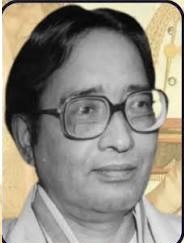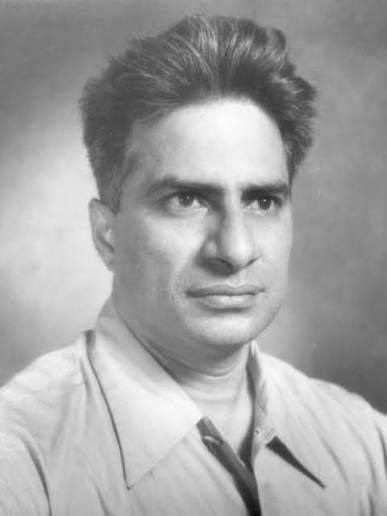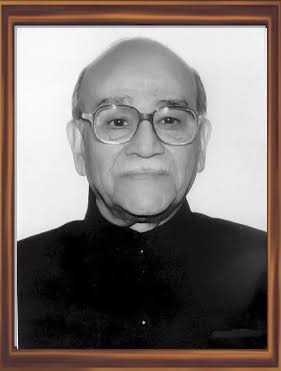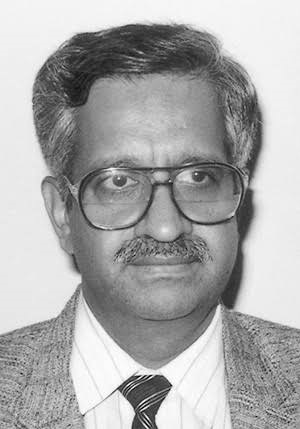
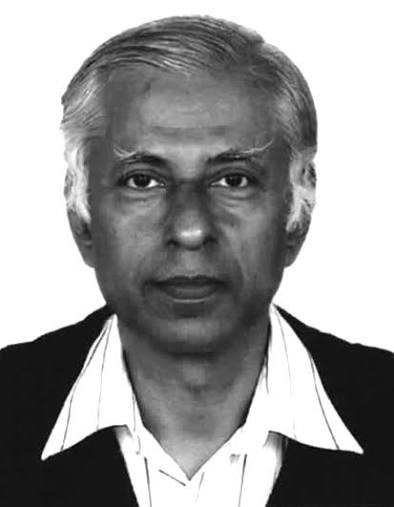
N. Mukunda – Theoretical Physics
Introduction
Narasimha Mukunda, widely known as N. Mukunda, is one of India’s most distinguished theoretical physicists. He is renowned for his contributions to quantum mechanics, group theory, optics, and mathematical physics. Over several decades, his research has deepened the understanding of fundamental physical principles and has influenced generations of physicists in India and abroad. He is also recognized for his work in the history and philosophy of science, particularly concerning Indian scientific traditions.
Early Life and Education
Narasimha Mukunda was born on January 1, 1939, in India. He displayed exceptional talent in mathematics and physics from an early age. He completed his undergraduate studies in physics and later pursued advanced education in theoretical physics.
Mukunda earned his doctoral degree and specialized in mathematical methods in physics, focusing on symmetry principles and quantum theory. His strong academic foundation enabled him to contribute significantly to several branches of modern theoretical physics.
Scientific Career & Research
N. Mukunda spent much of his academic career at the Indian Institute of Science (IISc), where he became one of India’s leading theoretical physicists.
His major research areas include:
- Quantum Mechanics
- Group Theory
- Mathematical Physics
- Quantum Optics
- Symmetry Principles in Physics
- Classical and Quantum Dynamical Systems
Mukunda collaborated with leading physicists worldwide and published numerous influential research papers. His work emphasized the mathematical foundations of physical theories and the role of symmetry in understanding nature.
Major Discoveries and Inventions
Contributions to Group Theory in Physics
Mukunda made important contributions to applying group theory and symmetry principles to quantum mechanics and particle physics.
Quantum Optics Research
His research helped advance theoretical understanding of optical systems and quantum states of light.
Geometric Phases in Quantum Mechanics
He contributed significantly to the study of geometric phases, an important concept in modern quantum theory that has applications in optics and quantum computing.
Mathematical Foundations of Quantum Theory
Mukunda developed mathematical frameworks that improved understanding of quantum systems and their symmetries.
Research on Classical and Quantum Dynamics
His work connected classical mechanics and quantum mechanics through sophisticated mathematical approaches, helping physicists understand complex dynamical systems.
Awards and Honours
N. Mukunda has received numerous prestigious recognitions, including:
- Shanti Swarup Bhatnagar Prize in Physical Sciences
- Fellow of the Indian Academy of Sciences
- Fellow of the Indian National Science Academy
- Fellow of the National Academy of Sciences, India
- Several national and international awards for contributions to theoretical physics and science education
Later Life and Death
N. Mukunda is alive and continues to contribute to scientific research, education, and academic discussions. Even after retirement from full-time teaching, he remains active in research and the promotion of science. He has also written extensively on the history of science and the contributions of Indian scientists.
Legacy and Impact
N. Mukunda’s work has had a lasting impact on theoretical physics, particularly in quantum mechanics and mathematical physics. His research has helped shape modern understanding of symmetry, quantum dynamics, and geometric phases.
His legacy includes:
- Advancing theoretical and mathematical physics in India.
- Strengthening research in quantum mechanics and optics.
- Mentoring generations of physicists.
- Promoting interdisciplinary approaches to science.
- Contributing to the history and philosophy of science.
His publications continue to be widely cited by researchers around the world.
Conclusion
N. Mukunda is a pioneering theoretical physicist whose contributions have enriched several fields of modern physics. Through his research in quantum mechanics, group theory, optics, and mathematical physics, he has enhanced our understanding of the fundamental laws governing nature. His dedication to scientific research, education, and scholarship has made him one of India’s most respected physicists.
Short Blog Summary (200 Words)
Narasimha Mukunda, commonly known as N. Mukunda, is a distinguished Indian theoretical physicist recognized for his important contributions to quantum mechanics, mathematical physics, group theory, and quantum optics. Born in 1939, he developed a strong interest in mathematics and physics early in life and went on to become one of India’s leading theoretical scientists.
Throughout his career, primarily at the Indian Institute of Science in Bengaluru, Mukunda conducted pioneering research on symmetry principles, quantum dynamics, and the mathematical foundations of physics. He made notable contributions to the application of group theory in quantum mechanics and helped advance the understanding of geometric phases, a concept with important applications in quantum physics and optics.
Mukunda’s work has significantly influenced the study of quantum systems and optical phenomena. His research bridged complex mathematical concepts with practical physical theories, making fundamental scientific ideas more accessible and useful for future developments.
He has received several prestigious honours, including the Shanti Swarup Bhatnagar Prize, and has been elected Fellow of major Indian science academies. Beyond research, he has contributed to science education and the history of science in India.
Today, N. Mukunda is regarded as one of India’s foremost theoretical physicists, whose work continues to inspire researchers and advance our understanding of the physical universe.
About the Author