Early Life and Education
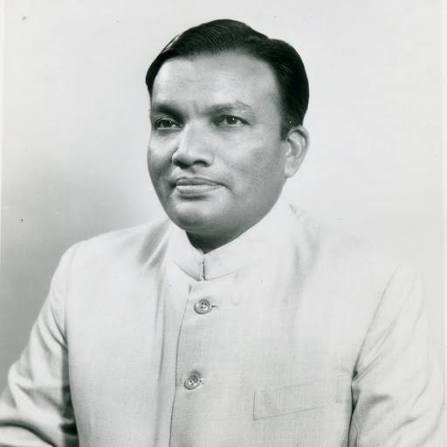
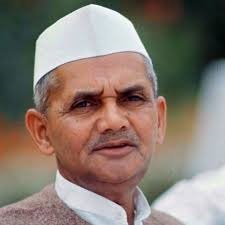
Lal Bahadur Shastri was born on 2 October 1904 in Mughalsarai (now Deen Dayal Upadhyaya Nagar), Uttar Pradesh, India. His father, Sharada Prasad Srivastava, was a school teacher and later worked as a clerk in the revenue department. Shastri lost his father when he was very young and was raised by his mother, Ramdulari Devi, under challenging financial circumstances.
He completed his early education in Varanasi and was deeply influenced by the nationalist movement during his student years. Inspired by the call of Mahatma Gandhi, he left government-supported schooling to participate in the Non-Cooperation Movement. Later, he studied at Kashi Vidyapith, where he earned the title “Shastri,” meaning “scholar.”
Education & Skills
Lal Bahadur Shastri received a strong education rooted in Indian culture, ethics, and nationalism. At Kashi Vidyapith, he studied philosophy, history, political science, and social reform movements.
Key Skills
- Leadership and administration
- Public speaking
- Political strategy
- Conflict resolution
- Organizational management
- Simplicity and ethical governance
- Decision-making during crises
His integrity, humility, and dedication made him one of India’s most respected political leaders.
Contribution to Tamil Literature
Lal Bahadur Shastri was not directly involved in Tamil literature and did not produce literary works in Tamil. However, he strongly promoted Indian languages and cultural unity. His speeches and policies encouraged respect for all regional languages, including Tamil.
His emphasis on national integration helped foster appreciation for India’s linguistic diversity. Many of his speeches have since been translated into Tamil and are widely read by students and scholars.
Role in India’s Freedom Movement
Lal Bahadur Shastri actively participated in India’s struggle for independence from British rule.
Major Contributions
- Joined the Non-Cooperation Movement launched by Mahatma Gandhi in 1921.
- Participated in the Civil Disobedience Movement and Salt Satyagraha.
- Took part in the Quit India Movement of 1942.
- Was imprisoned several times by British authorities for his nationalist activities.
- Spent nearly nine years in prison during various phases of the freedom struggle.
His dedication to the cause of independence earned him recognition as a committed freedom fighter.
Personal Life
Lal Bahadur Shastri married Lalita Shastri in 1928. The couple had six children and led a simple and disciplined family life.
Despite holding high political offices, Shastri was known for his honesty, modest lifestyle, and commitment to public service. After independence, he held several important positions, including:
- Minister of Railways
- Minister of Transport and Communications
- Minister of Home Affairs
- Prime Minister of India (1964–1966)
As Prime Minister, he gave the famous slogan “Jai Jawan, Jai Kisan” (Hail the Soldier, Hail the Farmer), emphasizing the importance of both national security and agricultural development.
Death
Lal Bahadur Shastri passed away on 11 January 1966 in Tashkent (then part of the Soviet Union) shortly after signing the Tashkent Declaration following the Indo-Pakistani War of 1965.
His sudden death shocked the nation and remains a significant moment in Indian history. He was posthumously awarded the Bharat Ratna in 1966.
Conclusion
Lal Bahadur Shastri was a distinguished freedom fighter, statesman, and the second Prime Minister of India. Rising from humble beginnings, he became a symbol of honesty, simplicity, and patriotic leadership. His contributions to India’s independence movement, governance, agricultural growth, and national security continue to inspire generations. His enduring legacy is reflected in his timeless slogan, “Jai Jawan, Jai Kisan,” which remains relevant in modern India.
About the Author