1. Introduction
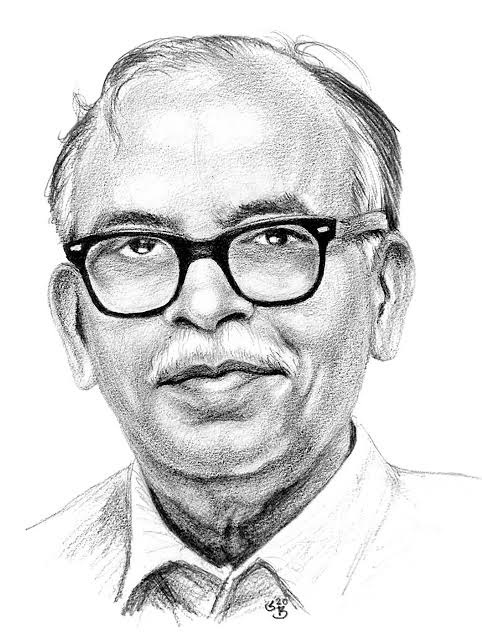
Dr. Daulat Singh Kothari was one of India’s most distinguished physicists, educationists, and scientific administrators. He made pioneering contributions to theoretical physics, defence science, and educational reforms in independent India. As the Chairman of the Education Commission (1964–1966), popularly known as the Kothari Commission, he laid the foundation for modern India’s education system. He also served as the Scientific Adviser to the Ministry of Defence and later as the Chairman of the University Grants Commission (UGC). In recognition of his exceptional service to science and education, the Government of India conferred upon him the Padma Vibhushan in 1973.
2. Quick Facts
| Category | Details |
|---|---|
| Full Name | Daulat Singh Kothari |
| Native Name | दौलत सिंह कोठारी |
| Date of Birth | 6 July 1906 |
| Place of Birth | Udaipur, Rajasthan, India (then Rajputana Agency, British India) |
| Date of Death | 4 February 1993 |
| Nationality | Indian |
| Occupation / Profession | Physicist, Educationist, Scientific Administrator |
| Field of Achievement | Physics, Defence Science, Higher Education, Educational Policy |
| Years Active | 1930–1993 |
3. Award Information
| Category | Details |
| Award Name | Padma Vibhushan |
| Award Category | Science & Engineering / Public Affairs (Civilian Honour) |
| Award Year | 1973 |
| Presented By | President of India on behalf of the Government of India |
| Date of Ceremony | 1973 (official investiture; exact date varies by ceremony records) |
| Citation / Official Reason | For exceptional and distinguished service in science, education, defence research, and higher education administration. |
| Previous Recipients (Optional) | Padma Vibhushan is awarded annually and does not have a single predecessor. |
| Next Recipients | Awarded annually to multiple distinguished individuals. |
4. Why Did He Receive the Award?
Dr. Daulat Singh Kothari received the Padma Vibhushan for his extraordinary contributions to:
- Theoretical Physics
- Defence Science and Research
- Educational Planning in India
- Higher Education Reforms
- Scientific Administration
- Development of the University Grants Commission (UGC)
His leadership helped shape India’s scientific institutions and educational policies after independence.
5. Early Life
Daulat Singh Kothari was born on 6 July 1906 in Udaipur, Rajasthan. His father, Fatehlal Kothari, passed away when Daulat Singh was still young, and his family faced financial challenges. Despite these difficulties, he excelled academically through determination and scholarship support. His passion for mathematics and physics developed during his school years and guided his future career.
6. Education
Dr. Kothari received his early education in Udaipur before pursuing higher studies in physics.
His educational qualifications include:
- School Education – Udaipur
- B.Sc. – Allahabad University
- M.Sc. in Physics – Allahabad University
- Doctoral Research under Nobel Laureate Sir C. V. Raman at the Indian Institute of Science, Bengaluru
His research focused on statistical mechanics, quantum physics, and astrophysics.
7. Career Journey
Early Academic Career
After completing his research, Kothari joined the University of Delhi as a professor of physics and established one of India’s leading centres for theoretical physics.
Scientific Adviser to Defence
In 1948, Prime Minister Jawaharlal Nehru appointed him as the Scientific Adviser to the Ministry of Defence, where he played a key role in developing India’s defence research infrastructure.
University Grants Commission
He later became the Chairman of the University Grants Commission (UGC) and worked to improve standards of higher education throughout India.
Kothari Commission
From 1964 to 1966, he chaired the Education Commission, whose recommendations profoundly influenced India’s National Policy on Education.
8. Major Achievements
- Established modern theoretical physics research in India.
- First Scientific Adviser to India’s Ministry of Defence.
- Strengthened India’s defence research organizations.
- Chairman of the University Grants Commission.
- Led the famous Kothari Education Commission.
- Introduced the concept of the 10+2+3 education structure.
- Promoted equal educational opportunities.
- Authored numerous scientific and educational publications.
9. Contribution to the Nation
Dr. Kothari’s contributions include:
- Strengthening India’s scientific research.
- Building defence science institutions.
- Reforming higher education.
- Improving university standards.
- Encouraging scientific temper.
- Promoting national development through education.
- Influencing India’s National Education Policy.
His recommendations continue to influence Indian education today.
10. Other Awards and Honours
- Padma Bhushan (1962)
- Padma Vibhushan (1973)
- Fellow of the Indian National Science Academy (INSA)
- Fellow of the Royal Society (FRS), London
- Numerous honorary doctorates from Indian universities
- Several educational institutions and awards have been named in his honour.
11. Legacy and Influence
Dr. Kothari is remembered as one of the architects of India’s modern education system.
His legacy includes:
- The Kothari Commission Report
- Educational reforms adopted nationwide
- Development of defence science
- Strengthening the UGC
- Promotion of scientific research
- Inspiration for generations of teachers and scientists
His recommendations continue to shape educational policy decades after they were made.
12. Interesting Facts
- He studied under Nobel Prize-winning physicist Sir C. V. Raman.
- The Kothari Commission is regarded as one of India’s most influential education commissions.
- He believed that education should promote both national development and social justice.
- He combined careers in science, defence, and education.
- He lived a simple and disciplined life despite holding high public office.
- He authored books on science, philosophy, and education.
13. Quotes
Some statements commonly associated with Dr. Kothari include:
“The destiny of India is now being shaped in her classrooms.”
This idea, emphasized in the Kothari Commission Report, highlights the transformative role of education in national development.
Another principle associated with his educational philosophy is:
“Education is the most powerful instrument of national development.”
(When quoting these lines, note that wording varies across publications; consult the official Kothari Commission Report for authoritative text.)
14. Timeline
1906 – Born in Udaipur, Rajasthan.
1920s – Studied Physics at Allahabad University.
1930s – Conducted research under Sir C. V. Raman.
1934 – Joined the University of Delhi.
1948 – Appointed Scientific Adviser to the Ministry of Defence.
1961 – Became Chairman of the University Grants Commission.
1964–1966 – Chaired the Education Commission (Kothari Commission).
1962 – Awarded the Padma Bhushan.
1973 – Awarded the Padma Vibhushan.
1993 – Passed away on 4 February.
15. References
- Government of India – Padma Awards.
- University Grants Commission (UGC).
- National Council of Educational Research and Training (NCERT).
- Kothari Education Commission Report (1964–1966).
- Indian National Science Academy (INSA).
- Royal Society, London.
- Encyclopaedia Britannica.
- University of Delhi archives.
16. Related Personalities
- Sir C. V. Raman
- Dr. Homi J. Bhabha
- Dr. Vikram Sarabhai
- Jawaharlal Nehru
- Dr. S. Radhakrishnan
- Meghnad Saha
- Shanti Swarup Bhatnagar
- D. S. Kothari Education Commission members
17. Frequently Asked Questions (FAQ)
Who was Daulat Singh Kothari?
Daulat Singh Kothari was an Indian physicist, educationist, and scientific administrator known for leading major education reforms and advancing defence science.
When was he born?
He was born on 6 July 1906 in Udaipur, Rajasthan.
When did he die?
He died on 4 February 1993.
Which award did Daulat Singh Kothari receive?
He received the Padma Bhushan (1962) and Padma Vibhushan (1973) from the Government of India.
Why is the Kothari Commission important?
The Kothari Commission recommended comprehensive reforms to India’s education system, including the 10+2+3 structure, equal educational opportunities, and improved quality of education.
Who was his mentor?
He conducted doctoral research under Sir C. V. Raman, Nobel Laureate in Physics.
What was his contribution to defence science?
As Scientific Adviser to the Ministry of Defence, he helped establish and strengthen India’s defence research framework, contributing to the growth of indigenous scientific capabilities.
Why is Dr. Kothari remembered today?
He is remembered for his lasting contributions to physics, defence science, higher education, and educational policy, which continue to influence India’s development.
About the Author