1. Introduction
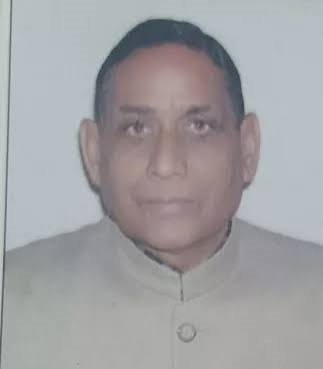
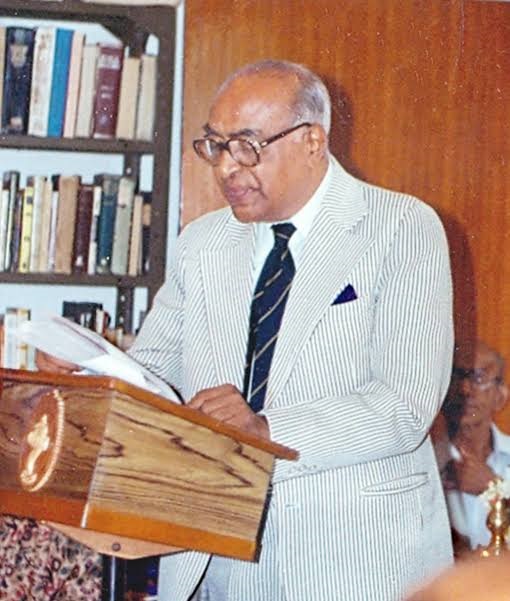
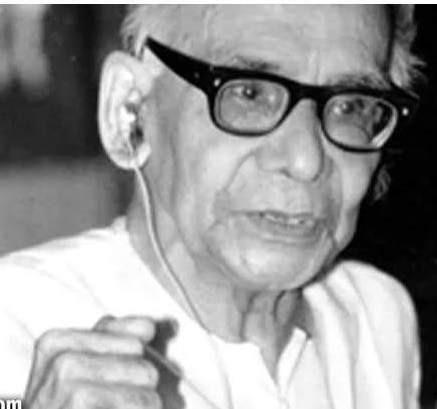
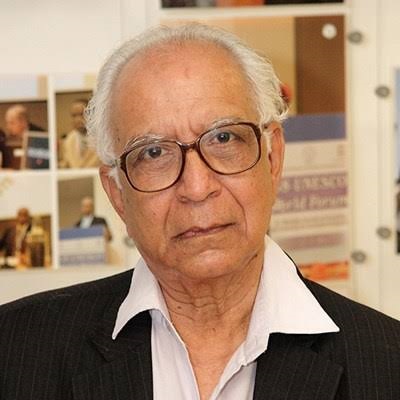
In the pantheon of post-independence Indian mathematics, few intellects have shone as brightly or influenced global geometry as Prof. M. S. Narasimhan. World-renowned for co-authoring the monumental Narasimhan-Seshadri theorem, his profound work bridged the deep chasms between algebraic geometry and differential geometry. From a humble village schoolhouse in Tamil Nadu to becoming the head of mathematics at the International Centre for Theoretical Physics (ICTP) in Italy and the only Indian scientist to win the prestigious King Faisal International Prize, Narasimhan’s journey represents the pinnacle of scientific brilliance, institutional leadership, and quiet dedication.
2. Quick Facts
- Full Name: Mudumbai Seshachalu Narasimhan
- Native Name: ಮುದುಂಬೈ ಶೇಷಾಚಲು ನರಸಿಂಹನ್
- Date of Birth: 7 June 1932
- Place of Birth: Tandarai, Tamil Nadu, British India
- Nationality: Indian
- Occupation/Profession: Mathematician, Researcher, Academic Administrator
- Field of Achievement: Algebraic Geometry, Differential Geometry, Partial Differential Equations, and Representation Theory
- Years Active: 1953–2021
3. Award Information (Focus: Padma Bhushan)
- Award Name: Padma Bhushan
- Award Category: Third-highest civilian award in India
- Award Year: 1990
- Presented By: The President of India
- Date of Ceremony: Rashtrapati Bhavan, New Delhi
- Citation/Official Reason: In recognition of his exceptional and distinguished service to science, research, and for elevating India’s stature in global mathematics through world-class geometrical theorems.
- Previous Recipients (Notable): Prominent scientists, academicians, and nation-builders.
- Next Recipients: Succeeding batches of national civilian honorees.
4. Why They Received the Award
M. S. Narasimhan received the Padma Bhushan in 1990 for his towering contributions to mathematical research and his instrumental role in establishing India as a global superpower in higher mathematics. His creation of the Narasimhan-Seshadri theorem solved foundational problems regarding stable vector bundles on Riemann surfaces, opening new doors for theoretical physics and string theory. Furthermore, his leadership in setting up the National Board for Higher Mathematics (NBHM) transformed the domestic landscape for aspiring young Indian mathematicians.
5. Early Life
Born in June 1932 in the small rural village of Tandarai in Tamil Nadu, Narasimhan grew up as the eldest of five children in a prosperous agricultural family. Though his family faced reduced financial circumstances after his father passed away when he was twelve, his relatives strongly encouraged his academic ambitions. Growing up without modern transit, he navigated early schooling with gritty determination, developing a fierce love for mathematics because it was a subject that required independent thought rather than rote memorization.
6. Education
- Undergraduate Studies: Loyola College, Madras (University of Madras), where he studied under the legendary French Jesuit mathematician and mentor Father Charles Racine.
- Graduate Studies: Joined the newly established Tata Institute of Fundamental Research (TIFR), Bombay, in 1953.
- Doctorate (Ph.D.): Completed his Ph.D. from the University of Mumbai in 1960 under the guidance of K. S. Chandrasekharan.
- Postdoctoral Research: Spent formative years in Paris working closely with Fields Medalist Laurent Schwartz and interacting with the French mathematical elite.
7. Career Journey
- TIFR School of Mathematics (1960–1992): Returned to TIFR as a permanent faculty member, building it into a global Mecca for algebraic geometry and mentoring brilliant generations of students (including S. Ramanan and M. S. Raghunathan).
- Administrative Leadership: Served as Chairman of the School of Mathematics at TIFR until 1987.
- Founding NBHM: Served as the first Chairman of the National Board for Higher Mathematics (NBHM), established by the Government of India in 1983.
- ICTP Mathematics Head (1993–1999): Headed the Mathematics Section at the International Centre for Theoretical Physics (ICTP) in Trieste, Italy, actively nurturing talent from developing nations.
8. Major Achievements
- The Narasimhan-Seshadri Theorem (1965): Co-authored with C. S. Seshadri, this groundbreaking theorem proved the necessary and sufficient conditions for stable vector bundles on compact Riemann surfaces, establishing a fundamental bridge between algebraic geometry and differential geometry.
- The Kotake-Narasimhan Theorem: Collaborated with Japanese mathematician Takeshi Kotake in Paris to prove essential regularity theorems for elliptic differential operators.
- Foundation for Kobayashi-Hitchin Correspondence: His work provided the crucial structural bedrock for the modern Kobayashi-Hitchin correspondence, which heavily impacts modern physics and gauge theory.
9. Contribution to the Nation
Narasimhan put Indian mathematics firmly on the global map. By co-founding breakthrough theorems that are taught in universities worldwide, he proved that Indian research institutions could produce world-class foundational science. Through his leadership at the NBHM, he structured funding, fellowships, and libraries across India, ensuring that rural or small-town students with a passion for numbers had access to world-class mentorship.
10. Other Awards and Honours
- King Faisal International Prize for Science (2006): Made history as the only Indian to ever receive this prestigious international science prize (shared with Simon Donaldson).
- Fellow of the Royal Society (FRS), London: Elected as a Fellow of the world’s oldest scientific academy.
- Shanti Swarup Bhatnagar Prize (1975): Awarded India’s highest science and technology research award in the mathematical sciences.
- Ordre national du Mérite, France (1989): Honored by the French government for strengthening bilateral scientific cooperation.
- Srinivasa Ramanujan Medal (1988): Conferred by the Indian National Science Academy (INSA).
11. Legacy and Influence
Prof. Narasimhan’s legacy is preserved in textbooks, research papers, and through the academic bloodline of his students, many of whom became world leaders in mathematics. Known for his immense humility, accessibility, and love for sharp intellectual discourse, he remained deeply curious about art, music, and literature well into his golden years. He passed away on May 15, 2021, leaving behind an immortal imprint on global science.
12. Interesting Facts
- The Bridge Builder: He was affectionately called a “master bridge builder” because his theorems effortlessly connected distant branches of mathematics (algebra and differential geometry).
- A Multidisciplinary Family: He was married to Sakuntala Narasimhan, a renowned classical musician, journalist, and consumer rights activist. Their daughter, Shobhana Narasimhan, is a prominent condensed-matter physicist.
- Broad Cultural Passions: Aside from complex equations, Narasimhan possessed a deep appreciation for French Impressionist paintings, Carnatic and Western classical music, and Tamil literature.
13. Quotes
“Mathematics gives you the unique opportunity to think for yourself. It is not about repeating what you are told; it is about exercising your brain to solve problems independently.”
— Reflecting on his lifelong fascination with mathematics.
14. Timeline
- June 7, 1932: Born in Tandarai, Tamil Nadu
- 1953: Joins the newly formed Tata Institute of Fundamental Research (TIFR), Bombay
- 1960: Completes his Ph.D. from the University of Mumbai and joins the TIFR faculty
- 1965: Publishes the landmark Narasimhan-Seshadri theorem
- 1975: Awarded the Shanti Swarup Bhatnagar Prize
- 1983: Helps establish and leads the National Board for Higher Mathematics (NBHM)
- 1990: Conferred the Padma Bhushan by the President of India
- 1993–1999: Serves as Head of Mathematics at the ICTP in Trieste, Italy
- 2006: Awarded the King Faisal International Prize for Science
- May 15, 2021: Passes away in Bangalore at the age of 88
15. References
- Wikipedia – M. S. Narasimhan Biographical Overview.
- European Mathematical Society (EMS) Magazine – Mudumbai Seshachalu Narasimhan (1932–2021).
- University of St Andrews – MacTutor History of Mathematics Archives.
- Notices of the American Mathematical Society – Remembering M. S. Narasimhan.
16. Related Personalities
- C. S. Seshadri: Brilliant contemporary mathematician and co-author of the historic Narasimhan-Seshadri theorem.
- Father Charles Racine: French Jesuit priest and professor at Loyola College who introduced Narasimhan to modern global mathematics.
- K. S. Chandrasekharan: Founder of the TIFR School of Mathematics and Narasimhan’s doctoral advisor.
17. Frequently Asked Questions (FAQ)
Q1: Who was M. S. Narasimhan?
A: M. S. Narasimhan was an internationally acclaimed Indian mathematician best known for co-authoring the famous Narasimhan-Seshadri theorem, which revolutionized algebraic and differential geometry.
Q2: What is the Narasimhan-Seshadri theorem?
A: Published in 1965, it is a foundational mathematical theorem that establishes a deep, elegant connection between algebraic geometry and differential geometry by analyzing stable vector bundles on Riemann surfaces.
Q3: What major international awards did he win?
A: He was a Fellow of the Royal Society (London), received the French National Order of Merit, and made history as the only Indian scientist to be awarded the prestigious King Faisal International Prize for Science (in 2006).
About the Author