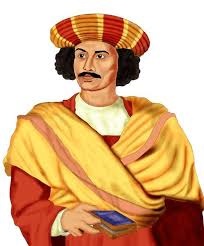
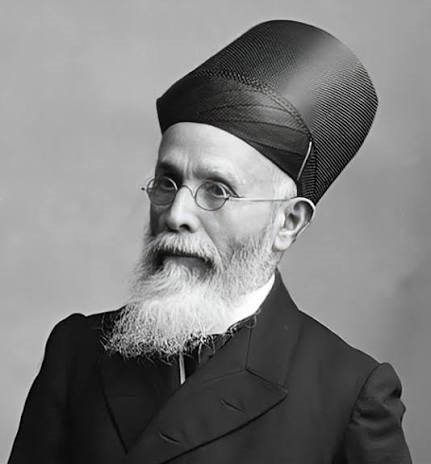
Dadabhai Naoroji
Early Life and Education
Dadabhai Naoroji was born on 4 September 1825 in Bombay (now Mumbai), India, into a Gujarati Parsi family. He was raised by his mother after losing his father at a young age. Despite financial difficulties, he showed strong academic ability from an early age.
He studied at the Elphinstone Institute School, where he later became a mathematics professor, making him one of the first Indians to hold such a position. His education helped him develop a deep understanding of economics, governance, and British policies in India.
Education & Skills
Dadabhai Naoroji was highly educated and intellectually gifted. His key skills included:
- Strong expertise in economics and political theory
- Teaching and academic research abilities
- Excellent writing and analytical skills
- Fluency in English and Gujarati
- Strong diplomatic and leadership qualities
He later became a professor of mathematics and also worked as a businessman in Britain, which gave him firsthand experience of colonial economic systems.
Contribution to Tamil Literature
Dadabhai Naoroji did not directly contribute to Tamil literature. However, his economic theories—especially the “Drain Theory”, which explained how wealth was being transferred from India to Britain—deeply influenced Indian nationalist writers across regions, including Tamil intellectuals. His ideas were widely discussed in Indian newspapers and journals that inspired Tamil political thought during the freedom struggle.
Role in India’s Freedom Movement
Dadabhai Naoroji is known as the “Grand Old Man of India” and was one of the earliest leaders of the Indian nationalist movement.
Major Contributions:
- Co-founded the Indian National Congress (1885), a major platform for India’s freedom struggle.
- Became the first Indian member of the British Parliament in 1892.
- Developed the famous Drain Theory, explaining British economic exploitation of India.
- Demanded self-rule (Swaraj) and equal rights for Indians.
- Represented Indian concerns in Britain through speeches and writings.
He played a major role in shaping the early phase of the Indian independence movement.
Personal Life
Dadabhai Naoroji led a simple and disciplined life. He was deeply committed to education, public service, and social reform. Although he spent many years in Britain for political work, he remained emotionally connected to India and its people. He was respected for his honesty, humility, and intellectual integrity.
Death
Dadabhai Naoroji passed away on 30 June 1917 in Mumbai, India, at the age of 91. His death marked the end of an era of early Indian nationalism. He is still remembered as one of the foundational figures of India’s freedom movement.
Conclusion
Dadabhai Naoroji was one of the earliest architects of Indian nationalism. Through his economic ideas, political activism, and leadership, he exposed British exploitation and inspired generations of freedom fighters. Although he had no direct link to Tamil literature, his ideas influenced political awareness and nationalist writing across India, including Tamil Nadu. He remains a symbol of wisdom, integrity, and early resistance against colonial rule.
About the Author