Early Life and Education
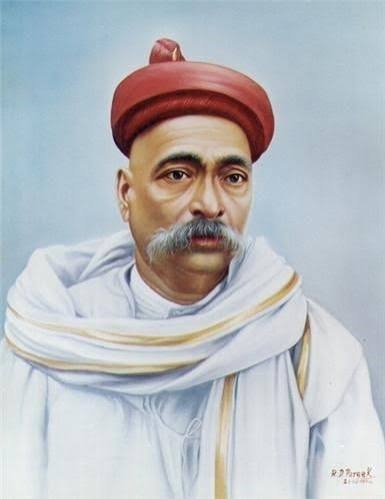
Bal Gangadhar Tilak was born on 23 July 1856 in Ratnagiri, Maharashtra, India. His full name was Lokmanya Bal Gangadhar Tilak, where Lokmanya means “accepted by the people.” He grew up in a traditional Hindu family that valued education and discipline.
Tilak completed his schooling in Pune and later graduated in Mathematics from Deccan College, Pune in 1877. He went on to study law and earned a degree in law in 1879. His education shaped his logical thinking and strong political awareness.
Education & Skills
Bal Gangadhar Tilak was highly educated and intellectually strong. His key skills included:
- Strong knowledge of mathematics and law
- Excellent oratory (public speaking) skills
- Deep understanding of Indian scriptures and history
- Journalism and writing abilities
- Leadership and organizational skills
He also became a powerful editor and writer, using newspapers like Kesari (in Marathi) and The Mahratta (in English) to spread nationalist ideas.
Contribution to Tamil Literature
Bal Gangadhar Tilak did not directly contribute to Tamil literature. However, his nationalist ideas strongly influenced writers and intellectuals across India, including Tamil scholars. His speeches and writings inspired patriotic themes in Tamil journals, poems, and essays during the freedom struggle.
His ideas of Swaraj (self-rule) and cultural pride were widely adopted by Tamil nationalist writers and reformers.
Role in India’s Freedom Movement
Tilak was one of the earliest and most influential leaders of the Indian independence movement.
Major Contributions:
- He declared, “Swaraj is my birthright and I shall have it.”
- He promoted self-rule (Swaraj) and opposed British colonial policies.
- He was part of the Lal-Bal-Pal trio (Lala Lajpat Rai, Bal Gangadhar Tilak, Bipin Chandra Pal), which led extremist nationalist activities in the Indian National Congress.
- He used newspapers like Kesari to awaken national consciousness.
- He organized public celebrations of Ganesh Chaturthi and Shivaji festival to unite Indians against British rule.
- He played a key role in the Home Rule Movement (1916–1918) demanding self-government for Indians.
He was a key figure in the early phase of the Indian independence movement.
Personal Life
Tilak was a family man with a strong sense of discipline and responsibility. He married at a young age and had children. Despite personal hardships, he remained deeply committed to public service and national awakening. He was known for his strict lifestyle, intelligence, and determination.
Death
Bal Gangadhar Tilak passed away on 1 August 1920 in Mumbai, India, at the age of 64. His death was widely mourned across the country. Mahatma Gandhi described him as “The Maker of Modern India,” recognizing his immense contribution to the freedom struggle.
Conclusion
Bal Gangadhar Tilak was one of the greatest leaders of India’s independence movement. Through his writings, speeches, and political activism, he awakened national pride and inspired millions to fight for freedom. Although he did not contribute directly to Tamil literature, his ideas influenced writers and thinkers across India, including Tamil Nadu. His legacy continues to inspire courage, self-respect, and patriotism.
About the Author