Early Life and Education
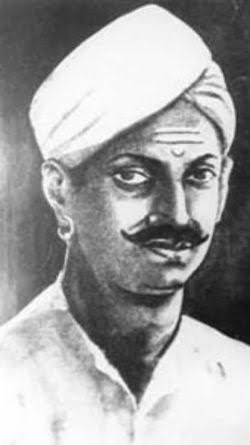
Mangal Pandey was born on 19 July 1827 in Nagwa village, Ballia district, in present-day Uttar Pradesh, India. He belonged to a traditional Brahmin family and grew up in an environment that emphasized religious values, discipline, and courage. Although detailed records of his formal education are scarce, he received basic traditional education and developed a strong sense of patriotism from an early age.
Education & Skills
Mangal Pandey was not known for extensive academic education, but he possessed several qualities that made him a respected soldier:
- Military training acquired through service in the British East India Company’s army.
- Proficiency in handling firearms and military equipment.
- Strong leadership abilities and personal courage.
- Deep commitment to his religious and cultural beliefs.
- Ability to inspire fellow soldiers through his determination and actions.
Contribution to Tamil Literature
Mangal Pandey did not make any direct contributions to Tamil literature. However, his role in the fight against British colonial rule inspired many Indian writers, poets, and dramatists, including those in Tamil Nadu. His life and sacrifice have been celebrated in patriotic poems, historical essays, and educational works that promote national pride and freedom.
Role in India’s Freedom Movement
Mangal Pandey occupies a significant place in Indian history as one of the earliest revolutionaries against British rule.
Key Contributions
- Served as a sepoy in the 34th Bengal Native Infantry of the British East India Company.
- Opposed the introduction of the Enfield rifle cartridges, which were believed to be greased with cow and pig fat, offending both Hindu and Muslim soldiers.
- On 29 March 1857, at Barrackpore, he openly challenged British authority and attacked British officers.
- His actions became a catalyst for the Indian Rebellion of 1857, one of the most significant uprisings against British rule.
- Inspired thousands of Indians to join the struggle for freedom.
Because of his courage, Mangal Pandey is often regarded as one of the first martyrs of India’s independence movement.
Personal Life
Very little information is available about Mangal Pandey’s personal and family life. Historical records primarily focus on his military career and revolutionary activities. He is remembered for his unwavering commitment to justice, self-respect, and national pride.
Death
Following the events at Barrackpore, Mangal Pandey was arrested by British authorities and court-martialed. He was sentenced to death and executed by hanging on 8 April 1857 at Barrackpore, Bengal Presidency (present-day West Bengal). His execution was intended to discourage rebellion, but instead it inspired further resistance across India.
Conclusion
Mangal Pandey remains one of India’s most revered freedom fighters. His defiance against British colonial rule became a symbol of resistance and helped ignite the Indian Rebellion of 1857. Although he did not contribute directly to Tamil literature, his bravery inspired writers and patriots throughout India. His legacy continues to remind future generations of the sacrifices made in the struggle for India’s independence.
About the Author