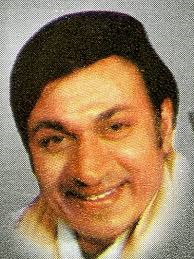
1. Introduction
Singanalluru Puttaswamaiah Muthuraj, universally and affectionately known as Dr. Rajkumar (or simply “Annavru”), was an iconic Indian actor and playback singer who became the cultural heartbeat of Kannada cinema. Spanning over five decades, his legendary career redefined Indian entertainment. He was revered not merely as a box-office colossus and versatile performer, but as a living symbol of Karnataka’s identity, values, simplicity, and linguistic pride.
2. Quick Facts
- Full Name: Singanalluru Puttaswamaiah Muthuraj (Stage Name: Dr. Rajkumar)
- Native Name: ಡಾ. ರಾಜ್ಕುಮಾರ್
- Date of Birth: April 24, 1929
- Place of Birth: Gajanur, Tamil Nadu (border village near Karnataka), British India
- Nationality: Indian
- Occupation/Profession: Film Actor, Playback Singer, and Cultural Icon
- Field of Achievement: Indian Cinema (primarily Sandalwood / Kannada Film Industry) and Classical Music
- Years Active: 1942, 1952–2000 (with his final film released in 2000; active span roughly five decades)
3. Award Information (Focus: Dadasaheb Phalke Award)
- Award Name: Dadasaheb Phalke Award
- Award Category: India’s Highest Award in Cinema
- Award Year: 1995
- Presented By: The Government of India
- Date of Ceremony: Conferred annually for lifetime contribution to cinema
- Citation/Official Reason: For outstanding, lifetime contributions to the growth, promotion, and enrichment of Indian cinema.
- Previous Recipients (Notable): Dilip Kumar, Dr. Bhupen Hazarika (in respective adjacent years)
- Next Recipients (Notable): Sivaji Ganesan, Pradeep Kumar
4. Why Did He Receive the Award?
Dr. Rajkumar received the Dadasaheb Phalke Award (alongside the Padma Bhushan in 1983 and Karnataka Ratna in 1992) for his monumental role in shaping Kannada cinema into a respected art form. He starred in over 200 films without ever compromising his artistic integrity, popularized meaningful message-oriented cinema, excelled as a legendary classical-trained playback singer, and remained an ethical role model throughout his life.
5. Early Life
Born to theatre artists Singanalluru Puttaswamaiah and Lakshmamma, Rajkumar grew up immersed in traditional folk theatre (Gubbi Veeranna’s Nataka Company). Financial constraints forced him to drop out of school at the tender age of eight to support his family, working odd jobs while mastering acting, body movements, stage craft, and classical music traditions under the rigorous tutelage of travelling troupes.
6. Education
- Formal Schooling: Cut short at age eight due to financial hardships, making him largely self-taught and deeply read through life experience.
- Performing Arts Training: Received intensive grooming in classical Carnatic music, Sanskrit diction, stage performance, sword fighting, and horse riding inside the historic Gubbi Drama Company.
- Honorary Doctorates: Later awarded honorary doctorates from institutions like the University of Mysore in recognition of his cultural contributions.
7. Career Journey
- Child and Minor Roles: Started as a child artist in films like Bhakta Prahlada (1942).
- Stardom Breakthrough: Achieved overnight stardom with his lead debut in the mythological classic Bedara Kannappa (1954), directed by H.L.N. Simha.
- Prolific Reign: Acted in 206 films, spanning social dramas, historical epics, mythological roles, spy thrillers, and action blockbusters, remaining a primary box-office anchor until his retirement.
8. Major Achievements
- Unmatched Accolades: Won 11 Karnataka State Film Awards (9 for Best Actor), 10 Filmfare Awards South, and a National Film Award for Best Male Playback Singer (for the song “Naadamaya” from Jeevana Chaitra).
- Cult Classic Milestone: His 1972 social drama Bangarada Manushya ran uninterrupted for over a year in theatres, transforming him from a star into an cultural deity and inspiring thousands of urban youth to return to agriculture.
- Global Distinction: Honored as a Kentucky Colonel (1985) by the Governor of the Commonwealth of Kentucky, US—making him the only Indian actor to receive the prestigious title.
9. Contribution to the Nation
Dr. Rajkumar was a cultural ambassador for Karnataka. During the critical Gokak Agitation in the 1980s, he spearheaded the movement advocating for the primacy of the Kannada language without inciting malice. Furthermore, his movies consistently addressed social evils, rural upliftment, forest conservation (Gandhada Gudi), and communal harmony. Upon his death, he set a final national example by pledging and successfully donating his eyes.
10. Other Awards and Honours
- Padma Bhushan (1983) – Government of India
- Karnataka Ratna (1992) – Highest civilian honor of the State of Karnataka
- NTR National Award (2002)
- Nadoja Award (1999)
- Nata Saarvabhouma (Title conferred by the Government of Karnataka)
11. Legacy and Influence
Dr. Rajkumar’s legacy is woven into the daily life of Karnataka. Statues of him adorn hundreds of squares across Bengaluru and the state. He set a gold standard for personal humility, living a clean, alcohol-free, and vegetarian lifestyle away from vices, proving that an entertainer could maintain absolute moral clarity. His legacy is proudly carried forward by his actor sons—Shiva Rajkumar, Raghavendra Rajkumar, and the late Puneeth Rajkumar.
12. Interesting Facts
- The Veerappan Abduction: In 2000, at the age of 71, he was abducted by the notorious forest brigand Veerappan. Held hostage in deep jungles for 108 days, his calm, dignified resilience throughout the crisis earned worldwide admiration before his safe release.
- Versatile Playback Singer: Though he started singing late in his career (notably breaking out with “Yaare Koogadali”), he went on to win a National Award for playback singing, a rare feat for a lead commercial actor.
- Zero Negative Roles: In a career spanning over 200 films, Dr. Rajkumar deliberately avoided playing negative or anti-hero roles, preferring to project positive values to impressionable young audiences.
13. Quotes
“I am what I am because of the love of the Kannada people. Whatever I return to them is just a fraction of what they have given me.”
14. Timeline
- 1929: Born on April 24 in Gajanur.
- 1942: Appears as a child artist in Bhakta Prahlada.
- 1954: Breaks out as a superstar lead actor in Bedara Kannappa.
- 1972: Delivers the historic blockbuster Bangarada Manushya.
- 1983: Conferred the Padma Bhushan by the Government of India.
- 1992: Wins the National Award for Best Playback Singer for Jeevana Chaitra.
- 1995: Awarded the prestigious Dadasaheb Phalke Award.
- 2000: Kidnapped by Veerappan; released safely after 108 days.
- 2006: Passes away on April 12 in Bengaluru; eyes donated per his wishes.
15. References
- Wikipedia contributors. “Dr. Rajkumar filmography” and “Dr. Rajkumar.” Wikipedia, The Free Encyclopedia.
- Government of Karnataka Archives. Directorate of Information and Public Relations profiles.
- The Hindu & frontline archives. Retrospective articles on Sandalwood cinema history.
16. Related Personalities
- Parvathamma Rajkumar (Wife and prominent film producer)
- Puneeth Rajkumar (Legendary youngest son and actor)
- Shiva Rajkumar (Eldest son and prominent actor)
- Chi. Udayashankar (Renowned lyricist and close scriptwriting collaborator)
- Gubbi Veeranna (Theatre legend and mentor)
17. Frequently Asked Questions (FAQ)
Q1: Why is Dr. Rajkumar called ‘Annavru’?
A: ‘Annavru’ translates affectionately to “Elder Brother” in Kannada. Fans and industry peers called him this out of deep respect for his paternal, protective, and benevolent public standing.
Q2: Did Dr. Rajkumar sing his own songs?
A: Yes! While playback singers like P.B. Srinivas sang for him in his earlier decades, Dr. Rajkumar later began singing his own tracks starting in the 1970s. He eventually won a National Award for Best Male Playback Singer.
Q3: How many films did Dr. Rajkumar star in?
A: He starred in 206 feature films in lead roles, maintaining an exceptional success rate where roughly 90% of his movies were commercially successful.
About the Author