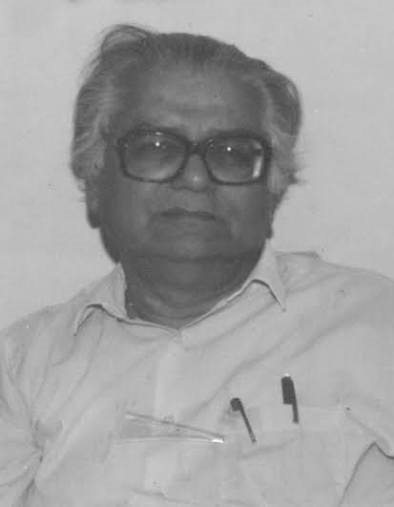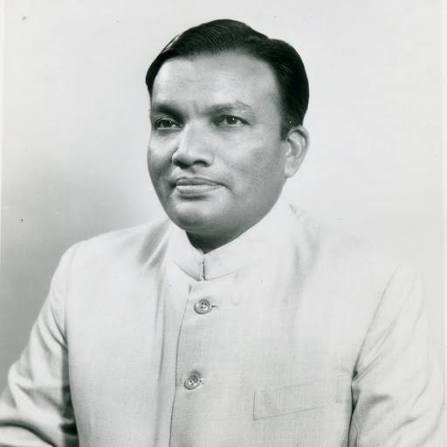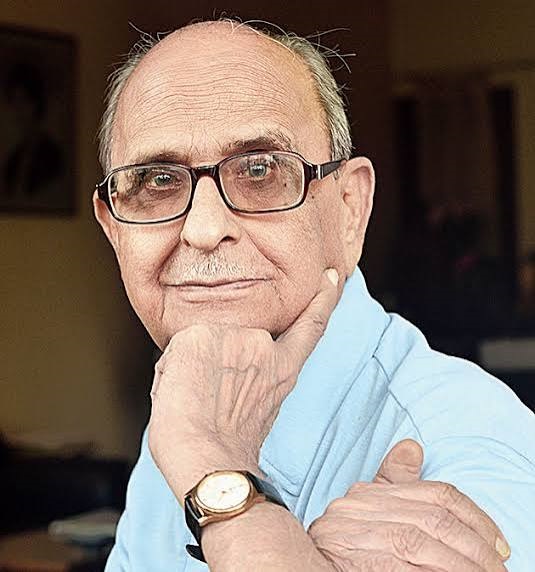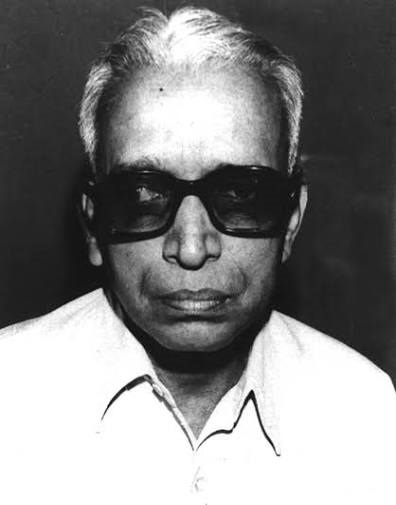
Kollagunta Gopalaiyer Ramanathan, widely known as K.G. Ramanathan (13 November 1920 – 10 May 1992), was a legendary Indian mathematician who made seminal contributions to number theory. Alongside building a robust school of mathematics at the Tata Institute of Fundamental Research (TIFR), he played a foundational role in placing post-independence India firmly back on the international mathematical map through his research, mentorship, and institutional leadership.
2. Quick Facts
- Full Name: Kollagunta Gopalaiyer Ramanathan
- Native Name: కొள்ளగుంట గోపాల అయ్యర్ రామనాథన్ (Telugu context) / கொல்லகுண்ட கோபால ஐயர் ராமநாதன் (Tamil context)
- Date of Birth: November 13, 1920
- Place of Birth: Hyderabad, British India
- Nationality: Indian
- Occupation/Profession: Mathematician, Researcher, and Professor
- Field of Achievement: Number Theory and Analytic/Arithmetic Theory of Quadratic Forms
- Years Active: 1941–1985 (spanning over four decades of active research and teaching)
3. Award Information (Focus: Padma Bhushan)
- Award Name: Padma Bhushan
- Award Category: India’s Third-Highest Civilian Honour
- Award Year: 1983
- Presented By: The President of India
- Date of Ceremony: Conferred annually around Republic Day
- Citation/Official Reason: Recognized for his exceptional and distinguished contributions to science, education, and the development of mathematical research in India.
4. Why Did He Receive the Award?
K.G. Ramanathan was awarded the Padma Bhushan (as well as the Shanti Swarup Bhatnagar Prize in 1965) for his trailblazing research in number theory, particularly his work on quadratic forms over division algebras. He was honored equally for his vital institutional role in shaping TIFR into a world-class global hub for mathematics and for mentoring generations of Indian mathematicians.
5. Early Life
Born in Hyderabad to Sri Kollagunta Gopal Iyer and Smt. Anantalakshmi, Ramanathan grew up with a profound love for academics. He completed his foundational education at Wesleyan Mission High School in Secunderabad. From a young age, he cultivated a sharp intellect and a deep-seated passion for classical literature, music, and numbers.
6. Education
- Schooling & Undergraduate: Completed his early education locally and obtained his B.A. degree from Nizam College, Hyderabad, in 1940.
- Master’s Degree: Earned his M.A. in Mathematics from Loyola College, Chennai (then Madras), in 1942, influenced heavily by Jesuit priest and mathematician Rev. Fr. C. Racine.
- Doctorate (Princeton University): Traveled to the United States as a research scholar at the Institute for Advanced Study (IAS), Princeton. He completed his Ph.D. under the legendary mathematician Emil Artin, while closely collaborating with and assisting Hermann Weyl and drawing deep inspiration from Carl Siegel.
7. Career Journey
- Early Academia: Worked as an assistant lecturer at Annamalai University (1945–1946) and later as a lecturer at Osmania University. He also conducted research alongside pioneers like R. Vaidhyanathaswamy and T. Vijayaraghavan at the University of Madras.
- The TIFR Era: Upon returning to India in 1951, he joined K.S. Chandrasekharan at the newly founded Tata Institute of Fundamental Research (TIFR) in Bombay, where he spent the rest of his active career building India’s premier number theory group.
- Global Collaborations: Served visiting research and teaching terms globally, including at the Mathematisches Institut der Universität Göttingen and the University of Alberta. He officially retired from TIFR in December 1985.
8. Major Achievements
- Pioneering Number Theory Group: Single-handedly built a vibrant, world-class school of number theory at TIFR, mentoring brilliant minds like C.P. Ramanujam and K. Ramachandra.
- Research Milestone: Made deep advances in the analytic and arithmetic theory of quadratic forms over division algebras with involution, applying Siegel’s analytical frameworks to breakthrough global mathematical problems.
- Ramanujan Scholarship: Spent decades decoding, expounding, and publishing deep commentaries on the published and unpublished notebooks of Srinivasa Ramanujan.
- Editorial Leadership: Served on the editorial board of the prestigious international mathematics journal Acta Arithmetica for over 30 years.
9. Contribution to the Nation
Professor Ramanathan was instrumental in building the backbone of independent India’s advanced mathematical ecosystem. Through his stewardship of the Journal of the Indian Mathematical Society as editor for over a decade and his presidency of the Indian Mathematical Society, he elevated publication standards across Indian universities and instilled a culture of rigorous, uncompromised intellectual integrity.
10. Other Awards and Honours
- Shanti Swarup Bhatnagar Prize (1965) – Highest science award in India
- Padma Bhushan (1983) – Government of India
- Fellow of the Indian National Science Academy (INSA)
- Fellow of the Indian Academy of Sciences (IASc)
- Homi Bhabha Medal (INSA)
- Jawaharlal Nehru Fellowship
- Founder Fellow of the Maharashtra Academy of Sciences
11. Legacy and Influence
Though physically small in build, K.G. Ramanathan cast a towering shadow over post-independence Indian science. Known for his uncompromising academic standards, he frequently exhorted younger mathematicians to pursue research for its intrinsic beauty rather than chasing superficial glamour or media glory (anashrithah karmapalam spirit). His students and peers remember him as an intellectual giant with an astonishing grasp of classical music, Sanskrit poetry, and literature.
12. Interesting Facts
- Singing to Einstein: During his time at the Institute for Advanced Study in Princeton, Ramanathan was a neighbor of Albert Einstein and notably sang Carnatic classical compositions of Tyagaraja for the legendary physicist.
- True Simplicity: Despite rubbing shoulders with global mathematical titans like Weyl, Artin, and Siegel, Ramanathan remained fiercely humble, completely shunning political maneuvering or self-promotion.
- Polymath Mind: Beyond mathematical equations, he possessed deep erudition in English, Telugu, and Tamil literature, often punctuating academic conversations with apt classical quotes.
13. Quotes
“Pursue your own mathematical objectives diligently without being overawed by glamour or jargon, truly in the spirit of working without expecting the fruit of action.”
14. Timeline
- 1920: Born on November 13 in Hyderabad.
- 1940: Earns his B.A. from Nizam College, Hyderabad.
- 1942: Completes his M.A. in Mathematics from Loyola College, Madras.
- 1948: Travels to the Institute for Advanced Study, Princeton.
- 1951: Returns to India to join TIFR alongside K.S. Chandrasekharan.
- 1965: Awarded the prestigious Shanti Swarup Bhatnagar Prize.
- 1983: Conferred the Padma Bhushan by the President of India.
- 1985: Retires from active institutional duties at TIFR.
- 1992: Passes away on May 10 in Bombay at the age of 71.
15. References
- Wikipedia contributors. “K. G. Ramanathan.” Wikipedia, The Free Encyclopedia.
- S. Raghavan (1993). “Professor K. G. Ramanathan (1920–1992).” Acta Arithmetica, 64, 1-6.
- Indian National Science Academy (INSA). Biographical memoirs of Fellows.
- MacTutor History of Mathematics Archive. University of St Andrews – Biography of Kollagunta Ramanathan.
16. Related Personalities
- Emil Artin (Ph.D. advisor at Princeton)
- Hermann Weyl (Colleague at IAS, Princeton)
- C.P. Ramanujam (Prominent doctoral student)
- K.S. Chandrasekharan (Co-founder of TIFR’s mathematics school)
- Srinivasa Ramanujan (Subject of his analytical research)
17. Frequently Asked Questions (FAQ)
Q1: What is K.G. Ramanathan best known for?
A: He is best known for his pioneering research in number theory—particularly concerning quadratic forms over division algebras—and for building the foundational number theory group at TIFR.
Q2: Who were his primary academic mentors?
A: At Princeton, he completed his Ph.D. under the supervision of Emil Artin and worked closely with mathematical giants like Hermann Weyl and Carl Siegel.
Q3: Did he interact with Albert Einstein?
A: Yes! While residing at the Institute for Advanced Study in Princeton, he was a neighbor of Albert Einstein and famously shared Carnatic music with him.
About the Author