
Introduction
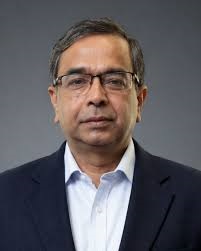
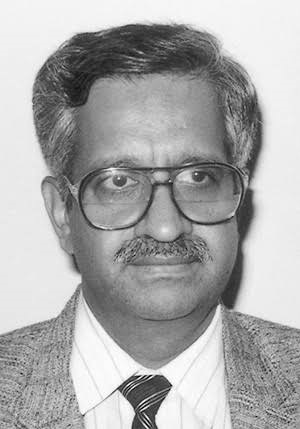
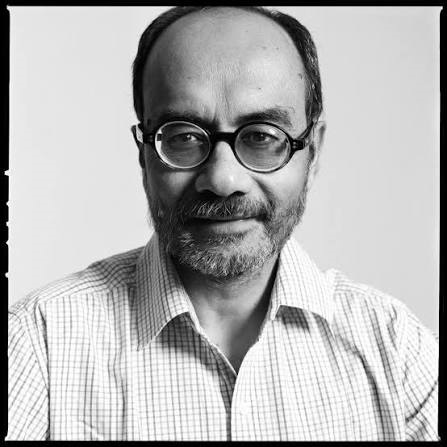
Ashoke Sen is one of India’s most prominent theoretical physicists, best known for his groundbreaking work in string theory. His research has played a major role in shaping modern understanding of quantum gravity, black holes, and fundamental forces of nature. He is internationally recognized for introducing concepts that helped establish string theory as a consistent framework in theoretical physics.
Early Life and Education
Ashoke Sen was born in Kolkata, India, in 1956. He grew up in an academically enriched environment that encouraged curiosity in science and mathematics.
He completed his undergraduate studies in physics at the Presidency College (now Presidency University), Kolkata, one of India’s most prestigious institutions.
He then pursued higher studies at the Indian Institute of Technology (IIT) Kanpur, where he earned his master’s degree in physics.
Later, he went abroad for doctoral research at Stony Brook University, USA, where he developed a strong foundation in high-energy theoretical physics and string theory.
Scientific Career & Research
Ashoke Sen’s scientific career is centered on string theory, one of the most advanced frameworks in theoretical physics.
- Joined the Harish-Chandra Research Institute (HRI), Allahabad, where he conducted most of his groundbreaking research.
- Worked extensively on duality symmetries in string theory, which revealed deep connections between different physical theories.
- Contributed to the understanding of non-perturbative effects in string theory, a major advancement in the field.
- Developed concepts related to tachyon condensation, which helped explain instability in string theory models.
- Made important contributions to black hole entropy and quantum gravity.
His research significantly strengthened the mathematical consistency of string theory.
Major Discoveries and Inventions
Ashoke Sen is known for several landmark contributions:
- Sen’s Conjecture (Tachyon Condensation Theory)
Explained how unstable D-branes decay in string theory. - Strong-Weak Coupling Duality
Showed deep relationships between strongly and weakly interacting systems. - S-Duality in String Theory
Helped unify different string theory formulations. - Contributions to black hole entropy calculations in string theory frameworks.
These discoveries made him one of the key figures in modern theoretical physics.
Awards and Honours
Ashoke Sen has received numerous prestigious awards, including:
- Shanti Swarup Bhatnagar Prize for Science and Technology
- Dirac Medal (ICTP) for outstanding contributions to theoretical physics
- Fundamental Physics Prize (Breakthrough Prize Foundation)
- Fellow of major scientific academies including the Royal Society
- One of the most internationally recognized Indian physicists in theoretical physics
Later Life and Death
Ashoke Sen continues to actively work in theoretical physics and research. He is currently associated with the Harish-Chandra Research Institute (HRI) and remains involved in mentoring students and advancing string theory research.
(As of now, he is alive and actively contributing to science.)
Legacy and Impact
Ashoke Sen’s contributions have had a global impact on theoretical physics:
- One of the leading architects of modern string theory
- Helped establish India as a major contributor to high-energy theoretical physics
- His work on dualities reshaped understanding of fundamental forces
- Inspired a generation of physicists working in quantum gravity
- Widely regarded as one of the greatest living theoretical physicists from India
Conclusion
Ashoke Sen’s research has transformed modern theoretical physics, especially in string theory and quantum gravity. His discoveries continue to influence scientific research worldwide, making him one of the most important figures in contemporary physics.
About the Author