![cropped-ChatGPT-Image-Jun-29-2026-07_22_15-PM-300x84[1]](https://tamilwarriors.com/wp-content/uploads/2026/07/cropped-ChatGPT-Image-Jun-29-2026-07_22_15-PM-300x841-1.png)
Introduction
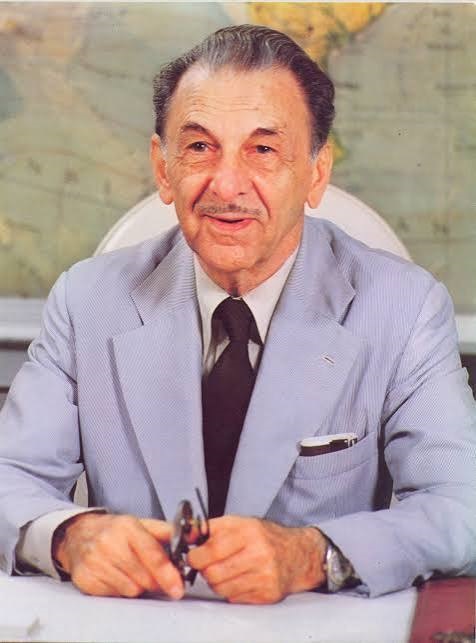
Jehangir Ratanji Dadabhoy Tata (29 July 1904 – 29 November 1993), popularly known as J. R. D. Tata, was one of India’s most influential industrialists, entrepreneurs, and philanthropists. As the longtime chairman of the Tata Group, he transformed the organization into one of India’s largest and most respected business conglomerates. He was also a pioneer of Indian civil aviation, becoming the country’s first licensed pilot and founding India’s first commercial airline. His leadership, commitment to innovation, and dedication to ethical business practices made him one of the architects of modern India’s industrial growth.
Why Did He Receive the Padma Vibhushan Award?
J. R. D. Tata was awarded the Padma Vibhushan in 1957, India’s second-highest civilian honour, in recognition of his outstanding contributions to industry, civil aviation, economic development, and public service. His leadership strengthened Indian manufacturing, promoted scientific research, created employment opportunities, and laid the foundation for India’s aviation industry.
Early Life
J. R. D. Tata was born on 29 July 1904 in Paris, France, to Ratanji Dadabhoy Tata and Suzanne Brière, a French national. Because of his multicultural upbringing, he spent his early years in France, India, and Japan, gaining exposure to different cultures and languages.
From an early age, he developed a fascination with technology, engineering, and aviation, interests that later shaped his remarkable career.
Education and Career
J. R. D. Tata received his early education in France, Japan, and England. Although he did not earn a university degree, his broad international education and practical business experience prepared him for leadership.
In 1925, he joined the Tata Group, founded by his family. At the age of 34, he became the Chairman of Tata Sons in 1938. Under his leadership, the Tata Group expanded from around 14 companies to more than 90 enterprises operating in industries such as steel, automobiles, chemicals, engineering, hospitality, power, information technology, and consumer products.
In 1932, he founded Tata Airlines, India’s first commercial airline. The airline later became Air India, which grew into the country’s national carrier.
Career and Achievements
J. R. D. Tata made remarkable contributions to Indian industry and aviation.
His major achievements include:
- Founded Tata Airlines in 1932, India’s first commercial airline.
- Became India’s first licensed pilot in 1929.
- Expanded the Tata Group into one of India’s largest industrial organizations.
- Promoted research, innovation, and technological development across industries.
- Encouraged employee welfare by introducing progressive workplace policies.
- Supported the establishment and growth of leading scientific and educational institutions.
- Played an important role in developing India’s civil aviation sector.
His vision of combining business success with social responsibility set new standards for corporate leadership.
Field of Achievements
J. R. D. Tata excelled in several fields, including:
- Industrial Development
- Civil Aviation
- Business Leadership
- Entrepreneurship
- Corporate Governance
- Philanthropy
Awards and Honours
J. R. D. Tata received numerous prestigious honours throughout his lifetime:
- Padma Vibhushan (1957) for distinguished service to the nation.
- Bharat Ratna (1992), India’s highest civilian honour.
- Daniel Guggenheim Medal (1988) for outstanding contributions to aviation.
- Edward Warner Award (1986) from the International Civil Aviation Organization (ICAO).
- Honorary doctorates from several universities in India and abroad.
Interesting Facts
- J. R. D. Tata became India’s first licensed pilot in 1929.
- He personally flew the inaugural flight of Tata Airlines from Karachi to Bombay in 1932.
- Under his leadership, the Tata Group grew from about 14 companies to over 90 companies.
- He believed that businesses should contribute to society, not just generate profits.
- He was known for his humility, integrity, and high standards of corporate ethics.
Legacy and Inspiration
J. R. D. Tata’s legacy extends far beyond business success. His commitment to innovation, ethical leadership, employee welfare, and national development transformed Indian industry. He demonstrated that businesses can achieve commercial excellence while contributing positively to society.
His leadership philosophy continues to inspire entrepreneurs, business executives, and young professionals across the world. The Tata Group remains a symbol of trust, quality, and social responsibility, reflecting the values he championed.
Contribution to the Nation
J. R. D. Tata made lasting contributions to India by:
- Establishing India’s first commercial airline and advancing civil aviation.
- Expanding industries that generated employment and economic growth.
- Promoting scientific research and technological innovation.
- Supporting education, healthcare, and social welfare through philanthropy.
- Introducing progressive labour welfare measures, including employee benefits and workplace safety.
- Building globally respected Indian enterprises based on integrity and excellence.
His vision helped accelerate India’s industrial and economic development in the twentieth century.
Conclusion
J. R. D. Tata was a visionary industrialist, aviation pioneer, and philanthropist whose contributions transformed India’s business landscape. Through his leadership of the Tata Group and his pioneering role in civil aviation, he helped shape modern India’s economy while promoting ethical business practices and social responsibility. His achievements earned him the Padma Vibhushan and later the Bharat Ratna. Today, J. R. D. Tata remains an enduring symbol of innovation, integrity, and nation-building, inspiring generations of entrepreneurs and business leaders.
About the Author