

1. Introduction
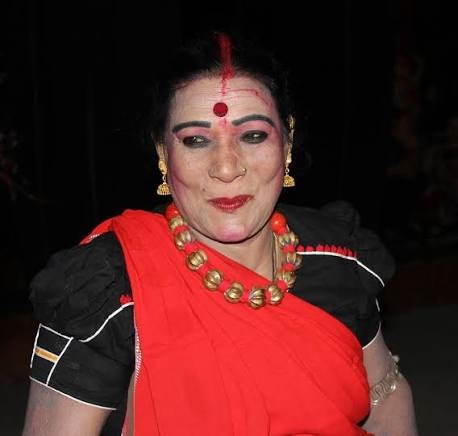
Teejan Bai was an iconic Indian folk artist globally celebrated as the peerless maestro of Pandavani—the traditional performing art form that narrates tales from the ancient epic, the Mahabharata. Breaking decades of patriarchal tradition by stepping into the aggressive, highly dramatic Kapalik style of performance, she transformed a localized rural tradition into an international spectacle. With her thunderous voice, magnetic stage presence, and a single stringed instrument (tambura) morphing into a mace, sword, or chariot, she carried the soul of Chhattisgarh across global stages.
2. Quick facts
- Full Name: Teejan Bai
- Native Name: तीजन बाई (Hindi / Chhattisgarhi)
- Date of birth: April 24, 1956 (alternate records note August 8, 1956)
- Place Of birth: Ganiyari village, Durg district, Chhattisgarh (erstwhile Madhya Pradesh)
- Nationality: Indian
- Occupation/ Profession: Folk Singer, Storyteller, and Cultural Icon
- Field of Achievement: Pandavani Folk Art, Traditional Performance, and Cultural Preservation
- Years Active: 1969 – 2020s
3. Award Information (Focusing on her Highest Honor: Padma Vibhushan)
- Award Name: Padma Vibhushan
- Award Category: India’s Second-Highest Civilian Award
- Award Year: 2019
- Presented By: Government of India (Conferred by President Ram Nath Kovind)
- Date of Ceremony: 2019 Republic Day honors cycle
- Citation/Official Reason: For exceptional and distinguished service in the arts and the preservation of traditional folk performance forms.
- Previous Recipients (Examples): Distinguished artists, scientists, and statesmen.
- Next Recipients: Conferred annually as part of national civilian honors.
4. Why they Receive the award?
Teejan Bai received the Padma Vibhushan—completing a rare hat-trick of civilian honors alongside the Padma Shri (1988) and Padma Bhushan (2003)—for her monumental role in reviving and popularizing Pandavani. She took a dying oral tradition, broke societal taboos against women performing it publicly, and showcased the depth of Indian indigenous storytelling to audiences across Europe, Asia, and the Americas.
5. Early Life
Born in Ganiyari village near Bhilai, Teejan was the eldest of five siblings in the Pardhi scheduled tribe. Her introduction to the Mahabharata came through her maternal grandfather, Brijlal Pardhi, who used to chant verses written by the Chhattisgarhi poet Sabal Singh Chauhan. Young Teejan listened spellbound, memorizing the epic lines effortlessly. Growing up in a rigid social structure, she faced severe resistance from her community when she expressed a desire to perform publicly, as Pandavani was traditionally viewed as a strictly male domain.
6. Education
- Formal Education: None. Teejan Bai never attended a formal school and grew up illiterate, capable only of signing her name.
- Informal Training: Her true schooling took place through oral traditions, absorbing regional dialects, rhythm patterns, and spiritual lore directly from her grandfather, later receiving guidance from veteran folk artist Umed Singh Deshmukh.
7. Carrier Journey
- Defying the Norms: At age 13, she gave her very first public performance in the neighboring village of Chandrakhuri, singing in the Vedmati ( seated) style. She later transitioned into the rigorous, standing Kapalik style, which involves active role-play and intense physical acting.
- Discovery by Habib Tanvir: The major turning point of her career arrived in the early 1980s when legendary theatre director Habib Tanvir discovered her talent and introduced her to wider urban and national platforms, including Bhopal’s Bharat Bhavan.
- Global Ambassador: She went on to tour extensively, enthralling audiences at Festivals of India in France, Switzerland, Germany, England, Turkey, and Malta.
8. Major Achievements
- First Woman in Kapalik Style: Became the absolute first woman to perform Pandavani in the dynamic Kapalik mode.
- The Triple Padma Honor: One of very few artists to be decorated sequentially with the Padma Shri (1988), Padma Bhushan (2003), and Padma Vibhushan (2019).
- International Acclaim: Recipient of the prestigious Fukuoka Prize (2018) from Japan for her outstanding contribution to Asian culture and arts.
- Sangeet Natak Akademi Fellowship: Honored with the highest fellowship by India’s national academy for arts.
9. Contribution to the nation
Teejan Bai kept India’s ancient oral narrative traditions alive in an increasingly digitized modern world. By interpreting epic episodes—such as Draupadi Cheerharan, Dushasana Vadh, and the Mahabharat Yudh—with raw, rustic power, she connected ordinary citizens to their cultural roots. Furthermore, her life stands as a beacon of feminist resilience, showing how raw talent and iron will can shatter patriarchal barriers.
10. Other Awards and Honours
- Padma Shri (1988) – Government of India
- Sangeet Natak Akademi Award (1995)
- Padma Bhushan (2003) – Government of India
- Hon. D.Litt (2003) – Bilaspur University
- M.S. Subbulakshmi Centenary Award (2016)
- Fukuoka Prize (2018) – Japan
- Padma Vibhushan (2019) – Government of India
11. Legacy and influence
Teejan Bai’s legacy is etched into the history of Indian folk performance. She proved that folk art requires no formal institutional degree, only authentic passion and cultural grounding. Her unique performance techniques have been documented extensively by researchers, folklorists, and filmmakers, inspiring a new generation of rural and urban youth to embrace indigenous storytelling.
12. Interesting Facts
- The Magical Tambura: In Teejan Bai’s hands, her single-stringed tambura stopped being just a musical instrument; during performances, it fluidly transformed into Bhima’s heavy mace, Arjuna’s bow, Krishna’s flute, or an elephant’s trunk.
- Social Ostracization Turned Triumph: As a young girl defying tradition to sing in public, she faced severe backlash and was temporarily ostracized by her community, only to later have the entire nation and world celebrate her as a national treasure.
- Passionate Advocate for Education: Despite never having gone to school herself, she actively championed children’s literacy and educational support during her later years and international award speeches.
13. Quotes
“Pandavani is not just a performance; it is my life, my worship, and my conversation with the gods of the Mahabharata.”
“Never let your background or lack of formal schooling stop you from dreaming. If your heart is honest, the world will stop to listen.”
14. Timeline
- 1956: Born on April 24 in Ganiyari village, Chhattisgarh.
- 1969: Gives her historic first public performance of Pandavani at age 13.
- 1980s: Gains national recognition under the mentorship of cultural institutions and director Habib Tanvir.
- 1988: Conferred the Padma Shri by the Government of India.
- 1995: Receives the Sangeet Natak Akademi Award.
- 2003: Awarded the Padma Bhushan.
- 2018: Receives international acclaim with Japan’s Fukuoka Prize.
- 2019: Conferred India’s second-highest civilian honor, the Padma Vibhushan.
- 2026: Passes away on July 5 in Raipur, leaving behind an immortal artistic legacy.
15. References
- Ministry of Home Affairs, Government of India – Padma Awards Directories.
- Fukuoka Prize Committee – Official Laureate Profile and Biographies on Teejan Bai.
- Sangeet Natak Akademi archives and cultural documentation on Chhattisgarhi folk arts.
- Biographies and academic papers regarding the evolution of the Kapalik style of Pandavani.
16. Related Personalities
- Habib Tanvir (Legendary playwright who helped bring Teejan Bai to national prominence)
- Jhaduram Devangan (Renowned master of the Vedmati style of Pandavani)
- Brijlal Pardhi (Maternal grandfather and Teejan Bai’s first inspiration/teacher)
- Sabalsingh Chauhan (19th-century poet whose Chhattisgarhi adaptation of the Mahabharata formed her core repertoire)
17. Frequently Asked Questions (FAQ)
Q1: What is Teejan Bai best known for?
A: Teejan Bai is world-renowned as the premier exponent of Pandavani, a traditional folk art form that enacts stories from the Mahabharata using powerful singing, intense acting, and a tambura.
Q2: What is the difference between Vedmati and Kapalik styles of Pandavani?
A: The Vedmati style is text-based and performed sitting down, whereas the Kapalik style is oral, highly dramatic, and performed standing up with active character impersonation—a style Teejan Bai famously pioneered for women.
Q3: Which major civilian awards did she receive from the Indian government?
A: Teejan Bai achieved the rare distinction of holding all three major Padma civilian honors: the Padma Shri (1988), the Padma Bhushan (2003), and the Padma Vibhushan (2019).
About the Author




