

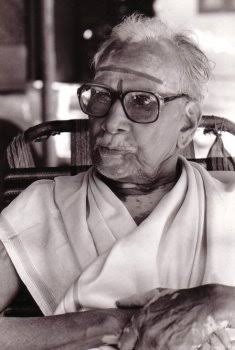
1. Introduction
Guru Ammannur Madhava Chakyar was a monumental figure in Indian classical theatre, celebrated globally as the greatest master of Kutiyattam—the ancient, surviving Sanskrit theatrical art form of Kerala. For centuries, this sacred art was strictly confined within temple sanctuaries (Koothambalams). Breaking rigid traditions, Guru Ammannur took Kutiyattam out to public stages and international capitals, combining breathtaking eye movements (netrabhinaya) and subtle facial expressions (abhinaya) to breathe new life into classical Sanskrit drama.
2. Quick facts
- Full Name: Ammannur Madhava Chakyar
- Native Name: അമ്മന്നൂർ মাধவ ചാക്യാർ (Malayalam)
- Date of birth: May 13, 1917
- Place Of birth: Ammannur Chakyar Madhom, Irinjalakuda, Thrissur district, Kerala
- Nationality: Indian
- Occupation/ Profession: Kutiyattam Master, Actor, and Guru
- Field of Achievement: Classical Sanskrit Theatre and Traditional Acting (Abhinaya)
- Years Active: Late 1920s – 2008 (Over 8 decades on stage)
3. Award Information
- Award Name: Padma Bhushan
- Award Category: India’s Third-Highest Civilian Award
- Award Year: 2002
- Presented By: Government of India (Conferred by the President of India)
- Date of Ceremony: Republic Day honors cycle, 2002
- Citation/Official Reason: For exceptional and distinguished service to the arts, specifically for preserving, promoting, and mastering traditional Kutiyattam.
- Previous Recipients (Examples): Prominent artists, scientists, and public intellectuals.
- Next Recipients: Conferred annually as part of national civilian honors.
4. Why they Receive the award?
Guru Ammannur Madhava Chakyar received the Padma Bhushan—following his earlier Padma Shri in 1982—in recognition of his peerless contribution to Indian performing arts. He was honored for single-handedly saving Kutiyattam from near extinction, establishing rigorous traditional training institutions (Gurukuls), and serving as the ultimate global ambassador for ancient Sanskrit drama.
5. Early Life
Born on May 13, 1917, into the illustrious traditional Ammannur Chakyar family in Irinjalakuda, Kerala, Madhava Chakyar was immersed in his ancestral heritage from childhood. Born to Vellarappilli Matassi Manakkal Parameswaran Namboothiri and Sreedevi Illodamma, he underwent an intense, disciplined upbringing under the strict guidance of his legendary uncles and gurus, Ammannur Chachu Chakyar and Ammannur Valiya Madhava Chakyar. He made his public stage debut (Arangettam) at the young age of 11 at the Thirumandhamkunnu Bhagavathy Temple.
6. Education
- Traditional Training: Underwent rigorous, decades-long training in Kutiyattam and eye-expression techniques (netrabhinaya) under family elders.
- Sanskrit Studies: Mastered classical Sanskrit language and classical texts under scholars such as Vidushi Kochikkuvu Tampuratti and Vidvan Manthitta Nambuthiri.
- Natyasastra Studies: Acquired deep theoretical and practical instruction in ancient performance canons from Bhagavatar Kunjunni Tampuran of the Kodungallur Palace.
7. Carrier Journey
- Temple Performer Roots: Spent decades performing strictly inside temple theatres (Koothambalams), perfecting complex character roles like Ravana, Bali, and Shurpanakha.
- The Paradigm Shift (1980s): Partnering with theatre activist G. Venu and cultural trusts like Natanakairali, he began performing outside temple boundaries, opening the art form to general public audiences.
- Global Ambassador: Traveled extensively across Europe (France, UK, Netherlands, Switzerland) and Japan starting in the 1980s, conducting workshops and stunning international theatre critics.
- Institutionalizing Education: Served as a visiting professor at Kerala Kalamandalam and Margi, and co-founded the Ammannur Chachu Chakyar Smaraka Gurukulam in Irinjalakuda to train the next generation.
8. Major Achievements
- UNESCO Masterpiece Recognition: Played a central role when UNESCO officially proclaimed Kutiyattam as a “Masterpiece of the Oral and Intangible Heritage of Humanity” in 2001, anchoring technical demonstrations for global documentation.
- Mastery of Micro-Expressions: Renowned for his supernatural command over Pakarnattam (playing multiple changing roles seamlessly) and deep psychological portrayals of characters like Ravana through eye movements alone.
- Sangeet Natak Akademi Fellowship: Conferred the highest fellowship of India’s national academy of arts in 1996.
- Kalidas Samman: Honored by the Government of Madhya Pradesh in 1992 for classical arts excellence.
9. Contribution to the nation
Guru Ammannur single-handedly rescued a 2,000-year-old classical Sanskrit dramatic tradition from dying out within closed community circles. By opening the doors of Kutiyattam to students of all backgrounds—regardless of caste or lineage—he democratized an esoteric art form. His efforts placed Indian classical theatre firmly on the global cultural map, preserving invaluable elements of ancient Indian aesthetic philosophy.
10. Other Awards and Honours
- Padma Shri (1982) – Government of India
- Sangeet Natak Akademi Award (1979)
- Kalidas Samman (1992) – Government of Madhya Pradesh
- Sangeet Natak Akademi Fellowship (1996)
- Padma Bhushan (2002) – Government of India
- Honorary D.Litt from Kannur University (2002)
- Numerous traditional honors including Veera Sringhala, Natya Kala Nidhi, and Peelithirumudi.
11. Legacy and influence
Guru Ammannur’s legacy lives on through the Ammannur Gurukulam in Irinjalakuda, where students from across India and the world continue to learn the precise, scientific grammar of Abhinaya. He revolutionized modern Indian theater thinking by proving that ancient traditional grammar possesses contemporary psychological relevance. Filmmakers and performance researchers have extensively documented his techniques in projects like the classic documentary Pakarnattam.
12. Interesting Facts
- The Power of the Eyes: Guru Ammannur could convey complex emotions—such as anger, jealousy, love, or the shifting of a scene from a forest to a palace—using only his eyes while keeping his body completely still, stunning modern neurologists and actors alike.
- Lifelong Dedication: He performed dynamic, physically demanding lead roles well into his 80s, maintaining a strict daily physical and mental discipline modeled after ancient traditions.
- Inseparable Partnership: He was married to Parukkutty Nangiaramma (an expert in Nangiar Koothu), and in a touching close to their lives, she passed away just weeks after his death in July 2008.
13. Quotes
“In Kutiyattam, the body and eyes are not just instruments of physical movement; they are the canvas upon which the inner soul of the character is painted.”
“Art is a form of spiritual tapasya (meditation). You do not master the art; the art masters you if you surrender to it completely.”
14. Timeline
- 1917: Born on May 13 in Irinjalakuda, Kerala.
- 1928: Makes his public stage debut (Arangettam) at age 11.
- 1979: Receives the central Sangeet Natak Akademi Award.
- 1982: Conferred the Padma Shri by the Government of India.
- 1996: Awarded the prestigious Sangeet Natak Akademi Fellowship.
- 2001: Plays a pivotal role as UNESCO declares Kutiyattam a world heritage art form.
- 2002: Conferred the Padma Bhushan by the Government of India.
- 2008: Passes away on July 1 at the age of 91 in Irinjalakuda, leaving behind an immortal theatrical legacy.
15. References
- Official records from the Ammannur Chachu Chakyar Smaraka Gurukulam and Natanakairali Archives.
- Ministry of Home Affairs, Government of India – Padma Awards Directories.
- Venu, G. Into the World of Kutiyattam: With the Legendary Ammannur Madhava Chakyar (Natana Kairali).
- Cultural retrospectives and historical tributes compiled by The Hindu and Sruti Magazine.
16. Related Personalities
- G. Venu (Renowned theatre exponent, author, and close collaborator who helped bring Ammannur to the global stage)
- Ammannur Chachu Chakyar (Legendary uncle and guru who shaped his early training)
- Painkulam Rama Chakyar (Contemporary maestro who also pioneered taking Kutiyattam outside temples)
- Mani Madhava Chakyar (Another towering contemporary legend of Kutiyattam and Sanskrit drama)
17. Frequently Asked Questions (FAQ)
Q1: What is Ammannur Madhava Chakyar most famous for?
A: He is globally celebrated as the ultimate master of Kutiyattam, India’s oldest surviving classical Sanskrit theatre form, famous for his revolutionary eye expressions (netrabhinaya) and multi-character portrayals (pakarnattam).
Q2: Why was his contribution to Kutiyattam historic?
A: Historically, Kutiyattam was locked inside temple theaters (Koothambalams). Guru Ammannur broke centuries-old traditions by performing on public stages across India and international countries, introducing the world to this ancient art and helping it secure UNESCO World Heritage recognition.
Q3: What are the highest civilian honors he received?
A: He was honored with the Padma Shri in 1982 and the Padma Bhushan in 2002 by the Government of India.
About the Author




