

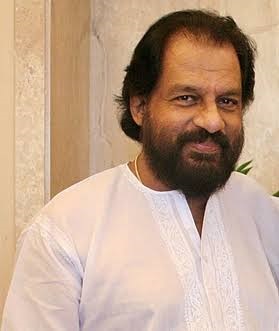
1. Introduction
Kattassery Joseph Yesudas, universally revered as K. J. Yesudas or by his honorific Gana Gandharvan (The Celestial Singer), stands as one of the greatest, most versatile, and enduring vocalists in the history of Indian music. With a career spanning over six decades, he has recorded more than 50,000 songs spanning classical, devotional, and cinematic genres across multiple languages, including Malayalam, Tamil, Telugu, Kannada, Hindi, and even foreign languages like Russian. His voice—characterized by supreme emotional depth, pitch perfection, and divine resonance—remains an irreplaceable cultural treasure of India.
2. Quick facts
- Full Name: Kattassery Joseph Yesudas
- Native Name: കാട്ടശ്ശേരി ஜோசப் யேசுதாஸ் (Malayalam)
- Date of birth: January 10, 1940
- Place Of birth: Fort Kochi, Cochin (British India, present-day Kerala, India)
- Nationality: Indian
- Occupation/ Profession: Playback Singer, Classical Musician, and Composer
- Field of Achievement: Indian Classical Music, Film Playback Singing, and Devotional Music
- Years Active: 1961 – Present
3. Award Information (Focusing on his Highest Honor: Padma Vibhushan)
- Award Name: Padma Vibhushan
- Award Category: India’s Second-Highest Civilian Award
- Award Year: 2017
- Presented By: Government of India (Conferred by the President of India)
- Date of Ceremony: 2017 (Republic Day honors cycle)
- Citation/Official Reason: For exceptional and distinguished service to the arts, specifically for his monumental contribution to Indian classical and playback music.
- Previous Recipients (Examples): Luminaries across science, arts, public service, and statesmanship.
- Next Recipients: Conferred annually as part of national civilian honors.
4. Why they Receive the award?
Dr. K. J. Yesudas was honored with the Padma Vibhushan—following his earlier civilian awards, the Padma Shri (1975) and Padma Bhushan (2002)—for defining the musical landscape of modern India. Over a legendary career, he bridged the gap between complex Carnatic classical compositions and accessible cinematic art, recording in nearly all major Indian languages and serving as a cultural ambassador of Indian music worldwide.
5. Early Life
Born into a devout Christian family in Fort Kochi, Yesudas was immersed in music from infancy. His father, Augustine Joseph, was a well-known stage actor and classical singer who served as young Yesudas’s first guru. Growing up in a household where music was a spiritual pursuit, he faced financial struggles during his youth but maintained an unwavering dedication to vocal training, often practicing for hours late into the night.
6. Education
- Foundational Music Training: Studied at the R.L.V. Music Academy, Thripunithura, and later graduated from the Sree Swathi Thirunal College of Music, Thiruvananthapuram.
- Advanced Classical Tutelage: Received rigorous advanced training under legendary masters, including Semmangudi Srinivasa Iyer and the iconic Carnatic maestro Chembai Vaidyanatha Bhagavatar.
7. Carrier Journey
- Playback Debut: Officially recorded his first professional song, “Ajaante Thediyallo”, composed by MB Sreenivasan and penned by P. Bhaskaran, for the Malayalam film Kaalpaadukal on November 14, 1961.
- Pan-Indian Stardom: Quickly rose to dominance in South Indian cinema during the 1960s and 1970s, working alongside legendary music directors like G. Devarajan, M. S. Baburaj, and Salil Chowdhury.
- Hindi Cinema Breakthrough: Captured the national imagination with timeless Bollywood hits like “Gori Tera Gaon Bada Pyara” from the film Chitchor (1976), for which he won his first National Film Award.
- Global Concert Circuit: Performed extensive classical and fusion concerts across the US, Europe, the Middle East, and the USSR (where he even sang a track in Russian over Radio Kazakhstan).
8. Major Achievements
- National Film Awards Record: Won the National Film Award for Best Male Playback Singer a record 8 times across multiple languages (Malayalam, Hindi, and Telugu)—a feat unmatched by any other male vocalist in Indian history.
- Unprecedented State Accolades: Conferred with state best singer awards over 25 times by the governments of Kerala, Tamil Nadu, Andhra Pradesh, and West Bengal.
- The Sabarimala Anthem: Recorded the immortal devotional composition “Harivarasanam”, which is traditionally chanted to close the doors of the Sabarimala Ayyappa Temple every night.
- Multilingual Mastery: Has recorded songs in almost all major Indian languages (except Assamese and Kashmiri).
9. Contribution to the nation
Yesudas unified India through the universal language of melody. By effortlessly transitioning between classical Carnatic kritis, soul-stirring ghazals, patriotic numbers, and popular film songs, he enriched the cultural identity of independent India. Furthermore, his soulful renditions of devotional numbers across Hindu, Christian, and Islamic traditions have championed secular harmony and mutual respect throughout society.
10. Other Awards and Honours
- Padma Shri (1975) – Government of India
- Padma Bhushan (2002) – Government of India
- Padma Vibhushan (2017) – Government of India
- Sangeet Natak Akademi Award (1992)
- Lata Mangeshkar Award (1993) – Government of Madhya Pradesh
- Swathi Sangeetha Puraskaram (2010) – Highest musical honor by the Government of Kerala
- Multiple honorary Doctorates (D.Litt) from universities including Annamalai, Kerala, and Mahatma Gandhi universities.
11. Legacy and influence
Often referred to as a living legend, Yesudas has inspired virtually every modern playback singer in South India. His meticulous adherence to classical grammar, crystal-clear pronunciation (shudha uccharanam), and soulful expression set the benchmark for professional vocalists. His annual birthday musical offerings (Sangeetharchana) at the Mookambika Temple in Kollur, Karnataka, remain major cultural events.
12. Interesting Facts
- The 16-Song Feat: In 2006, Yesudas set a remarkable personal record by recording 16 film songs in four different South Indian languages in a single day at AVM Studios in Chennai.
- Stepping Aside for Youth: After winning the Kerala State Film Award for Best Singer numerous times, he voluntarily requested that his name be removed from competition to give newer talents a fair chance—though juries continued to honor him for exceptional work.
- Guru Bhakti: He maintained a lifelong ritual of keeping a portrait of his guru, Chembai Vaidyanatha Bhagavatar, on stage during every single public concert as a mark of ultimate reverence.
13. Quotes
“Music has no barriers of caste, creed, or religion. It is the purest form of prayer that connects the human soul directly to the divine.”
“A singer is merely an instrument; the real creator is the almighty, and the audience completes the circle of music.”
14. Timeline
- 1940: Born on January 10 in Fort Kochi, Kerala.
- 1961: Makes his formal playback singing debut with Kaalpaadukal on November 14.
- 1975: Conferred the Padma Shri by the Government of India.
- 1976: Wins his first National Film Award for the Hindi classic “Gori Tera Gaon Bada Pyara” (Chitchor).
- 1992: Receives the prestigious Sangeet Natak Akademi Award.
- 2002: Honored with the Padma Bhushan by the Government of India.
- 2017: Conferred India’s second-highest civilian honor, the Padma Vibhushan.
- Present: Continues to mentor upcoming artists, perform selective classical concerts, and remain an active global icon of Indian music.
15. References
- Official biographical registers and archival logs from the Sangeet Natak Akademi.
- Ministry of Home Affairs, Government of India – Padma Awards Directory.
- National Film Awards Archive, Directorate of Film Festivals, India.
- Cultural retrospectives and interviews compiled by Malayalam and national media networks.
16. Related Personalities
- Chembai Vaidyanatha Bhagavatar (Legendary Carnatic master and primary guru of Yesudas)
- G. Devarajan (Iconic music composer who shaped Yesudas’s early Malayalam cinema career)
- Salil Chowdhury (Renowned composer who blended western and classical styles with Yesudas’s voice)
- Vijay Yesudas (Acclaimed playback singer and son of K. J. Yesudas)
17. Frequently Asked Questions (FAQ)
Q1: What is K. J. Yesudas most famous for?
A: K. J. Yesudas is famous for his legendary career as an Indian playback and classical singer, having recorded over 50,000 songs across multiple languages and winning the National Film Award for Best Male Playback Singer a record 8 times.
Q2: What are the highest civilian honors he has received?
A: He has received India’s top three civilian honors: the Padma Shri (1975), the Padma Bhushan (2002), and the Padma Vibhushan (2017).
Q3: What is the significance of the song “Harivarasanam”?
A: “Harivarasanam” is a devotional lullaby sung by Yesudas that is officially played to close the sanctum sanctorum doors of the famous Sabarimala Ayyappa Temple in Kerala every night.
About the Author




