

1. Introduction
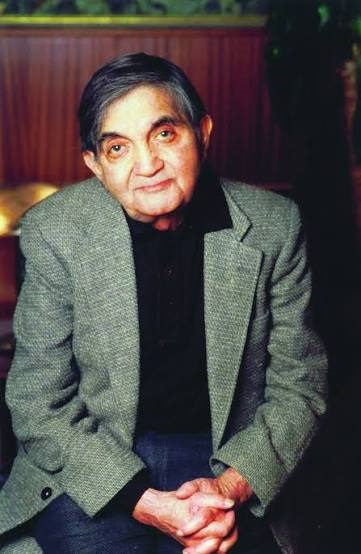
Nirmal Verma was one of the most brilliant, reflective, and influential writers in modern Hindi literature. As a pioneer of the Nayi Kahani (New Story) movement, his evocative prose introduced a distinct psychological depth, existential melancholy, and lyrical beauty to Indian fiction. Through his novels, short stories, and essays, Verma explored the profound loneliness, alienation, and spiritual displacement of modern individuals navigating a rapidly changing world.
2. Quick facts
- Full Name: Nirmal Verma
- Native Name: निर्मल वर्मा
- Date of birth: April 3, 1929
- Place Of birth: Shimla, British India
- Nationality: Indian
- Occupation/ Profession: Novelist, Short Story Writer, Essayist, Translator, and Journalist
- Field of Achievement: Hindi Literature, Modern Fiction, and Cultural Criticism
- Years Active: 1950s – 2005
3. Award Information
- Award Name: Jnanpith Award
- Award Category: India’s Highest Literary Honor
- Award Year: 1999 (Conferred for the year 1999; presented later)
- Presented By: Bharatiya Jnanpith
- Date Of Ceremony: Formal presentation ceremony during the literary honors cycle.
- Citation/Official Reason: For his outstanding contribution to Indian literature, particularly for pioneering the psychological modernism of the Nayi Kahani movement and exploring the existential dilemmas of contemporary humanity.
- Previous Recipients (Examples): Giants of Indian literature such as Thakazhi Sivasankara Pillai, Mahadevi Verma, and Qurratulain Hyder.
- Next Recipients: Conferred annually to distinguished Indian authors across various languages.
4. Why they Receive the award?
Nirmal Verma received the Jnanpith Award for his lifetime dedication to enriching Hindi literature with sophisticated philosophical underpinnings. His writing transcended conventional realism, delving into the interior landscapes of memory, exile, and human consciousness. By capturing the psychological nuances of post-independence urban existence, he permanently elevated the stylistic and thematic horizons of Hindi fiction.
5. Early Life
Born on April 3, 1929, in Shimla into a large family (he was the seventh of eight children), Nirmal Verma grew up amidst the scenic quietude of the Himalayas, which deeply influenced his sensitive artistic temperament. His father worked in the civil service, and the household environment encouraged wide reading, critical thinking, and political awareness. He experienced the trauma of partition and the shifts of post-colonial India during his youth, which later echoed through his themes of rootlessness and longing.
6. Education
- Schooling: Completed his early schooling in Shimla and Delhi.
- Higher Education: Earned a Master of Arts (M.A.) degree in History from St. Stephen’s College, Delhi.
- Academic Background: His rigorous grounding in history and European literature sharpened his intellectual framework, allowing him to weave profound philosophical currents into his native Hindi writings.
7. Carrier Journey
- Early Writing & Teaching: Started writing short stories in the early 1950s while teaching and engaging with Delhi’s literary circles. His debut collection, Parinde (The Birds, 1959), is widely credited with launching the Nayi Kahani movement.
- Prague Exile & Translation: Spent nearly a decade (1959–1968) living in Prague, Czechoslovakia, where he was invited to translate Czech classics into Hindi and English. This European sojourn deeply shaped his perspective on political freedom, exile, and Western modernism.
- Journalism and Activism: Upon returning to India, he worked extensively as a writer, essayist, and cultural commentator, participating actively in literary symposia and democratic public debates.
- Institutional Roles: Served as the Chairman of the National Book Trust (NBT) and fellow of various elite literary academies.
8. Major Achievements
- Parinde (Birds, 1959): A landmark short story collection that revolutionized Hindi narrative style by prioritizing psychological atmosphere and inner monologue over external plot progression.
- Ve Din (Those Days, 1964): His celebrated debut novel drawing heavily from his European experiences, exploring memory, alienation, and a fleeting love affair in Prague.
- Ek Chithra Sukh (A Ragged Happiness, 1979): A deeply introspective novel dealing with memory, art, and the complex bonds of a middle-class family.
- Literary Translation: Successfully bridged Eastern and Western literary traditions by translating major European authors into Hindi.
9. Contribution to the nation
Nirmal Verma rescued Hindi prose from didactic realism and political sloganism, infusing it with universal existential dimensions. His writings taught generations of readers to appreciate silence, memory, and the complex psychological undercurrents of human relationships. Furthermore, as an uncompromising cultural critic, he fiercely defended the freedom of expression and the preservation of India’s indigenous civilizational memory against cultural homogenization.
10. Other Awards and Honours
- Sahitya Akademi Award (1985) – For his novel Kavitya Aur Anya Kahaniya.
- Padma Bhushan (2002) – Conferred by the Government of India.
- Shalaka Samman (1998) – Highest literary honor by the Government of Delhi.
- Lalit Kala Akademi and various state literary fellowships.
11. Legacy and influence
Nirmal Verma is remembered as an unmatched stylist of the Hindi language whose prose possessed a poetic, haunting quality. His books remain foundational texts for anyone studying modern Indian fiction, psychology, and post-colonial existentialism. His legacy is carried forward by writers and scholars who continue to draw inspiration from his uncompromising literary integrity and minimalist aesthetic.
12. Interesting Facts
- The Prague Years: His decade-long stay in communist Czechoslovakia ended abruptly in 1968 following the Soviet military intervention (Prague Spring), an event that deeply disillusioned him regarding totalitarian politics and permanently altered his political philosophy.
- Reclusive Perfectionist: Verma was known for his quiet, introspective lifestyle, often spending hours rewriting sentences to achieve the exact emotional pitch and cadence he desired.
- Literary Brotherhood: His older brother was the eminent Hindi poet and thinker Ram Kumar, creating a powerful artistic household that contributed immensely to modern Indian arts.
13. Quotes
“Memory is the only home an exile truly possesses. It preserves what time and distance attempt to destroy.”
“A good story does not answer questions; it deepens the mystery of human existence.”
14. Timeline
- 1929: Born on April 3 in Shimla.
- 1959: Publishes his epochal short story collection Parinde; moves to Prague.
- 1964: Publishes his acclaimed debut novel, Ve Din.
- 1968: Returns to India following the Soviet invasion of Czechoslovakia.
- 1985: Wins the Sahitya Akademi Award.
- 1999: Awarded India’s highest literary honor, the Jnanpith Award.
- 2002: Conferred the Padma Bhushan by the Government of India.
- 2005: Passes away on October 25 in New Delhi, leaving behind a monumental literary footprint.
15. References
- Bharatiya Jnanpith Official Archives and Award Directories.
- Sahitya Akademi Biographical Registers.
- Verma, Nirmal. Selected essays and autobiographical prefaces collected in Sabhi Stotr Mahapradhan.
- Critical studies on the Nayi Kahani movement in Hindi literature.
16. Related Personalities
- Ram Kumar (Renowned artist, writer, and Nirmal Verma’s brother)
- U. R. Ananthamurthy (Eminent Indian novelist and contemporary literary figure)
- Namwar Singh (Leading Hindi literary critic who chronicled the Nayi Kahani movement)
- Milan Kundera (Czech-French author whose themes of exile and memory intersected with Verma’s intellectual sphere)
17. Frequently Asked Questions (FAQ)
Q1: What is Nirmal Verma best known for?
A: Nirmal Verma is best known as a pioneer of the Nayi Kahani (New Story) movement in Hindi literature, celebrated for introducing psychological depth, existential themes, and lyrical descriptions of human loneliness and memory.
Q2: Which major literary awards did he receive?
A: He received India’s highest literary honor, the Jnanpith Award (1999), the Sahitya Akademi Award (1985), and the civilian honor Padma Bhushan (2002).
Q3: How did his time in Europe influence his writing?
A: His decade-long stay in Prague exposed him to European modernism, political exile, and anti-totalitarian perspectives, which heavily shaped the introspective, rootless, and memory-driven characters in his famous novels like Ve Din.
About the Author




