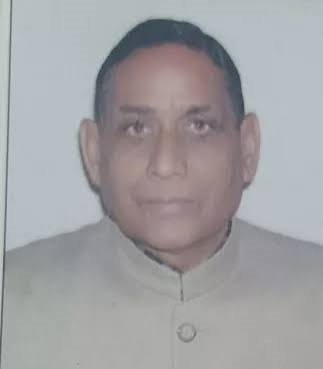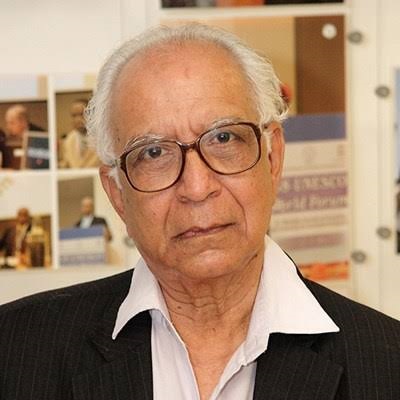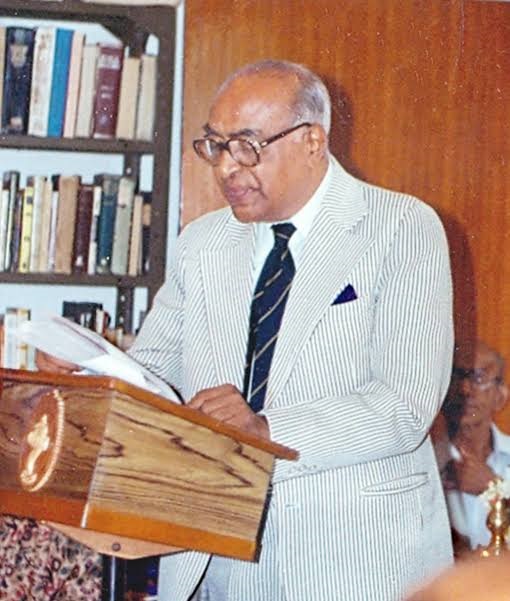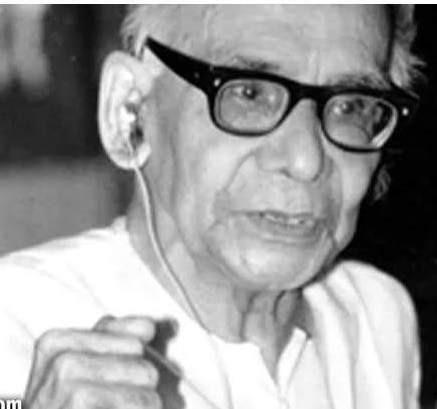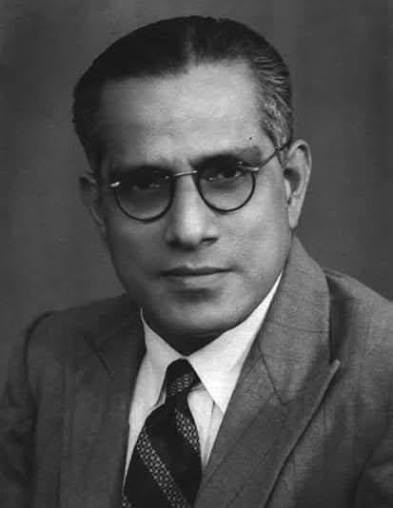
Thiruvenkata Rajendra Seshadri (3 February 1900 – 27 September 1975), popularly known as T. R. Seshadri, was a renowned Indian chemist, academician, researcher, and writer. He made pioneering contributions to organic chemistry, natural products chemistry, and phytochemistry, especially through his research on medicinal plants, flavonoids, and plant-based compounds. He was awarded the Padma Bhushan in 1963 for his contribution to Science.
1. Introduction
Dr. T. R. Seshadri was one of India’s most distinguished chemists and a pioneer of natural products chemistry. His research focused on the chemical properties of Indian medicinal plants and helped establish modern phytochemical research in India.
He served as Professor and Head of the Department of Chemistry at the University of Delhi, where he built a strong centre for chemical research. He also played an important role in training young scientists and developing scientific institutions in independent India.
2. Quick Facts
| Information | Details |
|---|---|
| Full Name | Thiruvenkata Rajendra Seshadri |
| Native Name | திருவேங்கட ராஜேந்திர சேஷாத்ரி |
| Popular Name | T. R. Seshadri |
| Date of Birth | 3 February 1900 |
| Place of Birth | Kulithalai, Tamil Nadu (then Madras Presidency) |
| Date of Death | 27 September 1975 |
| Place of Death | New Delhi, India |
| Nationality | Indian |
| Profession | Chemist, Professor, Researcher, Writer |
| Field of Achievement | Organic Chemistry, Natural Products Chemistry |
| Specialisation | Plant chemistry, flavonoids, medicinal compounds |
| Years Active | 1920s–1970s |
| Known For | Research on Indian medicinal plants and natural products |
3. Award Information
| Field | Details |
|---|---|
| Award Name | Padma Bhushan |
| Award Category | Science |
| Award Year | 1963 |
| Presented By | Government of India / President of India |
| Date of Ceremony | 1963 Investiture Ceremony |
| Official Citation | Contribution to Science, particularly Chemistry |
| Awarding Authority | Government of India |
The 1963 Padma Awards notification listed Dr. Tiruvenkata Rajendra Seshadri, Professor and Head of the Department of Chemistry, Delhi University, among the Padma Bhushan awardees.
4. Why Did He Receive the Padma Bhushan?
Dr. T. R. Seshadri received the Padma Bhushan for:
- Outstanding contributions to organic chemistry.
- Pioneering research on natural products derived from plants.
- Advancement of pharmaceutical and medicinal chemistry.
- Establishing advanced chemistry research centres in India.
- Training generations of Indian scientists.
5. Early Life
T. R. Seshadri was born on 3 February 1900 at Kulithalai in present-day Tamil Nadu.
His father, Thiruvengadatha Iyengar, was a school teacher. Coming from a modest background, Seshadri developed a strong interest in learning and science from an early age.
6. Education
His educational journey included:
- Early schooling in Tamil Nadu.
- Higher education at Presidency College, Madras.
- Bachelor’s and master’s studies in chemistry at the University of Madras.
- Doctoral research at the University of Manchester under the famous chemist Sir Robert Robinson.
- Postdoctoral research in European laboratories, including institutions in Austria and Scotland.
7. Career Journey
Early Academic Career
After completing his studies, Seshadri returned to India and began his scientific career.
He worked at:
- Agricultural College and Research Institute, Coimbatore.
- Andhra University, Waltair.
- University of Delhi.
Work at Andhra University
At Andhra University, he established a strong research programme in chemistry.
His work helped develop:
- Natural products chemistry.
- Flavonoid research.
- Pharmaceutical chemistry studies.
He created a major centre of chemical research that attracted scholars from India and abroad.
University of Delhi
In 1949, Seshadri joined the University of Delhi as Head of the Chemistry Department.
During his tenure:
- He strengthened chemistry research.
- Developed advanced laboratories.
- Guided many doctoral students.
- Established Delhi as an important centre for chemical research.
8. Major Achievements
- Received the Padma Bhushan in 1963.
- Elected Fellow of the Royal Society (FRS), UK in 1960.
- Served as President of the Indian National Science Academy (1967–68).
- Conducted pioneering research on plant-derived compounds.
- Guided more than 100 research scholars.
- Published extensively in chemistry and scientific literature.
9. Contribution to the Nation
Advancement of Chemistry
Seshadri helped establish natural products chemistry as an important scientific field in India.
Medicinal Plant Research
He studied chemical compounds found in Indian plants, contributing to the understanding of substances useful in medicine and agriculture.
Scientific Education
He trained generations of chemists who later contributed to Indian science and industry.
Institution Building
His leadership helped create internationally recognised chemistry research centres.
10. Other Awards and Honours
| Award / Honour | Year |
|---|---|
| Fellow of Indian National Science Academy | 1942 |
| Fellow of the Royal Society (FRS), UK | 1960 |
| Member of German Academy of Sciences Leopoldina | 1961 |
| Padma Bhushan | 1963 |
| President, Indian National Science Academy | 1967–68 |
11. Legacy and Influence
T. R. Seshadri is remembered as one of the founders of modern chemical research in India.
His legacy includes:
- Development of natural products chemistry.
- Promotion of scientific research in universities.
- Training outstanding chemists.
- Encouraging research on India’s biodiversity and medicinal plants.
His work continues to influence research in chemistry, pharmacology, and plant sciences.
12. Interesting Facts
- He was a Fellow of the prestigious Royal Society of London.
- He was among India’s leading organic chemists of the twentieth century.
- His research focused on colourful plant pigments such as flavonoids.
- He helped establish major chemistry research schools at Andhra University and Delhi University.
- He received the Padma Bhushan in 1963.
13. Quotes
No widely authenticated quotations by Dr. T. R. Seshadri are available in reliable historical records.
14. Timeline
| Year | Event |
|---|---|
| 1900 | Born on 3 February in Kulithalai, Tamil Nadu |
| 1917 | Joined Presidency College, Madras |
| 1920s | Completed higher studies and began research |
| 1927 | Went to University of Manchester for doctoral research |
| 1930 | Returned to India |
| 1934 | Joined Andhra University |
| 1949 | Became Head of Chemistry Department, University of Delhi |
| 1960 | Became Fellow of Royal Society |
| 1963 | Received Padma Bhushan |
| 1967–68 | Served as President of INSA |
| 1975 | Passed away on 27 September |
15. References
- Government of India – Padma Awards Database.
- Padma Awards Gazette Notification, 1963.
- Indian scientific biographies and institutional records.
- Historical records of Indian chemistry research.
16. Related Personalities
- Sir C. V. Raman – Nobel Prize-winning Indian physicist.
- Prafulla Chandra Ray – Pioneer of Indian chemistry.
- K. Venkataraman – Indian organic chemist known for natural products research.
- Homi J. Bhabha – Founder of India’s nuclear science programme.
- Shanti Swarup Bhatnagar – Chemist and founder of CSIR.
17. Frequently Asked Questions (FAQ)
1. Who was T. R. Seshadri?
T. R. Seshadri was an Indian chemist, professor, and researcher known for his pioneering work in natural products chemistry.
2. Which award did T. R. Seshadri receive?
He received the Padma Bhushan in 1963 for his contribution to science.
3. What was T. R. Seshadri famous for?
He was famous for research on medicinal plants, flavonoids, and organic chemistry.
4. Where did T. R. Seshadri work?
He worked at Andhra University and the University of Delhi, where he led major chemistry research programmes.
5. Was T. R. Seshadri a Fellow of the Royal Society?
Yes, he was elected a Fellow of the Royal Society (FRS) in 1960.
6. When was T. R. Seshadri born?
He was born on 3 February 1900.
7. When did T. R. Seshadri die?
He died on 27 September 1975 in New Delhi.
About the Author