Introduction
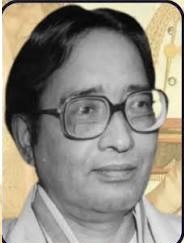
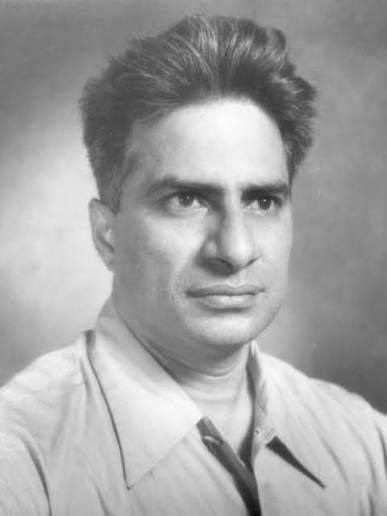
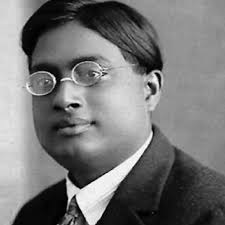
Satyendra Nath Bose was one of the most influential theoretical physicists of the 20th century. He is best known for his collaboration with Albert Einstein, which led to the development of Bose–Einstein statistics and the concept of bosons—a fundamental class of particles in quantum physics. His work laid the foundation for modern quantum mechanics and had a profound impact on fields such as particle physics, condensed matter physics, and quantum field theory. The term “boson” itself is named in his honor.
Early Life and Education
Satyendra Nath Bose was born on 1 January 1894 in Kolkata (then Calcutta, British India). He came from a well-educated Bengali family; his father worked in the Indian Railways and encouraged his academic growth.
Bose showed exceptional talent in mathematics from an early age. He studied at the prestigious Hindu School and later at Presidency College, where he earned his Master’s degree in mixed mathematics in 1915, securing first rank.
One of his classmates was the future Nobel laureate Meghnad Saha, and together they contributed to early Indian scientific research culture.
Scientific Career & Research
After completing his education, Bose worked as a lecturer in physics at the University of Dhaka. During this period, he developed his groundbreaking work on quantum statistics.
In 1924, Bose wrote a short but revolutionary paper on Planck’s law of black-body radiation and sent it to Albert Einstein. Einstein immediately recognized its importance, translated it into German, and helped publish it in European journals. This collaboration led to the creation of Bose–Einstein statistics.
Later, Bose worked at the University of Calcutta and became a professor of physics, where he continued research in theoretical physics, X-ray crystallography, and particle physics.
Major Discoveries and Inventions
1. Bose–Einstein Statistics
Bose developed a new way of counting indistinguishable particles, now known as Bose–Einstein statistics.
ni=e(Ei−μ)/kT−1gi
This formula describes how identical particles behave at quantum levels and applies to particles such as photons.
2. Bose–Einstein Condensate (Foundation)
Although experimentally discovered later, Bose’s theory predicted a new state of matter where particles occupy the same quantum state at very low temperatures. This is now known as the Bose–Einstein Condensate (BEC).
3. Bosons
Particles that follow Bose–Einstein statistics are called bosons, including:
- Photons
- Gluons
- W and Z bosons
- Mesons
These particles are fundamental to quantum field theory and modern particle physics.
4. Contributions to X-ray Crystallography
Bose also worked on crystal structure studies and contributed to the understanding of X-ray diffraction in solids.
Awards and Honours
Satyendra Nath Bose received several honors for his scientific contributions:
- Padma Vibhushan (1954)
- Fellow of the Royal Society
- President of several Indian science associations
- Honorary recognition from international scientific communities
The term “boson” was named after him by Paul Dirac to honor his contributions to quantum statistics.
Later Life and Death
In his later years, Bose continued teaching and research while actively promoting scientific education in India. He played an important role in building a strong scientific culture in post-independence India.
He remained associated with the University of Calcutta until his retirement and continued mentoring young physicists.
Satyendra Nath Bose passed away on 4 February 1974 in Kolkata at the age of 80.
Legacy and Impact
Satyendra Nath Bose’s contributions form a cornerstone of modern quantum physics. His work led to major advancements in:
- Quantum mechanics
- Particle physics
- Laser technology
- Superconductivity
- Bose–Einstein condensates
His collaboration with Einstein is considered one of the most important scientific partnerships in history.
Today, his legacy lives on through the term boson, which describes some of the most fundamental particles in the universe. Institutions, awards, and research centers continue to honor his name.
Conclusion
Satyendra Nath Bose was a visionary physicist whose work reshaped our understanding of the quantum world. From developing Bose–Einstein statistics to inspiring entire fields of modern physics, his contributions remain deeply influential. His life is a testament to the power of pure theoretical thinking and collaboration in science, and his legacy continues to guide researchers exploring the fundamental laws of nature.
About the Author