Introduction
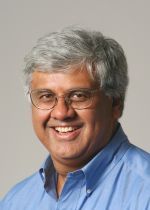
S. Shankar Sastry is an Indian-American engineer and professor known for his pioneering contributions in robotics, control theory, and cyber-physical systems. He is especially recognized for his work in nonlinear systems, hybrid systems, and autonomous robotics.
Shankar Sastry received his B.Tech. from the Indian Institute of Technology, Bombay, 1977, a M.S. in EECS, M.A. in Mathematics and Ph.D. in EECS from UC Berkeley, 1979, 1980, and 1981 respectively. He holds faculty appointments in the Departments of Electrical Engineering and Computer Sciences, Bioengineering, and Mechanical Engineering, and served as dean of the College of Engineering from 2007 to 2018. He was formerly the Director of CITRIS (Center for Information Technology Research in the Interest of Society) and the Banatao Institute @ CITRIS Berkeley. He served as chair of the EECS department from January, 2001 through June 2004. In 2000, he served as Director of the Information Technology Office at DARPA. From 1996-1999, he was the Director of the Electronics Research Laboratory at Berkeley, an organized research unit on the Berkeley campus conducting research in computer sciences and all aspects of electrical engineering. He is the NEC Distinguished Professor of Electrical Engineering and Computer Sciences and holds faculty appointments in the Departments of Bioengineering, EECS and Mechanical Engineering.
Prior to joining the EECS faculty in 1983 he was a professor at MIT.
Early Life and Education
Sastry was born in India and later moved to the United States for higher studies. He developed a strong interest in mathematics, physics, and engineering early in his academic journey.
He completed his higher education in engineering and control systems, eventually earning a Ph.D. in Electrical Engineering and Computer Sciences from the University of California, Berkeley.
Education
1981, Ph.D., Electrical Engineering and Computer Sciences, University of California, Berkeley
1980, M.A., Mathematics, University of California, Berkeley
1979, M.S., Electrical Engineering and Computer Sciences, University of California, Berkeley
1977, B.Tech, Institute of Technology, Bombay, India
Birth Date and Place
- Birth Year: Commonly reported as 1957 (exact public records vary)
- Birth Place: India
Scientific Career & Research
Sastry has had a long academic career, primarily at the University of California, Berkeley, where he served as a professor and later held leadership roles.
His major research areas include:
- Robotics and autonomous systems
- Nonlinear control systems
- Hybrid systems theory
- Cyber-physical systems
- Networked control systems
- Safety and verification of autonomous systems
He has also contributed to defense and aerospace research programs in the United States.
Career & Academic Milestones
- Education: Received his B.Tech. from IIT Bombay (1977) followed by his M.S. and Ph.D. from UC Berkeley (1981).
- Leadership Roles: Served as the Director of the Information Technology Office at DARPA (1999–2001) and Director of CITRIS (2004–2007).
- Mentorship: Over his career, he has supervised more than 65 doctoral students and 50 M.S. students, many of whom now lead major engineering faculties
Major Discoveries and Inventions
Some of his key contributions include:
- Development of foundational theories in nonlinear control systems
- Advances in hybrid systems modeling, combining digital and physical system behavior
- Work on safe and reliable autonomous robotics
- Contributions to sensor networks and distributed control systems
- Research influencing modern self-driving and autonomous decision systems
Awards and Honours
Sastry has received numerous honors, including:
- Fellow of the IEEE (Institute of Electrical and Electronics Engineers)
- Membership in the U.S. National Academy of Engineering
- Various distinguished teaching and research awards from UC Berkeley
- Recognition for contributions to control systems and robotics research
Later Life and Current Work
Sastry continues to be active in research and academic leadership. He has served in several advisory and administrative roles in engineering education and technology policy.
He is also involved in research centers focused on artificial intelligence, robotics, and trustworthy autonomous systems.
Legacy and Impact
S. Shankar Sastry’s work has significantly influenced:
- Modern robotics and automation systems
- Autonomous vehicle safety design
- Control theory used in aerospace and industrial systems
- AI-driven physical systems
Many of his students and collaborators are now leaders in academia and industry, extending his impact globally.
Conclusion
S. S. Sastry is considered one of the most influential figures in robotics and control engineering. His contributions have helped shape the theoretical foundation and practical development of modern autonomous systems.
About the Author