Introduction
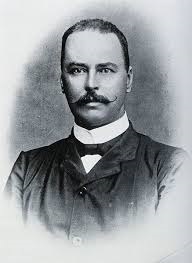
Sir Ronald Ross (1857–1932) was a British physician, epidemiologist, and parasitologist whose groundbreaking research transformed the understanding of malaria, one of the world’s deadliest infectious diseases. While serving in the Indian Medical Service, Ross discovered that female Anopheles mosquitoes transmit the malaria parasite between humans. This landmark discovery revolutionized tropical medicine and provided the scientific foundation for malaria prevention and control. In recognition of his pioneering work, Ross was awarded the 1902 Nobel Prize in Physiology or Medicine, becoming the first British Nobel laureate in medicine.
Early Life and Education
Ronald Ross was born on May 13, 1857, in Almora, in present-day Uttarakhand, India, where his father, Sir Campbell Claye Grant Ross, served as an officer in the British Indian Army.
At the age of eight, Ross was sent to England for his education. He attended several schools before studying medicine at St Bartholomew’s Hospital Medical College, London. He qualified as a physician in 1881 and later joined the Indian Medical Service (IMS).
During his service in India, Ross developed a keen interest in infectious diseases, particularly malaria, which caused widespread illness and death across the Indian subcontinent.
Scientific Career & Research
Ronald Ross served as a military doctor in various parts of British India, including Madras (Chennai), Bengal, Secunderabad, and Bengaluru. While treating malaria patients, he became determined to understand how the disease spread.
Inspired by the work of French physician Alphonse Laveran, who had discovered the malaria parasite in human blood, Ross investigated whether mosquitoes played a role in transmission.
Working under difficult conditions with limited laboratory facilities, Ross conducted meticulous experiments by dissecting hundreds of mosquitoes and studying the development of malaria parasites inside them.
On August 20, 1897, he made his historic discovery by identifying malaria parasites in the stomach wall of female Anopheles mosquitoes. This date is now celebrated annually as World Mosquito Day.
After his discovery, Ross continued research on malaria transmission in birds, helping scientists fully understand the parasite’s life cycle.
Major Discoveries and Contributions
1. Discovery of Mosquito Transmission of Malaria
Ronald Ross proved that female Anopheles mosquitoes transmit the malaria parasite (Plasmodium) from one host to another.
This breakthrough solved one of medicine’s greatest mysteries and transformed the prevention of malaria.
2. Understanding the Life Cycle of the Malaria Parasite
Ross demonstrated that the malaria parasite undergoes an essential stage of development inside the mosquito before being transmitted to humans.
This discovery explained how malaria spreads and provided the scientific basis for interrupting its transmission.
3. Foundation of Malaria Control Programs
Ross’s research showed that reducing mosquito populations could dramatically decrease malaria cases.
His work inspired mosquito-control strategies such as:
- Eliminating stagnant water
- Using insecticides
- Installing window screens
- Sleeping under mosquito nets
- Environmental sanitation
These methods remain central to malaria prevention today.
4. Mathematical Models of Disease Transmission
Ronald Ross was among the first scientists to apply mathematics to the study of infectious diseases.
He developed mathematical models that explained how diseases spread through populations, making him one of the pioneers of modern epidemiology and public health modeling.
5. Contributions to Tropical Medicine
Beyond malaria, Ross conducted important research on tropical diseases and promoted the establishment of institutions dedicated to tropical medicine.
His work strengthened public health systems in many countries affected by infectious diseases.
Awards and Honours
Ronald Ross received numerous prestigious awards and recognitions, including:
- Nobel Prize in Physiology or Medicine (1902) for discovering the role of mosquitoes in malaria transmission.
- Knight Bachelor (1902), receiving the title Sir Ronald Ross.
- Fellow of the Royal Society (FRS) (1901).
- Royal Medal of the Royal Society.
- Numerous honorary degrees from universities across Europe.
- Membership in several international scientific academies.
Many hospitals, research institutes, roads, and awards have been named in his honour.
Later Life and Death
After retiring from the Indian Medical Service, Ross became a professor at the Liverpool School of Tropical Medicine, where he continued research on malaria, epidemiology, and public health.
He also served as Director of the Ross Institute of Tropical Hygiene in London, promoting malaria research and disease control worldwide.
In addition to science, Ross enjoyed writing poetry, novels, and mathematical essays.
Sir Ronald Ross passed away on September 16, 1932, in London, England, at the age of 75.
Legacy and Impact
Ronald Ross’s discovery fundamentally changed medicine and public health.
His lasting legacy includes:
- Proving that female Anopheles mosquitoes transmit malaria.
- Establishing the scientific basis for malaria prevention and mosquito control.
- Saving millions of lives through improved public health measures.
- Advancing tropical medicine and infectious disease research.
- Pioneering mathematical epidemiology.
- Inspiring generations of physicians, parasitologists, and public health experts.
- Contributing to global efforts to eliminate malaria.
His work continues to guide organizations such as the World Health Organization (WHO) and national malaria control programs around the world.
Conclusion
Sir Ronald Ross’s discovery of the mosquito transmission of malaria ranks among the greatest achievements in medical history. His research transformed the understanding of one of humanity’s deadliest diseases and laid the foundation for modern malaria prevention and control. Awarded the Nobel Prize in 1902, Ross’s scientific legacy continues to influence tropical medicine, epidemiology, and global public health. His dedication and perseverance remain an enduring inspiration for scientists working to combat infectious diseases worldwide.
About the Author