1. Introduction
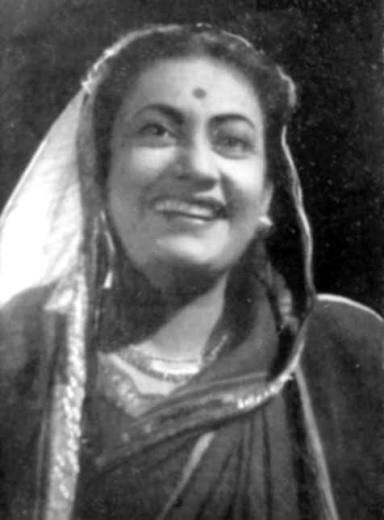
Renuka Ray (1903–1997) was a trailblazing Indian freedom fighter, social activist, politician, and a prominent voice in the drafting of the Indian Constitution. Hailing from a distinguished and progressive family, she dedicated her entire life to breaking structural barriers, championing women’s legal and inheritance rights, and building a robust welfare framework in post-independence India.
2. Quick Facts
- Full Name: Renuka Ray
- Native Name: রেনুকা রায় (Bengali)
- Date of Birth: January 4, 1903
- Place of Birth: Calcutta (Kolkata), Bengal Presidency, British India
- Nationality: Indian
- Occupation / Profession: Freedom Fighter, Social Activist, Politician, Author
- Field of Achievement: Women’s Rights, Constitutional Law, Social Welfare, and Public Administration
- Years Active: 1920s to late 1980s
3. Award Information
- Award Name: Padma Bhushan
- Award Category: Civilian Honour (Third Highest)
- Award Year: 1988
- Presented By: President of India
- Date of Ceremony: 1988 (Rashtrapati Bhavan annual investiture)
- Citation / Official Reason: For distinguished service to the nation in public affairs, social work, and the advancement of women’s rights.
- Previous Recipients: Eminent national leaders, educationists, and social reformers.
- Next Recipients: Subsequent cohorts of the Padma Bhushan in public service.
4. Why She Received the Award
Renuka Ray was awarded the Padma Bhushan in recognition of her decades-long pioneering public service. From walking out of college at Mahatma Gandhi’s call and drafting foundational legal reports on women’s disabilities to serving in the Constituent Assembly and managing massive refugee rehabilitation as a minister in West Bengal, her contributions fundamentally shaped modern India’s social structure.
5. Early Life
Born into an elite, highly accomplished Bengali family, Renuka was surrounded by reform-minded intellectuals. Her father, Satish Chandra Mukherjee, was an ICS officer, and her mother, Charulata Mukherjee, was an active social worker. Her maternal lineage was equally stellar—her grandfather Prof. P.K. Roy was the first Indian D.Phil from Oxford, and her grandmother Sarala Roy was a pioneering women’s educationist. Influenced deeply by these environments, Renuka met Mahatma Gandhi at age 16, a turning point that shifted her trajectory toward the national freedom movement.
6. Education
Renuka studied at Loreto House and Diocesan College in Calcutta. When Mahatma Gandhi called for a boycott of British educational institutions during the Non-Cooperation Movement, she immediately left college. However, upon Gandhi’s and her parents’ mutual persuasion that educated women were vital for nation-building, she moved to the United Kingdom and enrolled in the prestigious London School of Economics (LSE) in 1921, where she sharpened her socio-economic and political outlook.
7. Career Journey
- All India Women’s Conference (AIWC): Served in core leadership capacities, acting as its President twice (1932 and 1953–54) and pushing hard for women’s legal reforms.
- Legislative and Constituent Roles: Nominated to the Central Legislative Assembly in 1943; later elected as a member of the Constituent Assembly of India (1946–47).
- Ministerial Career: Appointed as the Minister of Relief and Rehabilitation for West Bengal (1952–57), tackling massive post-partition refugee crises.
- Parliamentary Service: Elected to the Lok Sabha from the Malda constituency (1957–1967).
8. Major Achievements
- Constitutional Advocacy: Fought fiercely for fundamental rights, gender equality, and a Uniform Civil Code within the Constituent Assembly.
- The Renuka Ray Committee (1959): Chaired the landmark committee on Social Welfare and Welfare of Backward Classes, shaping institutional welfare strategies.
- Literary Work: Authored the acclaimed memoir and analysis, My Reminiscences: Social Development During the Gandhian Era and After.
9. Contribution to the Nation
Renuka Ray bridged the gap between political freedom and social emancipation. She successfully advocated for Hindu law reforms to secure inheritance rights for women, fought against human trafficking, protected female laborers, and handled the monumental task of rehabilitating refugees during the partition of Bengal.
10. Other Awards and Honours
- Honored with the Padma Bhushan (1988) by the Government of India.
- Associated with premier institutions like Visva-Bharati University (Santiniketan) and the Planning Commission of India.
- Recognized widely as a foundational mother of Indian parliamentary democracy.
11. Legacy and Influence
Renuka Ray’s legacy lies in her practical approach to feminism and statecraft—she believed women were equal partners in building the nation rather than separate entities. Her family background also reads like a roll call of Indian history: her brother Subroto Mukherjee was the first Air Chief Marshal of the Indian Air Force, and another brother, Prasanto, chaired the Indian Railway Board.
12. Interesting Facts
- First Movers: She and fellow activist Lalita Ray were the very first two female students to walk out of Diocesan College in response to Gandhi’s non-cooperation call.
- Dynamic Family Tree: Her family tree boasts extraordinary achievers, including connections to intellectual icons like Keshab Chandra Sen and film director Muzaffar Ali.
- Global Delegate: She represented India on international platforms, including the United Nations General Assembly.
13. Quotes
“As much as men have contributed to making the Constitution, women have also contributed equally.”
14. Timeline
- 1903: Born in Calcutta, Bengal Presidency
- 1921: Joined the London School of Economics
- 1932 & 1953: Served as President of the All India Women’s Conference (AIWC)
- 1946–1947: Served as a member of the Constituent Assembly of India
- 1952–1957: Minister of Relief and Rehabilitation, Government of West Bengal
- 1957–1967: Member of Parliament (Lok Sabha) from Malda
- 1988: Awarded the Padma Bhushan by the Government of India
- 1997: Passed away at the age of 94
15. References
- Wikipedia contributors. “Renuka Ray.” Wikipedia, The Free Encyclopedia.
- Dakshayani Velayudhan Digital Archive. “Renuka Ray: A Stalwart Advocate for Women’s Rights.”
- Ray, Renuka. My Reminiscences: Social Development During the Gandhian Era and After.
- Academic Journals on Indian Women’s Movement (Paramita Bhadra, Renuka Ray: A Pioneering Woman in Indian Women’s Movement).
16. Related Personalities
- Mahatma Gandhi: Her primary ideological mentor during the freedom struggle.
- Subroto Mukherjee: Her brother and the first Air Chief Marshal of the Indian Air Force.
- Sarala Roy: Her maternal grandmother and legendary women’s educationist.
17. Frequently Asked Questions (FAQ)
Q1: What was Renuka Ray’s main contribution to the Indian Constitution?
A: She was one of the 15 women members of the Constituent Assembly, where she strongly advocated for gender equality, women’s legal rights, property inheritance, and a Uniform Civil Code.
Q2: Which government office did she hold after independence?
A: She served as the Minister of Relief and Rehabilitation for West Bengal from 1952 to 1957, where she managed the massive humanitarian crisis following partition.
Q3: When was she honored with the Padma Bhushan?
A: She received the Padma Bhushan in 1988 from the Government of India for her exceptional public service and social activism.
About the Author