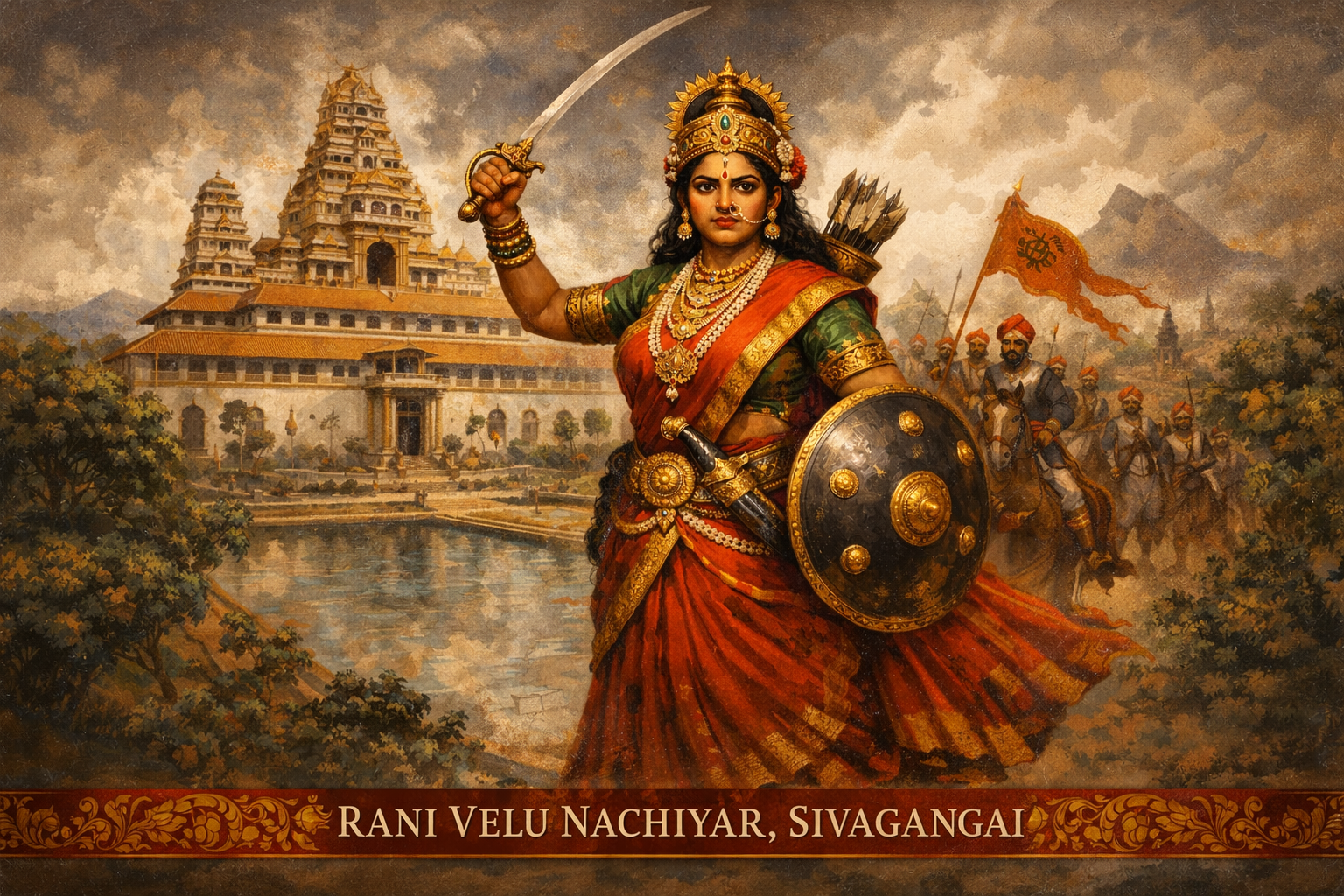
Rani Velu Nachiyar was one of the earliest Indian rulers to resist British colonial power. Known for her bravery, intelligence, and strategic thinking, she became the first Indian queen to wage war against the British East India Company. Her life story is an inspiring chapter in India’s freedom struggle, especially in Tamil Nadu’s history.
🏰 Early Life and Education
- Born: January 3, 1730
- Birthplace: Ramanathapuram, Tamil Nadu
- Parents: King Chellamuthu Vijayaragunatha Sethupathy and Queen Sakandhimuthal
Velu Nachiyar was the only child of the royal family. Unlike many princesses of her time, she received extensive education and military training.
📚 Education & Skills
She was highly educated and trained in:
- Tamil, Sanskrit, Urdu, and possibly English
- Silambam (traditional Tamil martial art)
- Horse riding
- Archery
- Sword fighting
- Military strategy and administration
Her upbringing prepared her not just as a princess, but as a future ruler and warrior.
👨👩👧 Marriage and Family
Velu Nachiyar married Muthu Vaduganatha Periya Udaiyathevar, the King of Sivaganga.
- Daughter: Vellacci Nachiyar
She lived a peaceful royal life initially. However, her life changed drastically due to British interference in South India.
⚔️ Beginning of the Freedom Struggle
In 1772, the British East India Company, along with the Nawab of Arcot, attacked Sivaganga. During this battle:
- Her husband was killed.
- The kingdom was captured.
- Velu Nachiyar and her daughter escaped to safety.
Instead of surrendering, she chose the path of resistance.
🤝 Alliance and Preparation
During her exile, she sought support from:
- Hyder Ali, the ruler of Mysore
- Local commanders like the Maruthu Brothers
Hyder Ali provided her with military assistance, weapons, and training. Velu Nachiyar spent nearly 8 years planning her revenge.
She formed a women’s army, which was revolutionary for that time.
💥 The Historic Attack
One of her most trusted commanders was:
- Kuyili
Kuyili is remembered as India’s first recorded suicide warrior. She sacrificed her life by setting herself on fire and destroying the British ammunition store. This act played a crucial role in Velu Nachiyar’s victory.
In 1780, Velu Nachiyar successfully recaptured Sivaganga from the British.
👑 Rule After Victory
After reclaiming her kingdom:
- She ruled Sivaganga from 1780 to 1790.
- She restored administration and strengthened defense.
- She appointed trusted leaders, including the Maruthu Brothers, in key positions.
Unlike many rulers who sought expansion, Velu Nachiyar focused on stability and protection of her people.
🕊️ Later Life and Death
After ruling for about 10 years, she handed over power to her daughter, Vellacci Nachiyar.
- Death: December 25, 1796
- Cause: Natural causes
She did not die in battle. After dedicating much of her life to freedom and governance, she passed away peacefully.
🌟 Why Velu Nachiyar is Important in Indian History
- First Indian queen to fight the British.
- Created one of the earliest women’s military units.
- Formed strategic alliances to defeat colonial forces.
- Symbol of Tamil pride and women empowerment.
Her struggle came decades before the famous 1857 revolt.
🏆 Legacy and Recognition
- The Government of India released a commemorative stamp in her honor.
- Her name is remembered alongside other freedom fighters of Tamil Nadu.
- She is celebrated as a pioneer of resistance against colonial rule.
📌 Conclusion
Rani Velu Nachiyar was not just a queen but a visionary leader and fearless warrior. From a well-educated princess to a determined freedom fighter, her life reflects courage, intelligence, and resilience.
She lived not only to fight for freedom but also to rebuild and protect her kingdom. Her story continues to inspire generations, especially women, to stand strong against injustice.
About the Author