Thiruvalluvar – Life, History, Religion & Legacy of the Author of Tirukkuṟaḷ
Introduction
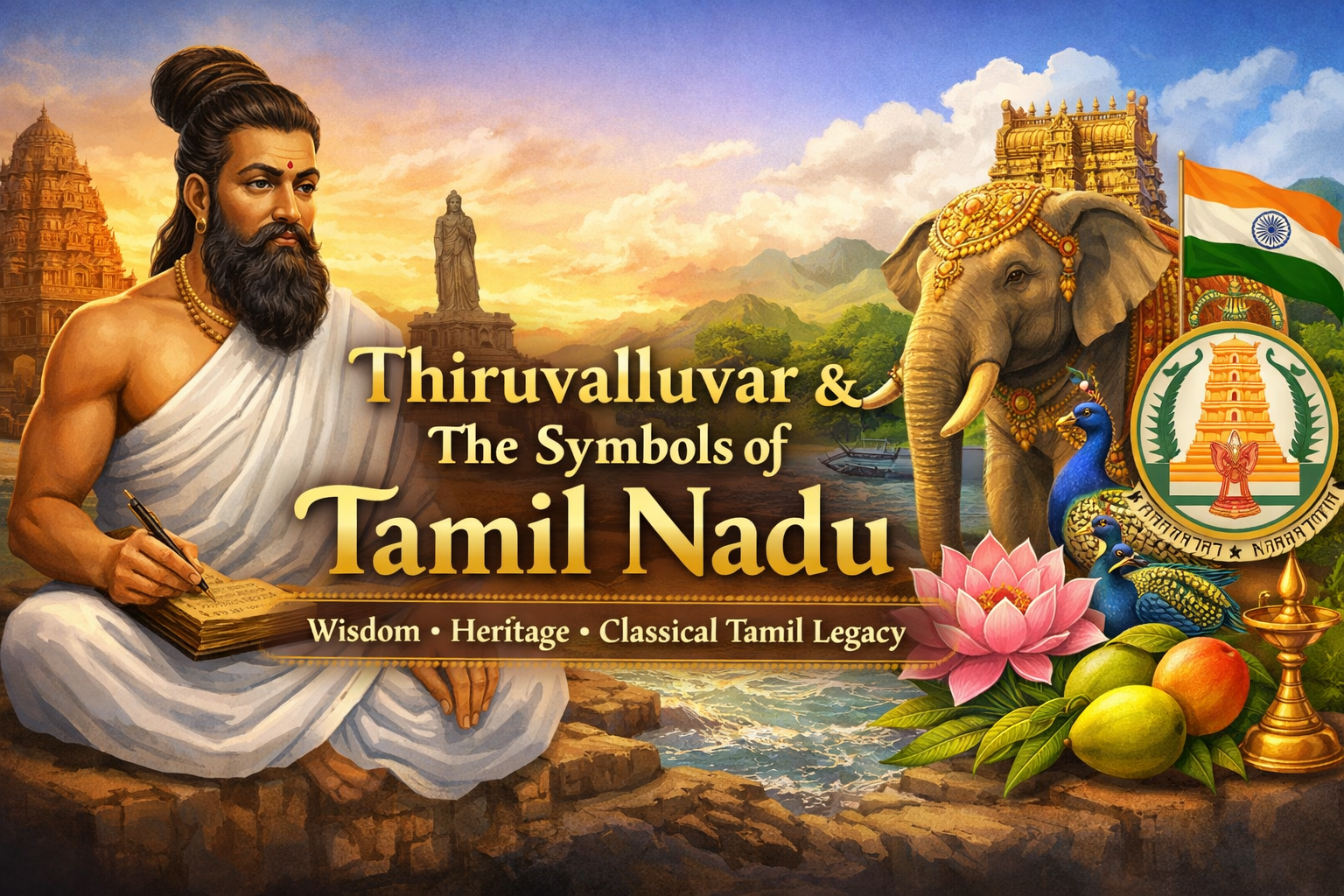
Thiruvalluvar, popularly known as Valluvar, is one of the greatest poets and moral philosophers in Indian history. He is best known as the author of the Tirukkuṟaḷ, a timeless Tamil classic consisting of 1,330 couplets that teach virtue, governance, economics, and love.
The Tirukkuṟaḷ is considered a universal ethical guide and is often referred to as the “Tamil Veda.” Though centuries have passed, Thiruvalluvar’s teachings remain relevant in modern society.
Early Life of Thiruvalluvar
Very little authentic historical evidence exists about Thiruvalluvar’s life. Scholars believe:
- His real name is unknown.
- “Thiru” is an honorific meaning sacred.
- “Valluvar” may have been a title or community name.
According to scholar Kamil Zvelebil, most information about Thiruvalluvar comes from legends rather than verified historical records.
Date and Period of Thiruvalluvar
The exact date of Thiruvalluvar remains debated:
- Traditional scholars date him to around 300 BCE.
- Some historians place him between 4th century BCE and 5th century CE.
- Modern scholars estimate around 450–500 CE.
- The Tamil Nadu Government officially recognizes 31 BCE as his birth year and follows the Valluvar Year system.
Despite differing opinions, scholars agree that he lived during the early classical Tamil period.
Birthplace of Thiruvalluvar
The most widely accepted belief is that Thiruvalluvar was born in Mylapore, now part of Chennai, Tamil Nadu.
Other claims suggest:
- Madurai
- Kanyakumari district
However, Mylapore remains the most popularly accepted birthplace, and a temple dedicated to him stands there today.
Family and Personal Life
Traditional stories mention that:
- Thiruvalluvar was married to a woman named Vasuki.
- Vasuki is portrayed as the ideal wife in Tamil folklore.
- He lived a simple life as a weaver.
However, historians consider these accounts devotional legends rather than confirmed facts.
Religion of Thiruvalluvar – A Scholarly Debate
One of the biggest debates about Thiruvalluvar concerns his religious identity.
Was Thiruvalluvar a Jain?
Some scholars suggest he may have been a Jain due to:
- Strong emphasis on non-violence (ahimsa)
- Advocacy of vegetarianism
- Moral philosophy similar to Jain teachings
Was He a Hindu?
Others argue he was Hindu because:
- References to Hindu deities like Indra and Vishnu
- Structure of the Tirukkuṟaḷ reflects Dharma (Aram), Artha (Porul), and Kama (Inbam)
- Medieval commentators interpreted the Kural within Hindu philosophy
Christian and Buddhist Claims
19th-century missionary George Uglow Pope claimed Christian influence, but modern scholars reject this theory.
Some Buddhist thinkers also claimed him as Buddhist, though there is limited historical proof.
Scholarly Conclusion
Most modern scholars agree that the Tirukkuṟaḷ is a non-sectarian ethical text. Thiruvalluvar’s teachings transcend religious boundaries and focus on universal moral values.
Tirukkuṟaḷ – The Masterpiece of Thiruvalluvar
The Tirukkuṟaḷ is the only confirmed work of Thiruvalluvar.
Structure of Tirukkuṟaḷ
- 133 Chapters
- 1,330 Couplets
- Divided into 3 sections:
- Aram (Virtue)
- Porul (Wealth and Politics)
- Inbam (Love)
The Porul section is the largest and discusses:
- Governance
- Leadership
- Diplomacy
- Military ethics
- Justice and administration
The Tirukkuṟaḷ has been translated into more than 40 languages worldwide and is considered one of the greatest works in Tamil literature.
Thiruvalluvar’s Political and Ethical Philosophy
Thiruvalluvar emphasized:
- Moral discipline
- Compassion
- Just governance
- Importance of education
- Leadership qualities
- Social harmony
His teachings promote a balanced life combining virtue, wealth, and love.
Unlike religious scriptures, the Tirukkuṟaḷ provides practical guidance for daily living and governance.
Memorials and Global Recognition
Thiruvalluvar is deeply revered in Tamil culture.
Major Memorials
- Valluvar Kottam in Chennai
- Thiruvalluvar Statue (133 feet tall) at Kanyakumari
- Statues in Bengaluru, Haridwar, London, and Germany
The 133-foot statue symbolizes the 133 chapters of the Tirukkuṟaḷ.
Thiruvalluvar Day
The Government of Tamil Nadu celebrates Thiruvalluvar Day every year on January 15 or 16 during the Pongal festival.
This day honors his contribution to Tamil literature and moral philosophy.
Why Thiruvalluvar Is Still Relevant Today
Even after centuries, Thiruvalluvar’s teachings remain relevant because:
- He promotes equality and justice.
- His ethics apply to modern politics and governance.
- His philosophy supports compassion and social responsibility.
- His ideas transcend religion and caste.
His work continues to inspire scholars, leaders, and common people across the world.
Conclusion
Thiruvalluvar remains one of the greatest ethical thinkers in world history. Though many aspects of his life remain uncertain, his legacy through the Tirukkuṟaḷ is unquestionable.
He is not just a Tamil poet but a global philosopher whose teachings continue to guide humanity toward virtue, wisdom, and harmony.
About the Author