1. Introduction
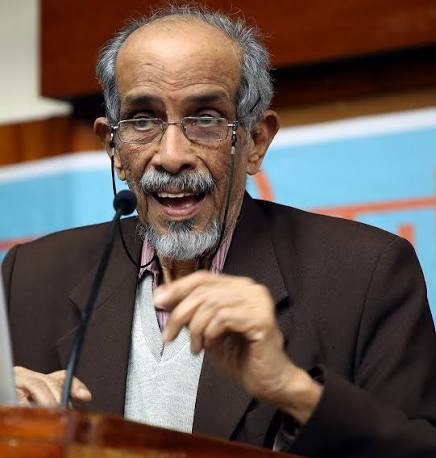
Prof. Roddam Narasimha (20 July 1933 – 14 December 2020) was one of India’s most distinguished aerospace scientists, fluid dynamicists, and science leaders. Over a career spanning more than six decades, he played a monumental role in shaping India’s aerospace technology, defense research, atmospheric sciences, and science policy. From working closely with Satish Dhawan to spearheading the development of India’s first parallel computer and contributing to the Light Combat Aircraft (LCA) project, Narasimha’s intellectual footprint remains deeply embedded in modern Indian science.
2. Quick Facts
- Full Name: Roddam Narasimha
- Native Name: ರೊದ್ದಂ ನರಸಿಂಹ (Kannada)
- Date of Birth: July 20, 1933
- Place of Birth: Bangalore, Karnataka, India (with family roots in Roddam village, Anantapur district, Andhra Pradesh)
- Nationality: Indian
- Occupation/Profession: Aerospace Scientist, Fluid Dynamicist, Professor, and Institution Builder
- Field of Achievement: Aerospace Engineering, Fluid Mechanics, Atmospheric Sciences, and Science Administration
- Years Active: 1953 – 2020
3. Award Information (Focus: Padma Vibhushan)
- Award Name: Padma Vibhushan
- Award Category: India’s Second-Highest Civilian Award
- Award Year: 2013
- Presented By: The President of India
- Date of Ceremony: March 2013 (Rashtrapati Bhavan)
- Citation/Official Reason: For exceptional and distinguished service and contributions to advance India’s aerospace technology.
- Previous Recipients (Examples): Prominent scientists, artists, and statesmen (such as Prof. C.N.R. Rao in other years).
- Next Recipients: Conferred alongside other eminent citizens in the 2013 civil investiture batch.
4. Why Did He Receive the Award?
Prof. Narasimha received the Padma Vibhushan for his lifelong, pioneering contributions to science and technology—specifically for cementing India’s capabilities in aeronautics, aerospace engineering, and fluid dynamics. His visionary leadership at the National Aerospace Laboratories (NAL), his fundamental discoveries regarding turbulence and shockwaves, and his guidance on national technology initiatives transformed India’s self-reliance in high-tech aerospace sectors.
5. Early Life
Born into a Kannada-speaking family in 1933, Narasimha grew up in an academic environment. His father, R.L. Narasimhaiah, was a physics professor at Central College, Bangalore, and a notable science writer in Kannada. Young Narasimha’s fascination with flight was ignited during a visit to the Indian Institute of Science (IISc), where he caught sight of a parked Spitfire aircraft. Despite family encouragement to pursue secure conventional employment with Indian Railways or Burmah Shell, his passion for engineering and flight steered him toward a life in scientific research.
6. Education
- Schooling: Acharya Pathasala, Gandhi Bazaar, Bangalore.
- Undergraduate: Bachelor’s degree in Mechanical Engineering from the University Visvesvaraya College of Engineering (UVCE), Bangalore (University of Mysore) in 1953.
- Postgraduate: Master’s degree in Engineering from the Indian Institute of Science (IISc), Bangalore, in 1955, working closely with Prof. Satish Dhawan.
- Doctorate (Ph.D.): Completed his Ph.D. in 1961 at the California Institute of Technology (Caltech) under the mentorship of renowned aerodynamicist Hans W. Liepmann.
7. Career Journey
- Early Research (US): Studied jet engine noise reduction and rarefied gas dynamics at Caltech and the NASA Jet Propulsion Laboratory (JPL).
- IISc Faculty (1962–1999): Returned to India to join the Department of Aerospace Engineering at IISc, where he taught and mentored generations of engineers for nearly four decades.
- Leadership at NAL (1984–1993): Served as the Director of the National Aerospace Laboratories, pushing boundaries in parallel computing and light aircraft design.
- Later Leadership Roles: Headed the Centre for Atmospheric Sciences (founder, 1982), directed the National Institute of Advanced Studies (NIAS, 1997–2004), and chaired the Engineering Mechanics Unit at JNCASR (2000–2014).
8. Major Achievements
- Fluid Dynamics Discoveries: Made fundamental contributions to understanding turbulent boundary layers (“bursting” phenomena), shockwaves, and hydrodynamic instability.
- India’s First Parallel Computer: Under his leadership at NAL, teams built India’s first parallel computer in 1986, using it to pioneer advanced tropical weather prediction codes.
- LCA Conceptual Studies: Led the joint HAL-NAL-IISc team carrying out early conceptual design studies for India’s Light Combat Aircraft (Tejas).
- Monsoon Research: Conceived major atmospheric field experiments, such as MONTBLEX, to study the boundary layer dynamics of the Indian summer monsoon.
9. Contribution to the Nation
Prof. Narasimha bridged the gap between fundamental academic research and practical national defense/space tech. He served multiple terms on the National Security Advisory Board and the Indian Space Commission, offering objective, strategic science advice to successive Indian prime ministers. He was instrumental in building institutional frameworks for atmospheric science, ensuring India could map its monsoons and build indigenous aerospace infrastructure.
10. Other Awards and Honours
- Shanti Swarup Bhatnagar Prize (1975)
- Padma Bhushan (1987)
- Fellow of the Royal Society (FRS), London (1992)
- Foreign Associate, US National Academy of Engineering & US National Academy of Sciences
- Trieste Science Prize (2008)
- Nature’s Lifetime Achievement Award for Mentoring in Science (2019)
11. Legacy and Influence
Prof. Narasimha is remembered not only for his equations and aircraft designs, but as a master institution builder and educator. He deeply influenced science communication and education in India, helping launch academic journals like Resonance and Sadhana. His legacy lives on through the rigorous scientific temper he instilled in his students and his holistic view combining modern science with the history of Indian scientific thought.
12. Interesting Facts
- Early Inspiration: Seeing a Spitfire plane at IISc as a youth permanently changed his career path from railways/corporate jobs to aeronautics.
- Early Computing Pioneer: During his graduate studies at Caltech/NASA in the late 1950s, he was among the early researchers to run complex flow simulations on some of NASA’s earliest computers.
- Literary Bend: Aside from 200+ technical papers and 15 books, he deeply appreciated literature, poetry, and philosophy, editing works like The Dynamics of Technology and An Encyclopaedia of Classical Indian Sciences.
13. Quotes
“Science is not just about building things; it is about seeking an elegant, truthful understanding of how nature behaves under pressure and motion.”
14. Timeline
- 1933: Born on July 20 in Bangalore.
- 1953: Graduated in Mechanical Engineering from UVCE.
- 1961: Earned his Ph.D. from Caltech under Hans Liepmann.
- 1962: Joined the faculty of Aerospace Engineering at IISc.
- 1984: Appointed Director of the National Aerospace Laboratories (NAL).
- 1992: Elected a Fellow of the Royal Society (FRS), London.
- 2013: Awarded the Padma Vibhushan by the Government of India.
- 2020: Passed away on December 14 at the age of 87.
15. References
- Wikipedia contributors. Roddam Narasimha. Wikipedia, The Free Encyclopedia.
- Indian Academy of Sciences / Royal Society Publishing. Biographical Memoirs of Fellows: Roddam Narasimha.
- National Academy of Engineering. Memorial Tributes: Volume 25, Roddam Narasimha.
16. Related Personalities
- Satish Dhawan: Legendary aerospace engineer and former ISRO chairman, who was Narasimha’s mentor and colleague.
- Hans W. Liepmann: Eminent Caltech professor and aerodynamics pioneer who supervised Narasimha’s Ph.D.
- A.P.J. Abdul Kalam: Former Indian President and aerospace scientist who collaborated with Narasimha on fluid mechanics forums.
- C.N.R. Rao: Renowned Indian chemist and institutional leader of modern Indian science.
17. Frequently Asked Questions (FAQ)
Q: What was Roddam Narasimha famous for?
A: He was globally renowned for his pioneering research in fluid dynamics, aerospace technology, atmospheric sciences, and for leading key technological advancements in India like parallel computing and aircraft design.
Q: Did Roddam Narasimha work with NASA?
A: Yes, early in his career during his time at Caltech, he worked at the NASA Jet Propulsion Laboratory (JPL) studying rarefied gas dynamics and supersonic flows relevant to space vehicles.
Q: What civilian honors did he receive?
A: He received the Padma Bhushan in 1987 and India’s second-highest civilian honor, the Padma Vibhushan, in 2013.
About the Author