1. Introduction
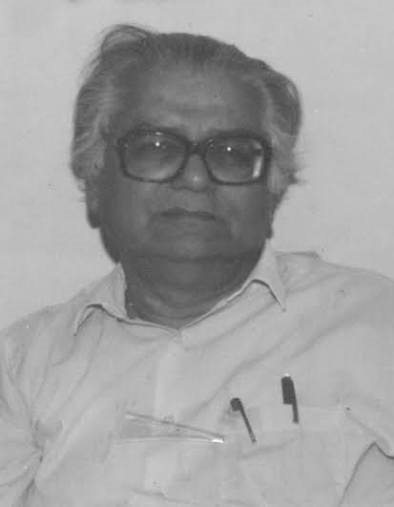
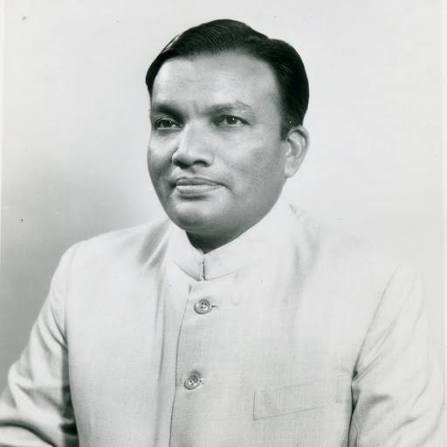
Professor Ajit Ram Verma was a towering figure in modern Indian physics, celebrated globally for his foundational research in crystallography, crystal growth, and solid-state physics. Best known as the longest-serving director of the National Physical Laboratory (NPL) in New Delhi, he was an institutional builder who shaped national standards, advanced scientific self-reliance, and championed ethical values in scientific research.
Wikipedia
2. Quick Facts
- Full Name: Ajit Ram Verma
- Native Name: अजित राम वर्मा
- Date of Birth: September 20, 1921 Wikipedia
- Place of Birth: Dalmau, near Lucknow, Uttar Pradesh, India Wikipedia
- Nationality: Indian Wikipedia
- Occupation/Profession: Physicist, Researcher, Academic, and Laboratory Director Wikipedia
- Field of Achievement: Crystallography, Solid-State Physics, and Material Science Indian Academy of Sciences – Indian Academy of Sciences
- Years Active: 1945–2009
3. Award Information
- Award Name: Padma Bhushan Wikipedia
- Award Category: Civil Honour (Science and Engineering)
- Award Year: 1982 Wikipedia
- Presented By: The President of India Wikipedia
- Date of Ceremony: 1982 (Standard Rashtrapati Bhavan investiture cycle)
- Citation/Official Reason: For his exceptional contributions to science, particularly his pioneering research in crystallography and his leadership in national technological infrastructure.
- Previous Recipients: Distinguished scientists, academics, and leaders of India.
- Next Recipients: Subsequent cohorts of Padma Bhushan honorees in science and engineering.
4. Why Did He Receive the Award?
Professor Verma received the Padma Bhushan in recognition of his lifetime dedication to experimental physics and his stellar administration of India’s premier measurement laboratory. His monumental work on crystal dislocation and spiral growth, combined with his leadership at the National Physical Laboratory (NPL) for nearly 17 years, modernized India’s capabilities in metrology and material physics.
Wikipedia
5. Early Life
Born in September 1921 in Dalmau (Uttar Pradesh), Ajit Ram Verma was the son of Hans Raj Verma, a respected railway official, and Devi Rani. Growing up in a disciplined and culturally grounded household, young Ajit moved across different towns due to his father’s transfers, completing his early education across multiple institutions before establishing a brilliant academic trajectory in higher education.
Wikipedia
6. Education
- Bachelor of Science (B.Sc.): Completed from Allahabad University in 1940. Wikipedia
- Master of Science (M.Sc.): Secured a master’s degree in Physics from Allahabad University in 1942. Wikipedia
- Doctor of Philosophy (Ph.D.): Earned his Ph.D. from the University of London in 1952 under the mentorship of renowned experimental physicist Professor Samuel Tolansky, focusing on unimolecular growth spirals on crystal surfaces. Wikipedia
7. Career Journey
- Early Academia: Began teaching at Delhi University before moving abroad for doctoral research. Returned to serve as a Reader in Physics at Delhi University (1955–1959). Wikipedia+ 1
- Banaras Hindu University (BHU): Appointed Professor and Head of the Department of Physics at BHU in 1959, where he built a vibrant school of solid-state physics research. Wikipedia
- Director of NPL (1965–1982): Appointed as the Director of the National Physical Laboratory, New Delhi. Serving for 17 years, he remains NPL’s longest-serving director, transforming it into a world-class institution for standards and measurements. Wikipedia+ 1
- Later Roles: Served as a visiting professor at IIT Delhi and later as a CSIR Emeritus Scientist and INSA Senior Scientist. Wikipedia
8. Major Achievements
- Groundbreaking Crystallography Work: His early studies on crystal growth spirals provided physical proof for the Frank theory of crystal dislocations, earning international acclaim. Indian National Science Academy
- Shanti Swarup Bhatnagar Prize (1964): Awarded India’s highest science prize in the physical sciences category for his exceptional contributions to crystallography. Wikipedia
- International Representation: Served as an elected member of the prestigious International Committee for Weights and Measures (CIPM), Paris (1966–1982). Wikipedia
- Authoritative Textbooks: Co-authored landmark scientific books, including Crystal Growth and Dislocations and Polymorphism and Polytypism in Crystals, which became standard texts globally. Wikipedia
9. Contribution to the Nation
Professor Verma played a definitive role in establishing India’s technological self-reliance. Under his tenure at NPL, the laboratory standardized national measurements, fostered indigenous instrumentation, and provided vital calibration services to Indian industries. Furthermore, he was a co-founder of the Society for Scientific Values (SSV), tirelessly advocating for integrity, transparency, and ethical conduct in Indian scientific institutions.
Wikipedia
10. Other Awards and Honours
- Shanti Swarup Bhatnagar Prize (1964): Presented by CSIR. Wikipedia
- Atmaram Award (1994): Awarded for scientific literature. Wikipedia
- Fellowships: Elected Fellow of the Indian National Science Academy (INSA), Indian Academy of Sciences (IAS), and the National Academy of Sciences, India (NASI). Wikipedia
- Editorial Roles: Served on the board of editors for major international journals like Solid State Communications. Wikipedia
11. Legacy and Influence
Professor Verma’s legacy lives on through generations of physicists and material scientists whom he mentored. He helped bridge fundamental crystal physics with practical industrial applications. His unwavering stand on institutional morality through the Society for Scientific Values left an enduring moral compass for the country’s scientific community.
Wikipedia
12. Interesting Facts
- Global Recognition: His early photography and analysis of crystal growth spirals were showcased under the “Looking Back” historical archive of the Nature Physics portal. Wikipedia
- Multifaceted Scholarly Mind: Late in life, alongside his pure physics work, he also deeply explored philosophical dialogues, co-authoring books on the concepts of truth in science and religion. Wikipedia
13. Quotes
“The pursuit of science demands not just brilliant intellect, but absolute adherence to objectivity, transparency, and ethical integrity.” — Prof. Ajit Ram Verma (Reflecting his philosophy on scientific values)
14. Timeline
- 1921: Born on September 20 in Dalmau, United Provinces, British India. Wikipedia
- 1942: Completes his M.Sc. in Physics from Allahabad University. Wikipedia
- 1952: Obtains his Ph.D. from the University of London. Wikipedia
- 1964: Receives the prestigious Shanti Swarup Bhatnagar Prize. Wikipedia
- 1965: Assumes charge as Director of the National Physical Laboratory (NPL). Wikipedia
- 1982: Conferred the Padma Bhushan by the President of India; steps down from NPL. Wikipedia
- 1984: Helps co-found the Society for Scientific Values. Wikipedia
- 2009: Passes away on March 4 at the age of 87. Wikipedia
15. References
- Wikipedia contributors. Ajit Ram Verma. Wikipedia, The Free Encyclopedia.
- Indian National Science Academy (INSA). Biographical Memoirs of Fellows: Ajit Ram Verma.
- Indian Academy of Sciences (IAS). Fellow Profile: Dr. Ajit Ram Verma.
16. Related Personalities
- Professor Samuel Tolansky: Eminent British physicist and doctoral advisor to Prof. Verma at the University of London. Wikipedia
- Professor D. S. Kothari: Legendary Indian physicist and educationist who guided early academic appointments in independent India.
- Dr. Onkar Nath Srivastava: Prominent physicist, student, and co-author of several classical crystallography books with Prof. Verma. Wikipedia
17. Frequently Asked Questions (FAQ)
- Q: What was Prof. Ajit Ram Verma best known for?
- A: He was best known for his pioneering research in crystal growth, dislocations, and crystallography, as well as his 17-year tenure as the Director of the National Physical Laboratory (NPL). Wikipedia
- Q: Which civilian and scientific awards did he receive?
- A: He received the Shanti Swarup Bhatnagar Prize in 1964 and India’s third-highest civilian honor, the Padma Bhushan, in 1982. Wikipedia
- Q: What was the Society for Scientific Values?
- A: It was a prominent voluntary body co-founded by Prof. Verma in the 1980s to promote ethics, integrity, and objectivity in Indian scientific research. Wikipedia
Wikipedia Ajit Ram Verma – Wikipedia ‘In 1982, the Padma Bhushan, India’s third highest civilian award, was conferred on him by the President of India. Ajit Ram Verma. Born. 20 September 1921. Dalma…’
- A: It was a prominent voluntary body co-founded by Prof. Verma in the 1980s to promote ethics, integrity, and objectivity in Indian scientific research. Wikipedia
About the Author