1. Introduction
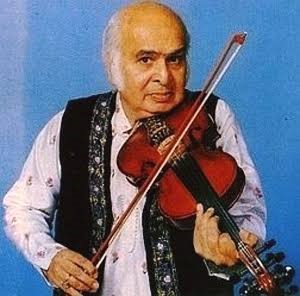
Pandit Vishnu Govind Jog, universally known as V.G. Jog, was a legendary Indian classical instrumentalist often heralded as the “Violin Samrat” (Emperor of the Violin). He is widely credited with pioneering and cementing the violin as a premier solo instrument within the Hindustani classical music tradition. By seamlessly blending multiple vocal and instrumental stylistic lineages (gayaki-ang and tantrakari-ang), Pandit Jog transformed the perception of a Western instrument into an authentic medium for profound Indian spiritual and aesthetic expression.
2. Quick Facts
- Full Name: Pandit Vishnu Govind Jog
- Native Name: विष्णु गोविंद जोग
- Date of Birth: February 22, 1922
- Place of Birth: Wai, Satara District, Maharashtra, India
- Nationality: Indian
- Occupation/Profession: Classical Musician, Violinist, Educator, and Music Producer
- Field of Achievement: Hindustani Classical Instrumental Music (Violin)
- Years Active: c. 1930s – late 1990s (spanning nearly six decades)
3. Award Information (Focus: Padma Bhushan)
- Award Name: Padma Bhushan
- Award Category: India’s Third-Highest Civilian Honour
- Award Year: 1982 (Some records note 1983)
- Presented By: The President of India
- Date of Ceremony: Published/Conferred annually around Republic Day
- Citation/Official Reason: Recognized for his exceptional and distinguished service to the arts and his pioneering contributions to Hindustani classical instrumental music.
4. Why Did He Receive the Award?
Pandit V.G. Jog received the Padma Bhushan and other prestigious national accolades for his monumental role in adapting the Western violin to the rigorous microtonal nuances (shruti) and emotional depths of Hindustani ragas. Before him, the violin was primarily used for accompaniment or within Carnatic music. Jog elevated it to a solo concert-level instrument, trained generations of students, and represented Indian culture globally through iconic collaborations and world tours.
5. Early Life
Born in a culturally inclined Maharashtrian family in Wai, Maharashtra, Jog showed a deep inclination toward music from a tender age. He began playing the violin when he was just 12 years old. Recognizing his innate talent, his family supported his early immersion into musical training under local and regional mentors, setting the stage for a lifelong dedication to the art.
6. Education
- Early Training: Received initial tutelage from S.C. Athavale and Ganpat Rao Purohit.
- Advanced Training: Underwent rigorous grooming under veteran masters like Vishweswar Shastry, Dr. S.C. Ratanjankar, and briefly under the legendary Baba Allauddin Khan (the guru of Ravi Shankar and Ali Akbar Khan).
- Formal Degree: Earned a Master’s degree in Music from the prestigious Bhatkhande College of Hindustani Music in Lucknow in 1944, rubbing shoulders with musical prodigies of the era.
7. Career Journey
- Academic Tenure: After completing his master’s degree, Jog began teaching at the Bhatkhande College of Music and later taught at institutions like the Ali Akbar College of Music.
- All India Radio (AIR): Joined AIR in 1953 as a music producer, eventually retiring as the Deputy Chief Producer, where he helped broadcast classical music to millions across India.
- Global Concert Stage: Toured extensively across the United Kingdom, France, West Germany, the United States, East Africa, Nepal, and Sri Lanka. He famously performed at global landmarks like Carnegie Hall and Lincoln Center, and starred in the Festival of India in the US (1985).
8. Major Achievements
- Pioneering Solo Violin: Single-handedly carved out a distinct identity for the violin in North Indian classical music.
- Legendary Jugalbandis: Formed an iconic, genre-defining partnership with Shehnai maestro Ustad Bismillah Khan, bridging Hindustani instrumental music boundaries. He also performed jugalbandis with L. Subramaniam, Amjad Ali Khan, Hariprasad Chaurasia, and Girija Devi.
- Accompanist to Giants: Despite being a stellar soloist, he was revered as an peerless accompanist who played alongside vocal titans like Faiyaz Khan, Bade Ghulam Ali Khan, Omkarnath Thakur, Amir Khan, and Kesarbai Kerkar.
9. Contribution to the Nation
Pandit Jog institutionalized and propagated traditional Hindustani instruction through his faculty roles at Lucknow and Kolkata. Through All India Radio, he preserved rare ragas and compositions, acting as a cultural custodian. He was also a valued member of the Experts Committee at the ITC Sangeet Research Academy (SRA) in Kolkata, mentoring young disciples like Pallab Bandyopadhyay and Utpal Chakrabarty.
10. Other Awards and Honours
- Sangeet Natak Akademi Award (1981)
- Kalidas Samman (Government of Madhya Pradesh)
- Rajya Natak Award (West Bengal Government)
- ITC Award
- Bhuwalka Puraskar
- Hafiz Ali Khan Award
11. Legacy and Influence
Pandit V.G. Jog’s legacy lies in his unique musical synthesis. By combining the Gwalior, Agra, and Bakhle gharanas, he achieved a style that married vocal lyrical fluidity (gayaki-ang) with instrumental dexterity (tantrakari-ang). Every year on the anniversary of his passing (January 31), cultural bodies like Swarsadhana in Kolkata organize commemorative concerts to celebrate his enduring musical footprint.
12. Interesting Facts
- Gift from a Legend: After being deeply moved by a joint performance, the fierce and legendary Baba Allauddin Khan gifted Pandit Jog his personal violin.
- Three Generations of Artistry: Jog possessed the rare distinction of performing at the absolute highest tier of classical music alongside three consecutive generations of Indian musicians.
- Audience Intuition: He was famous for reading the emotional climate of a live audience mid-performance and tweaking his lighter compositions or folk-infused dhuns to captivate them.
13. Quotes
“Pandit Jog ushered in a new era of musical appreciation of Hindustani-style violin and was unquestionably the ‘Violin Samrat’ for all time to come.”
14. Timeline
- 1922: Born on February 22 in Wai, Maharashtra.
- 1934: Began learning to play the violin at age 12.
- 1944: Graduated with a Master’s degree in Music from Bhatkhande College, Lucknow.
- 1953: Joined All India Radio (AIR) as a music producer.
- 1981: Awarded the Sangeet Natak Akademi Award.
- 1982: Honored with the Padma Bhushan by the Government of India.
- 1985: Performed globally at the prestigious Festival of India in the United States.
- 2004: Passed away on January 31 in Kolkata following a prolonged illness.
15. References
- Wikipedia contributors. “V. G. Jog.” Wikipedia, The Free Encyclopedia.
- ITC Sangeet Research Academy (SRA). Maestro Tributes Archive.
- The Times of India & The Hindu. Obituary archives (February 2004).
- Encyclopædia Britannica. Profile on V.G. Jog and Hindustani Classical Music.
16. Related Personalities
- Ustad Bismillah Khan (Shehnai Maestro)
- Baba Allauddin Khan (Multi-instrumentalist and Guru)
- Pandit S.C. Ratanjankar (Musicologist)
- Dr. L. Subramaniam (Carnatic/Hindustani Violinist)
- Pandit Hariprasad Chaurasia (Flutist)
17. Frequently Asked Questions (FAQ)
Q1: Is the violin a traditional Indian instrument?
A: No. The violin is originally a Western classical instrument. However, musicians like V.G. Jog successfully adapted it to fit the microtonal demands (shruti and meend) of Hindustani classical music, making it an organic part of the tradition.
Q2: What was V.G. Jog’s playing style known for?
A: His style was a unique fusion of gayaki-ang (vocal style) and tantrakari-ang (instrumental style), drawing influences from the Gwalior, Agra, and Bakhle gharanas.
Q3: What are his most famous recordings?
A: His collaborative jugalbandi albums with Shehnai legend Ustad Bismillah Khan remain global benchmark recordings of Hindustani instrumental music.
About the Author