1. Introduction
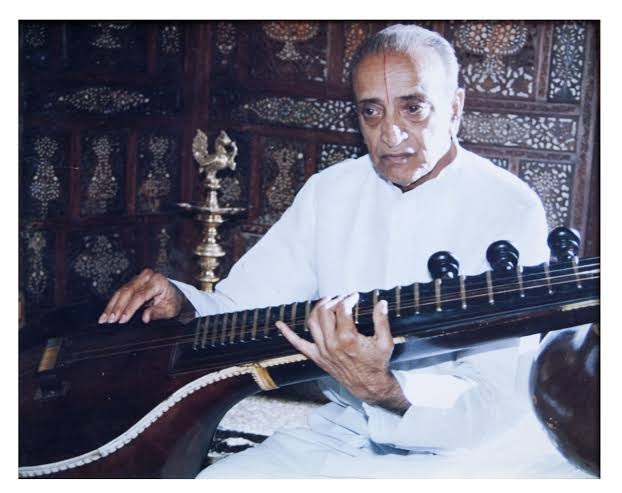
Mysore V. Doreswamy Iyengar was one of the greatest exponents of the veena in modern Indian history. As a legendary figure in Carnatic classical music, he was celebrated for preserving the pure acoustic sound of the instrument, upholding the distinctive “Mysore style”, and bridging traditional shastric music with rich public art programming through All India Radio.
2. Quick facts
- Full Name: Mysore Venkatesha Doreswamy Iyengar
- Native Name: ಮೈಸೂರು ದೊರೆಸ್ವಾಮಿ ಅಯ್ಯಂಗಾರ್
- Date of Birth: August 11, 1920
- Place of Birth: Gaddavalli village, Hassan district, Kingdom of Mysore (Karnataka), India
- Nationality: Indian
- Occupation/Profession: Carnatic Musician, Veena Virtuoso, Composer, and Broadcaster
- Field of Achievement: Carnatic Classical Music (Veena Instrumentalist)
- Years Active: 1930s–1997
3. Award Information
- Award Name: Padma Bhushan
- Award Category: Civil Honour (Arts / Classical Music)
- Award Year: 1983
- Presented By: The President of India
- Date of Ceremony: 1983 (Standard Rashtrapati Bhavan investiture cycle)
- Citation/Official Reason: For his outstanding contribution to Indian classical music and his lifelong dedication to propagating and mastering the art of the veena.
- Previous Recipients: Eminent artists, scientists, and public figures of India.
- Next Recipients: Subsequent cohorts of Padma Bhushan honorees in the arts.
4. Why Did He Receive the Award?
Doreswamy Iyengar was honored with the Padma Bhushan for his peerless mastery over the veena and his immense efforts to keep authentic Carnatic instrumental traditions alive. Through his immaculate phrasing, adherence to acoustic purity, pioneering radio compositions, and decades of sublime performances across the globe, he elevated the status of the veena on the international cultural map.
5. Early Life
Born in 1920 into a deeply musical Tamil Brahmin family in Gaddavalli, Iyengar inherited a rich cultural lineage. His grandfather, Janardhana Iyengar, was a devout singer of Dasa compositions, and his father, Venkatesha Iyengar, was a learned vainika and royal musician at the court of the Maharaja of Mysore. Growing up surrounded by classical arts, young Doreswamy naturally gravitated toward music, starting out with a mouth organ at age four before moving strictly to stringed instruments under his father’s rigorous eye.
6. Education
- Early Training: Received his initial, intensive grounding in veena performance directly from his father, Venkatesha Iyengar.
- Advanced Shastric Mastery: Became the prime disciple of the legendary court maestro Veena Venkatagiriyappa, perfecting complex microtones and gamakas.
- Formal Education: Earned his Bachelor of Arts (B.A.) degree from the Maharaja’s College in Mysore. He also formally studied and cleared examinations in the advanced theory of Western music through Trinity College, London.
7. Career Journey
- Royal Court Recognition: Performed before the Maharaja of Mysore, Krishna Raja Wadiyar IV, at the tender age of 12. At just 16, he was appointed an official court musician of Mysore, becoming the youngest to earn the honor.
- Public Debut: Gave his breakthrough public performance in 1943 at the Bangalore Gayana Samaja.
- All India Radio (AIR): Joined AIR Bangalore in 1955 as a Producer, where he spent 25 years shaping high-grade classical broadcasts, orchestras, and musical features.
- Global Concerts: Represented India internationally, notably performing at the Shiraz-Persepolis Festival of Arts in Iran in 1969.
8. Major Achievements
- The Purist Standard: Refused to switch to contact microphones or heavy electronic amplification, staunchly advocating for the pure, unadulterated tone of the acoustic veena.
- The Mysore Style: Celebrated for his unique technique involving parted left-hand fingers and distinct plucking methods that created a continuous, vocal-like resonance (gayaki style).
- Iconic Collaborations: Broke conventional performance boundaries by collaborating in jugalbandis with Hindustani music stalwarts like Ustad Ali Akbar Khan.
- Dance-Drama and Film Scores: Composed rich musical scores for acclaimed Kannada poetic dance-dramas (such as P.T. Narasimhachar’s Gokula Nirgamana) and classical-themed films like Subba Shastry (1966).
9. Contribution to the Nation
Iyengar anchored the rich heritage of South Indian classical instrumental music firmly into the national consciousness. Through his long tenure at All India Radio, he conceptualized cross-cultural and regional musical bridges—such as Gita Bharati, which paired traditional Carnatic kritis with Rabindranath Tagore’s Bengali compositions. He mentored numerous younger artists, ensuring that the nuances of traditional instrumental execution survived securely into generations to come.
10. Other Awards and Honours
- Sangeetha Kalanidhi (1984): Conferred by the prestigious Madras Music Academy (the highest accolade in Carnatic music).
- Sangeet Natak Akademi Award (1971): Presented by India’s National Academy of Music, Dance and Drama.
- Honorary Doctorate (1975): Awarded by the University of Mysore.
- Sangeetha Kalasikhamani (1994): Awarded by the Indian Fine Arts Society.
- Chowdiah National Memorial Award (1985): Honored for lifetime achievement in instrumental music.
11. Legacy and Influence
Mysore V. Doreswamy Iyengar is remembered as a quiet titan of grace, dignity, and uncompromising artistic integrity. His distinct “Mysore style” of playing continues to thrive globally through his son and primary disciple, D. Balakrishna, and numerous other students who carry forward his legacy of acoustic purity.
12. Interesting Facts
- The Royal Silver Coin: When he first played before the Maharaja of Mysore at age 12, the ruler was so spellbound that he gifted him a 50-rupee silver coin and urged his teachers to nurture the boy, predicting he would bring great glory to the state.
- Literary Admiration: Renowned novelist R.K. Narayan was an ardent admirer of his music, frequently writing about the meditative serenity and depth of Iyengar’s veena recitals.
13. Quotes
“Music is an inward journey; the instrument is merely a vessel to translate the silence of the soul into sound.” — Mysore V. Doreswamy Iyengar (Reflecting his aesthetic philosophy)
14. Timeline
- 1920: Born on August 11 in Gaddavalli, Mysore State.
- 1932: Performs in the royal court of Mysore at age 12; receives royal patronage.
- 1936: Appointed as the youngest court musician of Mysore at age 16.
- 1955: Begins his long, impactful tenure as a producer at All India Radio (AIR), Bangalore.
- 1975: Receives an Honorary Doctorate from the University of Mysore.
- 1983: Conferred the Padma Bhushan by the Government of India.
- 1984: Presides over the Madras Music Academy as Sangeetha Kalanidhi.
- 1997: Passes away on October 28 in Bangalore at the age of 77.
15. References
- Wikipedia contributors. Doreswamy Iyengar. Wikipedia, The Free Encyclopedia.
- Frontline Magazine. A gentle musician: Tribute to Doreswamy Iyengar (Gowri Ramnarayan).
- Karnataka.com. Shri V. Doraiswamy Iyengar – Of Mysore Style and Music.
- The Hindu. A life in music / Remembering the virtuoso.
16. Related Personalities
- Veena Venkatagiriyappa: Legendary court vainika and primary mentor to Doreswamy Iyengar.
- Mysore T. Chowdiah: Iconic violinist who frequently accompanied Iyengar in legendary concert pairings.
- D. Balakrishna: Eminent veena player, Reserve Bank of India veteran, and Doreswamy Iyengar’s son and principal torchbearer.
17. Frequently Asked Questions (FAQ)
- Q: What is Mysore V. Doreswamy Iyengar famous for?
- A: He is widely celebrated as one of the twentieth century’s greatest masters of the Carnatic veena, known for his adherence to pure acoustic sound and the classic Mysore playing style.
- Q: Did he receive any national honors?
- A: Yes, he was awarded India’s third-highest civilian honor, the Padma Bhushan, in 1983.
- Q: What distinguishes the Mysore style of veena playing?
- A: It relies on an organic acoustic tone using finger-nails rather than metal picks, with parted left-hand fingers to ensure a continuous, flowing legato sound reminiscent of human vocal music
About the Author