

Introduction
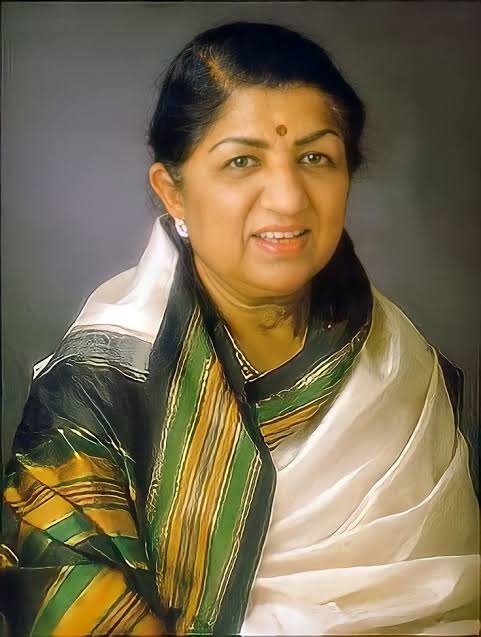
Lata Mangeshkar was one of India’s greatest playback singers and a cultural icon whose melodious voice touched millions of hearts across generations. Popularly known as the “Nightingale of India,” she recorded thousands of songs in more than 30 languages during a career spanning over seven decades. Her extraordinary contribution to Indian music earned her numerous prestigious awards, including the Padma Vibhushan and the Bharat Ratna, India’s highest civilian honour.
Early Life
Lata Mangeshkar was born into a family deeply rooted in music. Her father, Deenanath Mangeshkar, was a renowned classical singer and theatre artist who introduced her to music at an early age. After her father’s passing in 1942, Lata took on family responsibilities while continuing her passion for singing. Despite facing financial hardships, she persevered and became one of the most celebrated voices in Indian cinema.
Birth Date and Death
- Born: September 28, 1929
- Place of Birth: Indore, Madhya Pradesh, India
- Died: February 6, 2022
- Place of Death: Mumbai, Maharashtra, India
- Age at Death: 92 years
Education and Career
Education
Lata Mangeshkar received limited formal schooling because she began working at a young age. However, she received extensive training in Hindustani classical music from her father and later continued learning under respected music teachers. Her musical education laid the foundation for her exceptional singing career.
Career
Lata Mangeshkar began her singing career in the early 1940s. Her breakthrough came with the song “Aayega Aanewala” from the film Mahal (1949). Over the following decades, she became the leading playback singer in Hindi cinema and also sang in Marathi, Bengali, Gujarati, Tamil, Telugu, Kannada, Malayalam, Punjabi, Assamese, and several other languages.
She collaborated with legendary composers such as Naushad, S. D. Burman, R. D. Burman, Madan Mohan, and A. R. Rahman.
Career and Achievements
1. Legendary Playback Singer
Lata Mangeshkar recorded thousands of songs over a career that lasted more than 70 years, becoming one of the most respected playback singers in the world.
2. Voice of Indian Cinema
She lent her voice to some of the biggest actresses in Indian films and became synonymous with timeless melodies.
3. Singing in Multiple Languages
She recorded songs in more than 30 Indian and foreign languages, showcasing her remarkable versatility.
4. Patriotic Songs
Her patriotic songs, especially “Ae Mere Watan Ke Logon,” became symbols of national pride and continue to inspire audiences.
5. Global Recognition
Lata Mangeshkar received worldwide recognition for her contribution to music and Indian culture, performing in prestigious venues across the globe.
Why Did Lata Mangeshkar Receive the Padma Vibhushan Award?
Lata Mangeshkar received the Padma Vibhushan in 1999 in recognition of her exceptional contribution to Indian music and culture.
The award honoured her for:
- Over five decades of outstanding service to Indian music.
- Extraordinary achievements as India’s leading playback singer.
- Promoting Indian music and culture around the world.
- Inspiring generations of singers and musicians.
- Preserving the rich tradition of Indian film and classical music.
Field of Achievement
Lata Mangeshkar made remarkable contributions in:
- Playback Singing
- Indian Classical Music
- Film Music
- Devotional Music
- Patriotic Songs
- Cultural Heritage
Awards and Honours
Lata Mangeshkar received numerous prestigious awards throughout her career, including:
- Padma Bhushan (1969)
- Dadasaheb Phalke Award (1989)
- Padma Vibhushan (1999)
- Bharat Ratna (2001)
- Multiple Filmfare Awards and National Film Awards
- Several Lifetime Achievement Awards
- Honorary doctorates from Indian universities
Interesting Facts
- Lata Mangeshkar sang over 25,000 songs in more than 30 languages during her career.
- She was known as the “Nightingale of India.”
- She began singing professionally at the age of 13.
- She was also a music composer and film producer.
- Her song “Ae Mere Watan Ke Logon” moved Prime Minister Jawaharlal Nehru to tears when she performed it live in 1963.
- She remained one of India’s most respected cultural icons throughout her life.
Legacy and Inspiration
Lata Mangeshkar’s legacy is unmatched in Indian music. Her songs continue to be cherished by audiences of all ages, and her voice remains a benchmark for excellence in playback singing. She inspired countless singers with her dedication, humility, and commitment to musical perfection. Her contribution has helped preserve and promote India’s rich musical heritage on the global stage.
Contribution to the Nation
Lata Mangeshkar made lasting contributions to India by:
- Enriching Indian cinema with timeless songs.
- Promoting Indian music and culture internationally.
- Inspiring generations of musicians and singers.
- Strengthening national unity through patriotic songs.
- Supporting charitable causes related to healthcare and education.
- Serving as a cultural ambassador for India around the world.
Conclusion
Lata Mangeshkar was much more than a playback singer—she was the voice of India’s emotions, traditions, and aspirations. Her extraordinary talent, unwavering dedication, and timeless melodies made her one of the greatest musical legends in history. Honoured with the Padma Vibhushan and the Bharat Ratna, she left an enduring legacy that continues to inspire music lovers across the world. Her songs will remain an integral part of India’s cultural heritage for generations to come.
About the Author




