

Introduction
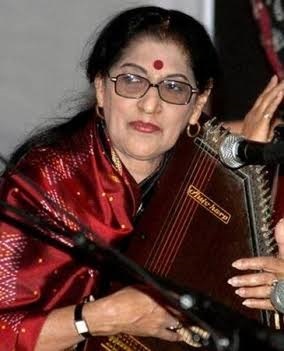
Kishori Amonkar was one of India’s most celebrated Hindustani classical vocalists, renowned for her extraordinary voice, emotional depth, and innovative approach to music. A leading exponent of the Jaipur-Atrauli Gharana, she redefined classical singing by blending tradition with artistic expression. Her remarkable contributions to Indian classical music earned her the Padma Vibhushan, recognizing her lifelong dedication to preserving and enriching India’s cultural heritage.
Early Life
Kishori Amonkar was born into a family deeply rooted in classical music. She inherited her passion for music from her mother, Mogubai Kurdikar, one of the greatest vocalists of the Jaipur-Atrauli Gharana.
From a very young age, Kishori displayed exceptional musical talent. She underwent rigorous classical training under her mother’s guidance, dedicating countless hours to mastering the intricacies of Hindustani music.
Birth Date and Death
- Full Name: Kishori Amonkar
- Date of Birth: 10 April 1932
- Place of Birth: Mumbai (then Bombay), Maharashtra, India
- Date of Death: 3 April 2017
- Place of Death: Mumbai, Maharashtra, India
- Age at Death: 84 years
Education and Career
Education
Kishori Amonkar received her early education in Mumbai. Alongside formal schooling, she underwent intensive training in Hindustani classical music from her mother, Mogubai Kurdikar. She also learned from several renowned musicians to deepen her understanding of different musical styles.
Career
Kishori Amonkar began performing publicly at an early age and soon established herself as one of India’s finest classical vocalists.
Her career spanned more than five decades, during which she:
- Performed at prestigious music festivals across India and abroad.
- Recorded numerous acclaimed classical albums.
- Composed original musical works.
- Trained many disciples in Hindustani classical music.
- Popularized Indian classical music among audiences worldwide.
She became known for her emotionally expressive performances and her unique interpretation of ragas.
Why Did She Receive the Padma Vibhushan Award?
Kishori Amonkar was awarded the Padma Vibhushan in 2002 for her exceptional contribution to Indian classical music.
She received this prestigious honour because she:
- Preserved and promoted Hindustani classical music.
- Elevated the Jaipur-Atrauli Gharana through her exceptional artistry.
- Introduced innovative interpretations while respecting classical traditions.
- Inspired generations of musicians through her performances and teaching.
- Represented Indian culture on international stages.
Her contributions significantly enhanced India’s reputation as a global center of classical music.
Career and Achievements
Kishori Amonkar enjoyed an extraordinary musical career filled with remarkable achievements.
Some of her major accomplishments include:
- Became one of the foremost vocalists of the Jaipur-Atrauli Gharana.
- Performed in prestigious concerts around the world.
- Released numerous acclaimed recordings of classical ragas.
- Received widespread critical acclaim for her emotional and spiritual style of singing.
- Trained many students who continue her musical tradition.
- Contributed to the preservation and evolution of Hindustani classical music.
Her performances remain benchmarks for classical vocal excellence.
Field of Achievement
Kishori Amonkar’s primary fields of achievement include:
- Hindustani Classical Vocal Music
- Jaipur-Atrauli Gharana
- Khayal Singing
- Classical Music Composition
- Music Education
- Cultural Preservation
Awards and Honours
Throughout her illustrious career, Kishori Amonkar received numerous prestigious awards, including:
- Padma Bhushan (1987)
- Padma Vibhushan (2002)
- Sangeet Natak Akademi Award
- Sangeet Natak Akademi Fellowship
- Sangeet Research Academy Award
- Sangeet Natak Akademi Ratna
- Numerous Lifetime Achievement Awards from cultural organizations
Interesting Facts
- She was trained primarily by her mother, Mogubai Kurdikar.
- She believed that music should express emotion as well as technical perfection.
- She developed a unique style that blended traditional techniques with personal creativity.
- She was known for her perfectionism and disciplined approach to music.
- She authored writings on music and philosophy.
- Her concerts attracted audiences from across the world.
Legacy and Inspiration
Kishori Amonkar’s legacy continues through her recordings, compositions, and disciples. She transformed the way many people experienced Hindustani classical music by emphasizing emotional expression alongside technical mastery.
Her dedication to artistic excellence inspires aspiring musicians to pursue both discipline and creativity. She remains one of the most influential figures in Indian classical music.
Contribution to the Nation
Kishori Amonkar made immense contributions to India’s cultural heritage.
Her contributions include:
- Preserving the rich traditions of Hindustani classical music.
- Promoting Indian music on international platforms.
- Training future generations of classical musicians.
- Inspiring audiences through soulful performances.
- Enriching India’s cultural identity through her artistry.
- Expanding global appreciation for Indian classical music.
Her work strengthened India’s reputation as a nation with a rich and enduring musical tradition.
Conclusion
Kishori Amonkar was one of the greatest vocalists in the history of Indian classical music. Through her extraordinary talent, lifelong dedication, and innovative artistic vision, she elevated Hindustani classical music to new heights. Her profound influence on the Jaipur-Atrauli Gharana, her unforgettable performances, and her commitment to preserving India’s musical heritage earned her the Padma Vibhushan, one of the country’s highest civilian honours. Her music continues to inspire artists and listeners around the world, ensuring that her legacy will endure for generations.
About the Author




