Introduction
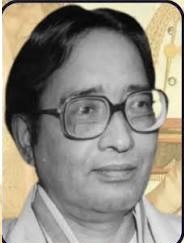
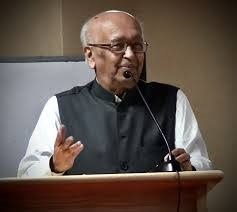
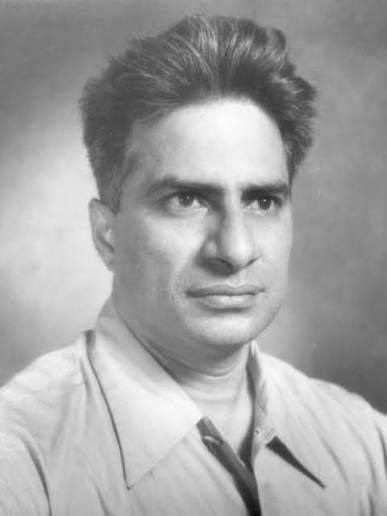
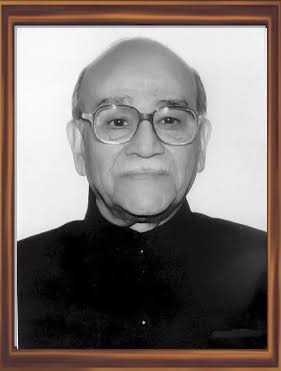
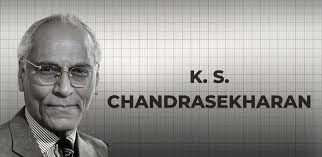
Komaravolu S. Chandrasekharan, commonly known as K. S. Chandrasekharan, was a distinguished Indian mathematician whose work in number theory, analysis, and the development of mathematical institutions earned him international recognition. He played a crucial role in advancing mathematical research in India and abroad and was instrumental in shaping modern mathematical education and scholarship.
Early Life and Education
K. S. Chandrasekharan was born on November 21, 1920, in Machilipatnam (Masulipatnam), Andhra Pradesh, India. He displayed exceptional aptitude for mathematics from an early age and pursued higher studies in the subject with great dedication.
He completed his education at the prestigious University of Madras, where he developed a strong foundation in pure mathematics. His academic excellence led him to pursue advanced research under some of the world’s leading mathematicians.
Scientific Career & Research
Chandrasekharan specialized in:
- Number Theory
- Analytic Number Theory
- Complex Analysis
- Fourier Analysis
- Mathematical Education
A major turning point in his career came when he worked under the renowned mathematician Hermann Weyl at the Institute for Advanced Study in Princeton, USA.
He later joined the faculty of the ETH Zurich, one of the world’s leading institutions for mathematics and science. There he established himself as an internationally respected scholar and educator.
Major Discoveries and Contributions
1. Contributions to Number Theory
Chandrasekharan made significant advances in analytic number theory, particularly in the study of:
- Prime numbers
- Arithmetic functions
- Zeta functions
- Modular forms
His research helped deepen understanding of fundamental problems in number theory.
2. Research on the Riemann Zeta Function
He contributed to the study of the Riemann zeta function and related topics, helping develop methods used in modern mathematical analysis.
3. Fourier Analysis
His work in Fourier analysis provided important tools for understanding periodic functions and mathematical transformations that have applications in physics, engineering, and signal processing.
4. Mathematical Publications
Chandrasekharan authored several influential books and research papers that became standard references for students and researchers. His writings were known for their clarity, rigor, and depth.
5. Development of Mathematical Institutions
Beyond research, he contributed significantly to strengthening mathematical communities and research institutions, encouraging international collaboration and higher standards of mathematical scholarship.
Awards and Honours
K. S. Chandrasekharan received numerous honors throughout his career, including:
- Fellowship and membership in several prestigious scientific academies.
- International recognition for his contributions to number theory and analysis.
- Distinguished academic appointments at leading universities.
- Honors from mathematical organizations for his research and educational contributions.
His reputation as both a researcher and educator extended across Europe, India, and North America.
Later Life and Death
After a long and productive academic career, Chandrasekharan continued to support mathematical research and education through writing, mentoring, and institutional service. He remained active in the international mathematical community for many years.
He passed away on April 13, 2017, leaving behind a lasting legacy in mathematics and mathematical education.
Legacy and Impact
K. S. Chandrasekharan’s influence extends far beyond his research papers. His contributions:
- Advanced analytic number theory and mathematical analysis.
- Trained and inspired generations of mathematicians.
- Strengthened international cooperation in mathematical research.
- Produced textbooks and monographs that continue to be studied.
- Enhanced the global reputation of Indian mathematicians.
His work remains valuable to researchers in number theory, complex analysis, and related fields.
Conclusion
K. S. Chandrasekharan was one of India’s most respected mathematicians, combining deep theoretical research with a lifelong commitment to education and institution-building. Through his contributions to number theory, analysis, and mathematical scholarship, he helped shape modern mathematics both in India and internationally. His achievements continue to inspire students, educators, and researchers around the world, ensuring his place among the leading mathematical figures of the twentieth century.
About the Author