
Introduction
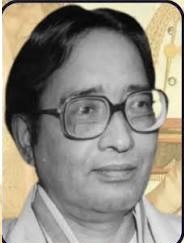
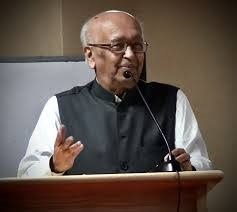
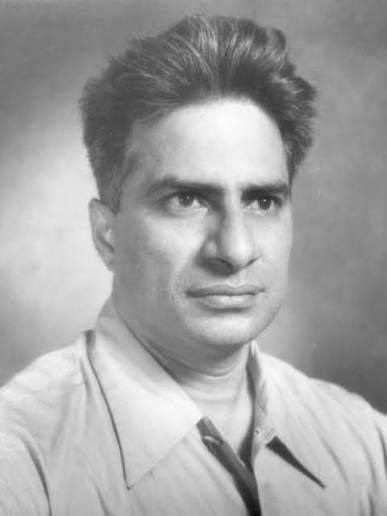
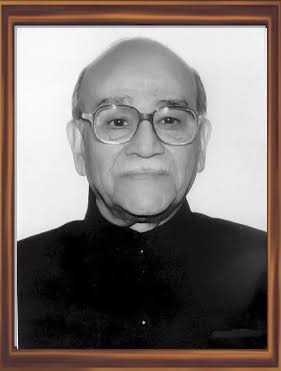
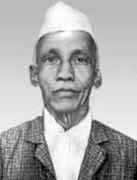
D. R. Kaprekar was an Indian mathematician best known for his discoveries in recreational number theory. Despite working largely outside major academic institutions, he made remarkable contributions to mathematics through his study of number patterns and properties. His most famous discoveries include the Kaprekar Number, Kaprekar Constant, and several other intriguing numerical phenomena that continue to fascinate mathematicians and enthusiasts worldwide.
Early Life and Education
Dattatreya Ramchandra Kaprekar was born on January 17, 1905, in Dahanu, Maharashtra, India. He received his early education in Maharashtra and later attended the University of Mumbai.
Kaprekar showed a strong interest in mathematics from a young age, particularly in number puzzles and arithmetic patterns. Unlike many renowned mathematicians, he spent much of his career as a school teacher, pursuing mathematical research independently.
Scientific Career & Research
Kaprekar worked as a mathematics teacher at a secondary school in Devlali, near Nashik, Maharashtra. While teaching, he devoted his spare time to exploring numerical curiosities and developing original mathematical ideas.
His research focused on:
- Number theory
- Recreational mathematics
- Numerical patterns
- Digit manipulation
- Arithmetic properties of integers
Although his work was initially overlooked by mainstream mathematicians, it later gained international recognition.
Major Discoveries and Inventions
1. Kaprekar Numbers
Kaprekar discovered a special class of numbers now known as Kaprekar Numbers.
A positive integer n is a Kaprekar Number if:
- n2 is calculated.
- The square is split into two parts.
- The sum of those parts equals the original number.
Example:
- 452=2025
- Split as 20 and 25
- 20+25=45
Therefore, 45 is a Kaprekar Number.
2. Kaprekar Constant (6174)
His most celebrated discovery is the Kaprekar Constant, 6174.
The process involves:
- Taking any four-digit number with at least two different digits.
- Arranging its digits in descending and ascending order.
- Subtracting the smaller number from the larger.
- Repeating the process.
The sequence always reaches:
6174
and remains fixed thereafter.
This phenomenon is known as the Kaprekar Routine.
3. Self Numbers
Kaprekar investigated numbers that cannot be generated by adding a number to the sum of its digits. These are known as Self Numbers and have become an important topic in recreational mathematics.
4. Harshad Numbers
He also studied numbers divisible by the sum of their digits, later called Harshad Numbers (meaning “great joy” in Sanskrit).
5. Demlo Numbers
Kaprekar introduced and analyzed Demlo Numbers, a unique sequence generated through repeated-digit arithmetic patterns.
Awards and Honours
Although Kaprekar did not receive many formal awards during his lifetime, his contributions earned increasing recognition among mathematicians and number theorists.
His discoveries are now widely discussed in:
- Recreational mathematics literature.
- Number theory research.
- Mathematical competitions.
- Educational mathematics programs.
Several mathematical concepts bear his name, ensuring his lasting recognition.
Later Life and Death
Kaprekar continued researching mathematical patterns throughout his life, often working independently without institutional support. He remained passionate about mathematics until his final years.
He passed away in 1986 in Maharashtra, India, leaving behind a rich legacy of mathematical discoveries.
Legacy and Impact
D. R. Kaprekar’s work has had a significant influence on recreational mathematics and number theory.
His legacy includes:
- Discovery of Kaprekar Numbers.
- Identification of the Kaprekar Constant (6174).
- Contributions to the study of Self Numbers and Harshad Numbers.
- Inspiration for mathematical puzzles and competitions.
- Popularization of number theory among students and enthusiasts.
Today, his discoveries are studied globally and frequently featured in mathematics education and recreational mathematics communities.
Conclusion
D. R. Kaprekar was a remarkable self-driven mathematician whose fascination with numbers led to several elegant and enduring discoveries. His work on Kaprekar Numbers, the Kaprekar Constant, and other numerical patterns demonstrated how deep mathematical insights can emerge from simple arithmetic explorations. Despite working outside mainstream academic circles, Kaprekar left an extraordinary legacy that continues to inspire mathematicians, educators, and puzzle enthusiasts around the world.
About the Author